
Peppered moth (Biston betularia)
A medium-sized nocturnal moth noted for caterpillar twig-mimicry and adult colour polymorphism. Famous as a textbook example of natural selection and of industrial melanism in temperate regions.
Overview: The peppered moth (Biston betularia) is a widespread nocturnal moth often cited in discussions of evolutionary change. Adults are active at night and commonly attracted to lights, while the caterpillars spend daylight hours resting on twigs and branches. The species is notable for distinct adult colour varieties and for the remarkable ability of its larvae to blend with their resting substrate.
Image gallery
10 Images




Appearance and life cycle
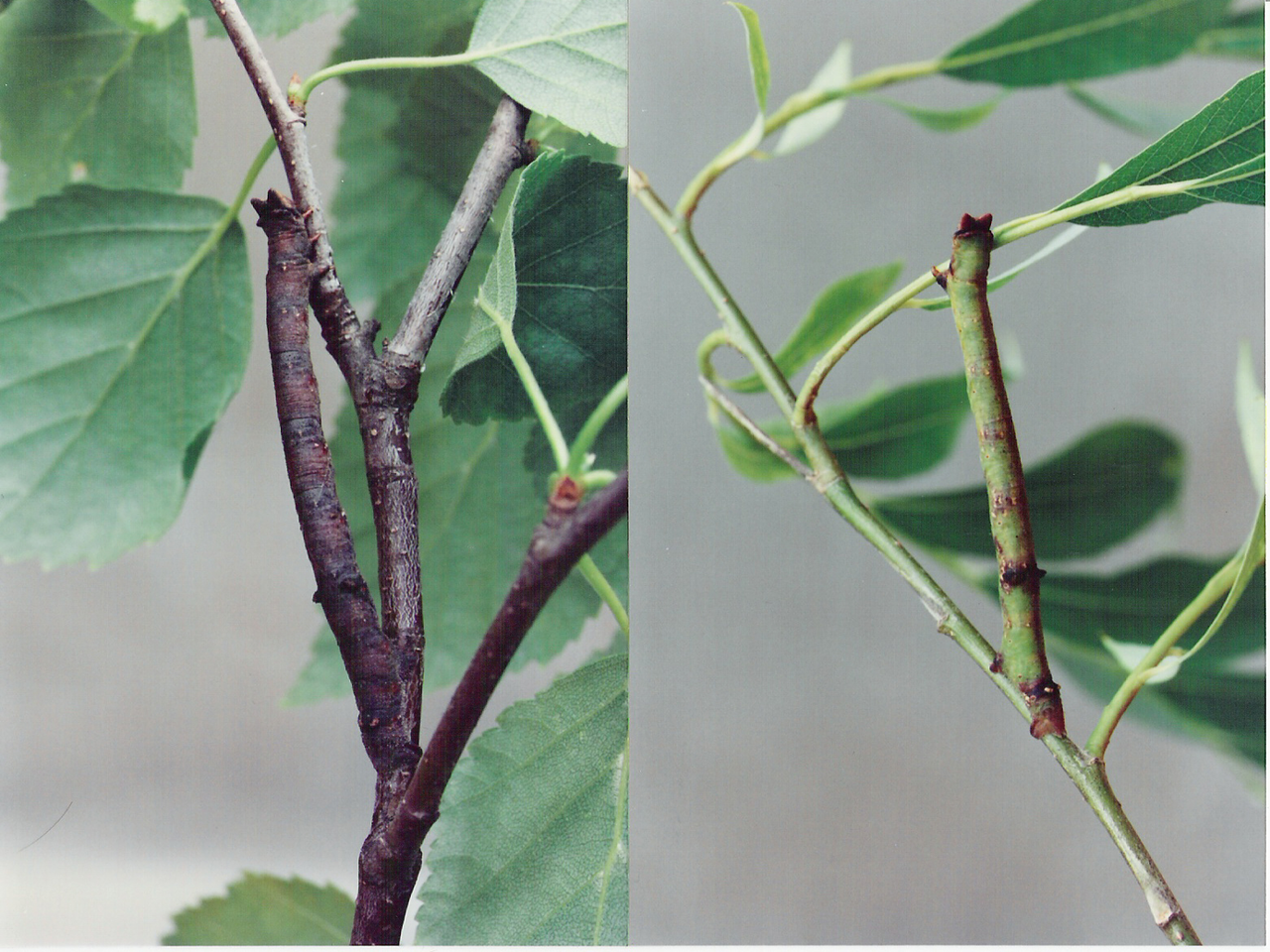
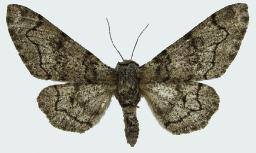
Adults are medium-sized moths with wings patterned to help them remain cryptic when at rest. Populations show a polymorphism: the typical form is pale with dark speckling, while melanic (dark) forms occur in some regions. Life stages follow the familiar moth sequence: egg, larva (caterpillar), pupa, and adult. Caterpillars are elongated and stick-like, a shape that aids concealment among twigs and shoots.
Camouflage and caterpillar colour-matching
The caterpillars are masters of camouflage. They not only mimic the shape of twigs but can also adjust their body colour to match the specific twig on which they rest. Studies indicate that larvae detect aspects of the background through their skin and alter pigmentation accordingly, reducing detection by bird predators. This form of background matching is a clear example of behavioural and physiological adaptation to reduce predation.
History of industrial melanism
The peppered moth became an emblematic case in evolutionary biology during and after the Industrial Revolution. In areas where soot darkened tree trunks and buildings, the darker adult form increased in frequency, a pattern attributed to improved camouflage on polluted surfaces and differential predation by birds. Later, as pollution declined and lichens recovered, the light-coloured form regained prevalence. This rise and fall of dark moths is commonly discussed under natural selection and has been the subject of focused research and public interest; detailed modern syntheses appear under pepered moth evolution.
Scientific importance and debate
The species has served as an educational example of rapid evolutionary response to environmental change and as a study system for predator–prey interactions, genetics, and ecology. Some aspects of the early experimental work prompted scrutiny and debate over methods and interpretation; subsequent studies and fieldwork have refined and reaffirmed the basic conclusions. Genetic investigations have also identified mutations associated with the melanic phenotype, linking observable variation to underlying heredity.
Distribution, research and conservation
Found across temperate parts of Europe, Asia and North America, the peppered moth remains common in many habitats where host trees and shrubs occur. It continues to be a focus for citizen-science monitoring of environmental change, and for teaching evolutionary principles. For more species-level information see the taxonomic and ecological notes at night-flying moth.
- Key concepts: polymorphism, crypsis, industrial melanism, background matching.
- Further reading: summaries and modern reviews are available via educational resources and research compilations such as pepered moth evolution.
Related articles
Author
AlegsaOnline.com Peppered moth (Biston betularia) Leandro Alegsa
URL: https://en.alegsaonline.com/art/75712
Sources
- ice.mpg.de : "Caterpillars of the peppered moth perceive color through their skin to match their body color to the background"
- commons.wikimedia.org : Biston betularia