
People's Alliance for Democracy (PAD)
A Thai political pressure movement known as the Yellow Shirts, formed against Prime Minister Thaksin Shinawatra and active through mass protests, airport seizures and prolonged sieges in the 2000s–2010s.
Overview
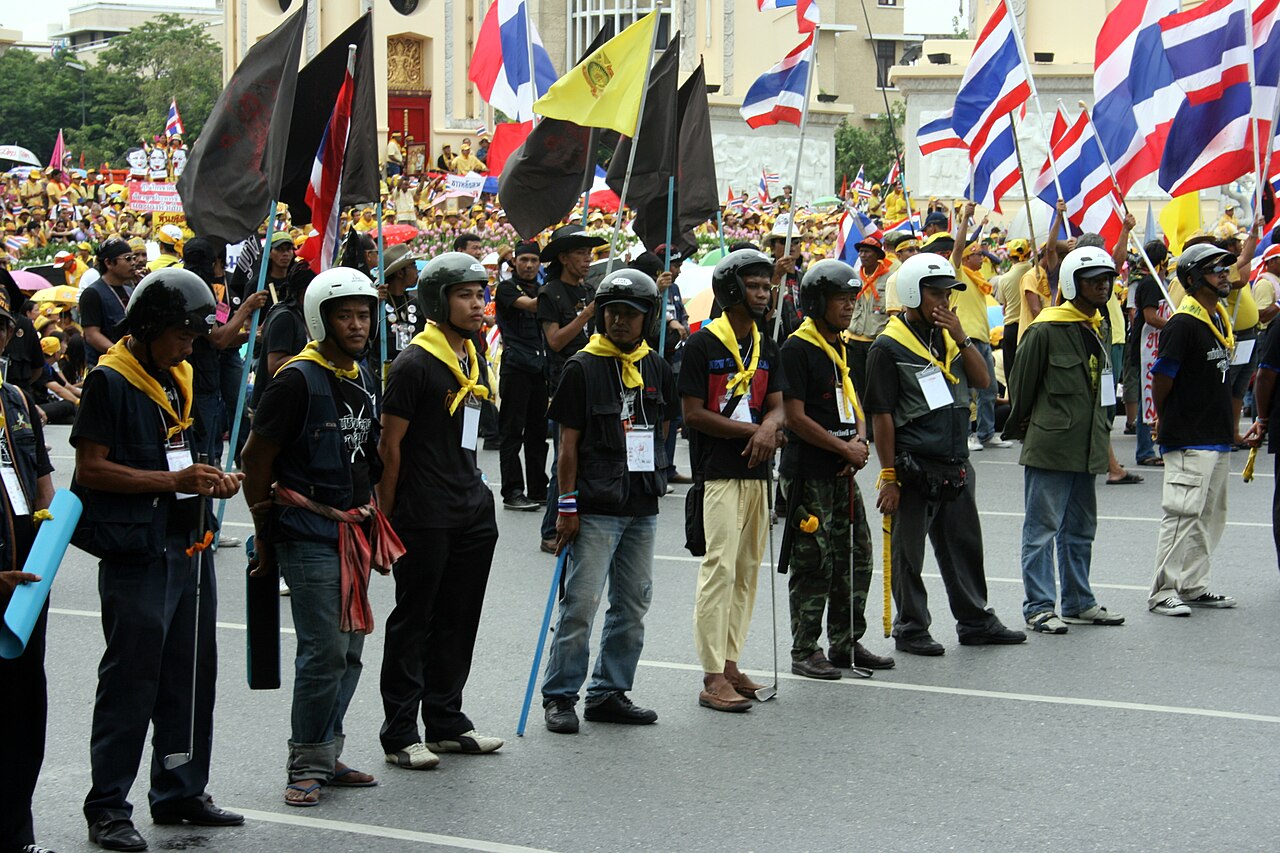
The People's Alliance for Democracy (PAD) is a political pressure movement in Thailand that rose to prominence in the mid-2000s. Commonly called the "Yellow Shirts" because of the yellow attire worn by many supporters, the PAD has presented itself as a coalition of civic groups, activists and allied elites. Observers describe it as a protest movement rather than a conventional political party; its activities have focused on mass demonstrations, public occupations and campaigns to remove or delegitimize elected governments. For national context see Thailand.
Image gallery
9 Images






Origins and development
The PAD originated as a loose alliance opposing the administration of Prime Minister Thaksin Shinawatra and developed into a broader anti-government coalition. Early origins combined middle‑class activists, royalist networks and critics of Thaksin’s business and political influence; its initial organizing formed a coalition of disparate groups (coalition) and street organizers (protesters). Public grievances often cited allegations of corruption and conflicts of interest associated with Thaksin and his business dealings, which opponents framed as abuses of public office (fraud and related accusations).
Tactics, symbols and organization
The PAD employed a mix of non‑institutional tactics: street occupations, rallies around symbolic sites and targeted blockades. Its members and supporters used visual symbolism—most notably yellow shirts and blue scarves—and public chants and musical instruments to attract attention. Supporters sometimes wore hats bearing the Latin word "liberate" and used the Thai slogan กู้ชาติ to express calls for national reform. Demonstrators also used noisemakers that imitate clapping (sound tools) as part of their public presence.
Major protests and impacts
PAD-led actions included prolonged occupations of government buildings and high-profile disruptions. Notably, in 2008 PAD protesters seized both Don Mueang and Suvarnabhumi airports in Bangkok, causing large-scale flight cancellations and international attention (airport seizure). Earlier and later campaigns focused on pressuring successive prime ministers, including demands for resignations and resignations of elected leaders like Samak Sundaravej and Somchai Wongsawat; the PAD framed these efforts as part of a struggle to remove what it considered illegitimate or corrupt administrations (Samak Sundaravej, later prime ministers).
Support base and public role
The movement drew support from a mix of conservative urbanites, some business interests, royalist sympathizers and rural actors disaffected with Thaksin-era politics. Its organizational structure was loose and often reliant on charismatic leaders and decentralized local chapters rather than formal party mechanisms. The PAD's approach has been both credited for mobilizing civic activism and criticized for bypassing electoral processes when it sought to remove sitting governments.
Criticism, legacy and significance
Reactions to the PAD have been mixed. Supporters argue it defended the monarchy and promoted clean governance; critics contend it undermined democratic norms by using extra‑parliamentary pressure to oust elected officials. The PAD's protests were a major factor in a turbulent period of Thai politics during the 2000s and early 2010s, and they influenced subsequent movements and political alignments. For further background or specific reports and analyses see related resources: Thaksin Shinawatra, movement structures, and additional contemporary accounts (national context, protester perspectives).
Related articles
Author
AlegsaOnline.com People's Alliance for Democracy (PAD) Leandro Alegsa
URL: https://en.alegsaonline.com/art/75672
Sources
- english.peopledaily.com.cn : "Thai economy likely to continue growth despite political uncertainties - People's Daily Online"