
Acre-foot (unit of water volume)
A non‑SI unit used chiefly in the United States to measure large water volumes. One acre‑foot equals the volume that covers one acre to a depth of one foot (≈43,560 cu ft, ≈1,233 m³).
Overview
An acre-foot is a customary unit of volume used mainly in the United States to quantify large amounts of water such as reservoirs, irrigation deliveries, and municipal supplies. Conceptually, it is the volume required to cover one acre of surface area to a uniform depth of one foot. The term links two familiar land and length measures—an acre and a foot—so it is especially convenient for water management on agricultural or regional scales.
Image gallery
1 Image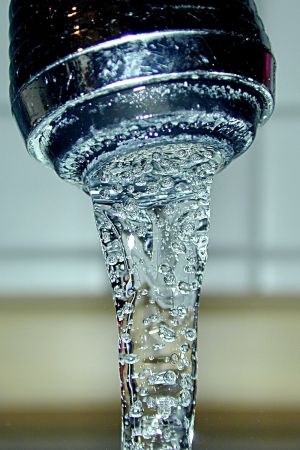
Definition and common conversions
By definition, one acre-foot equals the volume of water that covers 1 acre (43,560 square feet) to a depth of 1 foot. Common approximate conversions are:
- 43,560 cubic feet (cu ft)
- about 1,233 cubic meters (m³)
- about 325,851 US liquid gallons
- about 1,233,000 liters
For calculations: volume in cubic feet = acres × depth in feet × 43,560. Smaller related units include the acre-inch (one twelfth of an acre-foot) often used in irrigation scheduling.
Uses and practical examples
Acre-feet are used to express reservoir capacity, annual water allocations, and the volumes traded in water markets. Water managers commonly report storage in thousand acre-feet (TAF) or million acre-feet (MAF) to describe regional supplies. As a practical comparison, one acre-foot is roughly the amount of water needed to supply two to three average U.S. households for a year, though household use varies widely by region and conservation practices.
Historical and legal context
The acre-foot arose from English and early American land and surveying practices that employed the acre and foot. It persists because many water laws, rights, and contracts in the United States were written using customary units. In western states, water allocations, seniority of rights, and reservoir accounting frequently reference acre-feet, so the unit remains embedded in policy and engineering practice.
Related concepts and notable facts
- Measurement convenience: using area (acres) times depth (feet) makes on‑farm and reservoir calculations intuitive.
- Unit multiples: thousand acre-feet (TAF) and million acre-feet (MAF) are commonly used for regional resources.
- The acre-foot is non‑SI; international projects and scientific reporting often convert results to cubic meters.
For further general background and reference material see unit information, a definition of the acre at acre definition, and an illustrative comparison such as a swimming pool at pool comparison. Additional technical details and local usage guidance are available from regional water authorities and engineering references.
Related articles
Author
AlegsaOnline.com Acre-foot (unit of water volume) Leandro Alegsa
URL: https://en.alegsaonline.com/art/753
Sources
- ose.state.nm.us : "NM OSE Glossary" · web.archive.org
- dnrc.mt.gov : "Form No. 627 R8/03 Notice of Water Right"
- santafenm.gov : "Water Use in Santa Fe: A survey of residential and commercial water use in the Santa Fe urban area"