
Paul Langevin (French physicist)
Paul Langevin (1872–1946) was a French physicist known for foundational work in statistical mechanics, magnetism and ultrasonics; his research influenced Brownian motion theory and the development of sonar.
Overview
Paul Langevin (23 January 1872 – 19 December 1946) was a French physicist active in the early 20th century. He combined theoretical insight with experimental skill and worked across topics that ranged from statistical mechanics and magnetism to ultrasonics. His name is attached to several enduring concepts in physics and applied science.
Image gallery
3 Images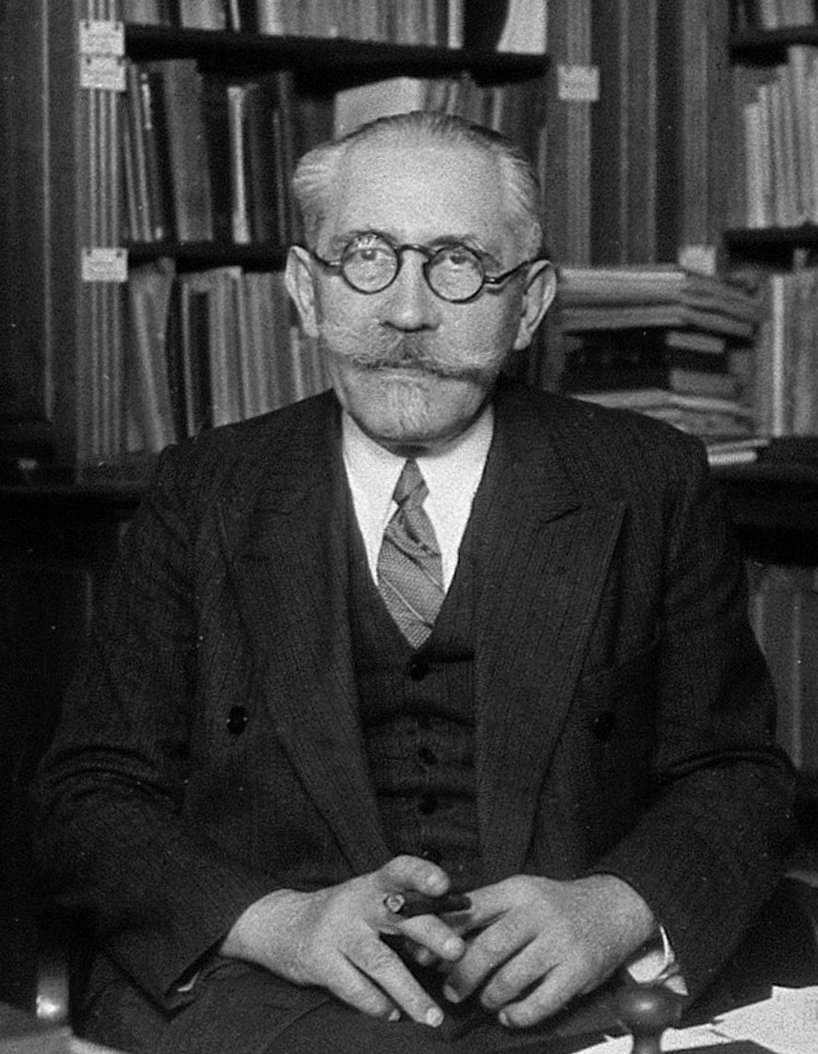


Major scientific contributions
Langevin made influential contributions to the theory of paramagnetism and diamagnetism, introducing ideas that clarify how magnetic moments respond to applied fields. In statistical physics he proposed a stochastic description of a particle's motion that later became known as the Langevin equation; this formulation provided an alternate route to understanding Brownian motion and fluctuations in thermodynamic systems.
Ultrasonics and naval detection
During the First World War and its aftermath Langevin investigated high-frequency sound waves and their interaction with matter. He pioneered practical techniques for producing and detecting ultrasound, work that directly contributed to the technology used for underwater detection. These developments are often cited as early foundations of modern sonar systems, linking laboratory studies of piezoelectricity and echoes to maritime applications.
Teaching, collaborations and public role
Langevin held prominent academic positions in Paris and influenced a generation of students through both research and teaching. He maintained scientific contacts with many leading figures of his time and exchanged ideas with contemporaries such as Albert Einstein, particularly on problems involving diffusion, statistical laws and the atomic hypothesis. Beyond research he was known as a public intellectual who commented on science and society.
Legacy and significance
Langevin's legacy spans theoretical tools, practical devices and pedagogical influence. The Langevin equation and related concepts remain standard in courses on stochastic processes and statistical mechanics. His experimental work helped bridge laboratory physics and engineering applications, illustrating how basic research can lead to technologies with broad practical impact.
Selected themes
- Statistical mechanics: stochastic models and Brownian motion.
- Magnetism: early theoretical descriptions of paramagnetic response.
- Ultrasonics: development of techniques that led to underwater acoustic detection.
Related articles
Author
AlegsaOnline.com Paul Langevin (French physicist) Leandro Alegsa
URL: https://en.alegsaonline.com/art/75148