
Australian Senate (Upper House of the Parliament)
The Australian Senate is the upper chamber of the federal Parliament. It represents states equally, uses proportional voting, and reviews legislation; most senators serve six-year staggered terms.
Overview
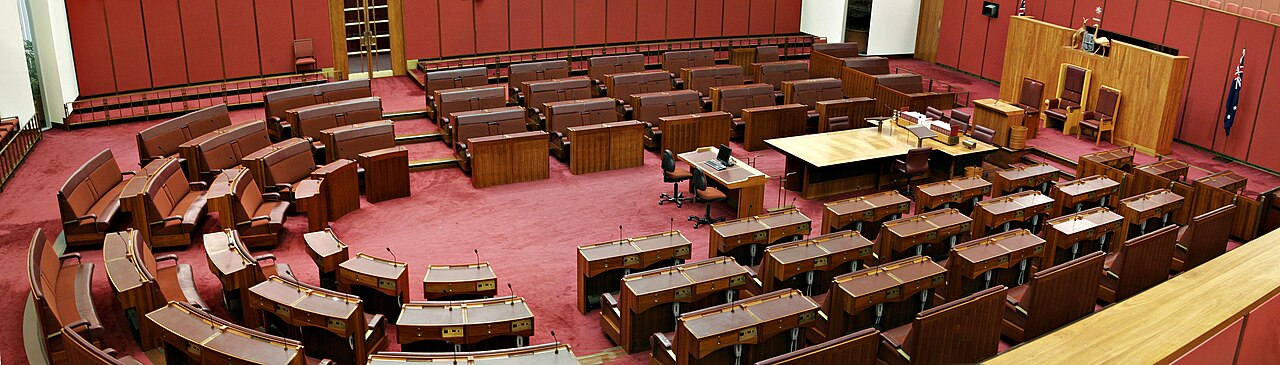
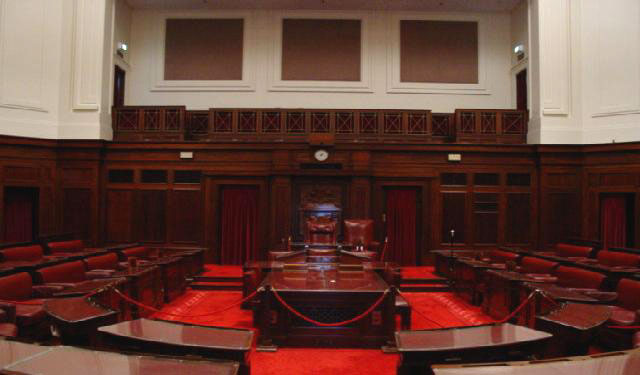
The Australian Senate is the upper house of the federal legislature and one of two chambers that make up the Parliament of Australia. Established by the Constitution, it is intended to represent the interests of the states within the national law‑making process. The lower chamber is the House of Representatives, which forms government; the two houses must normally agree for legislation to become law.
Image gallery
6 Images



Composition and terms
The Senate comprises 76 senators: twelve from each of the six states and two from each of the two mainland territories, giving a total of 76 members. State senators usually serve staggered six‑year terms, with roughly half the state seats contested at each half‑Senate election. Territory senators hold terms that coincide with House elections and therefore may serve shorter terms. Exceptional procedures such as double dissolutions can shorten terms for all senators.
Electoral system
Senators are chosen by proportional representation using the single transferable vote, a system that allows multiple parties and independents to win seats in a multi-member electorate. This voting method tends to produce a chamber where smaller parties and independents can hold the balance of power, influencing legislation and negotiations between the government and non-government groups.
Powers and functions
The Senate reviews, amends and can reject bills passed by the lower house. While money bills are required to originate in the House of Representatives, the Senate can still debate and vote on appropriation and supply measures. The chamber has extensive committee systems that examine legislation, government administration and public policy, giving it a strong role in scrutiny and oversight. Historically, the Senate's ability to block supply has been a significant constitutional and political factor.
History and notable aspects
The Senate was created at federation in 1901 to protect state interests within the federal system by providing equal state representation regardless of population. Over time its powers, electoral rules and role in government formation have evolved. The chamber is presided over by the President of the Senate and contains a range of standing and select committees that conduct inquiries and hearings into public matters.
Practical importance and distinctions
- Equal state representation: each state sends the same number of senators, balancing populous and less populous regions.
- Proportional representation: fosters multi-party representation and often puts minor parties in a decisive position.
- Legislative review and oversight: committees and question time enhance accountability.
- Constitutional role: the Senate's powers and limits are defined by the Constitution and clarified by practice and court decisions.
For summaries of current membership, procedures and recent reforms consult official resources on the House and Senate arrangements and parliamentary guides at authoritative sites.
Related articles
Author
AlegsaOnline.com Australian Senate (Upper House of the Parliament) Leandro Alegsa
URL: https://en.alegsaonline.com/art/7512