
Parvin E'tesami — Iranian poet (1907–1941)
Parvin E'tesami was a prominent 20th-century Iranian poet who wrote in Persian. Her concise, allegorical verse addressed moral and social issues; selections were translated into English in 2000.
Parvin E'tesami (born March 17, 1907 – died April 5, 1941) was an influential Iranian poet who wrote in Persian. Daughter of the writer Yosuf E'tesami, she began composing poems in childhood and is widely regarded as one of Iran's most important twentieth-century women poets. Her career was relatively short, but her work has had lasting presence in Persian letters.
Image gallery
4 Images

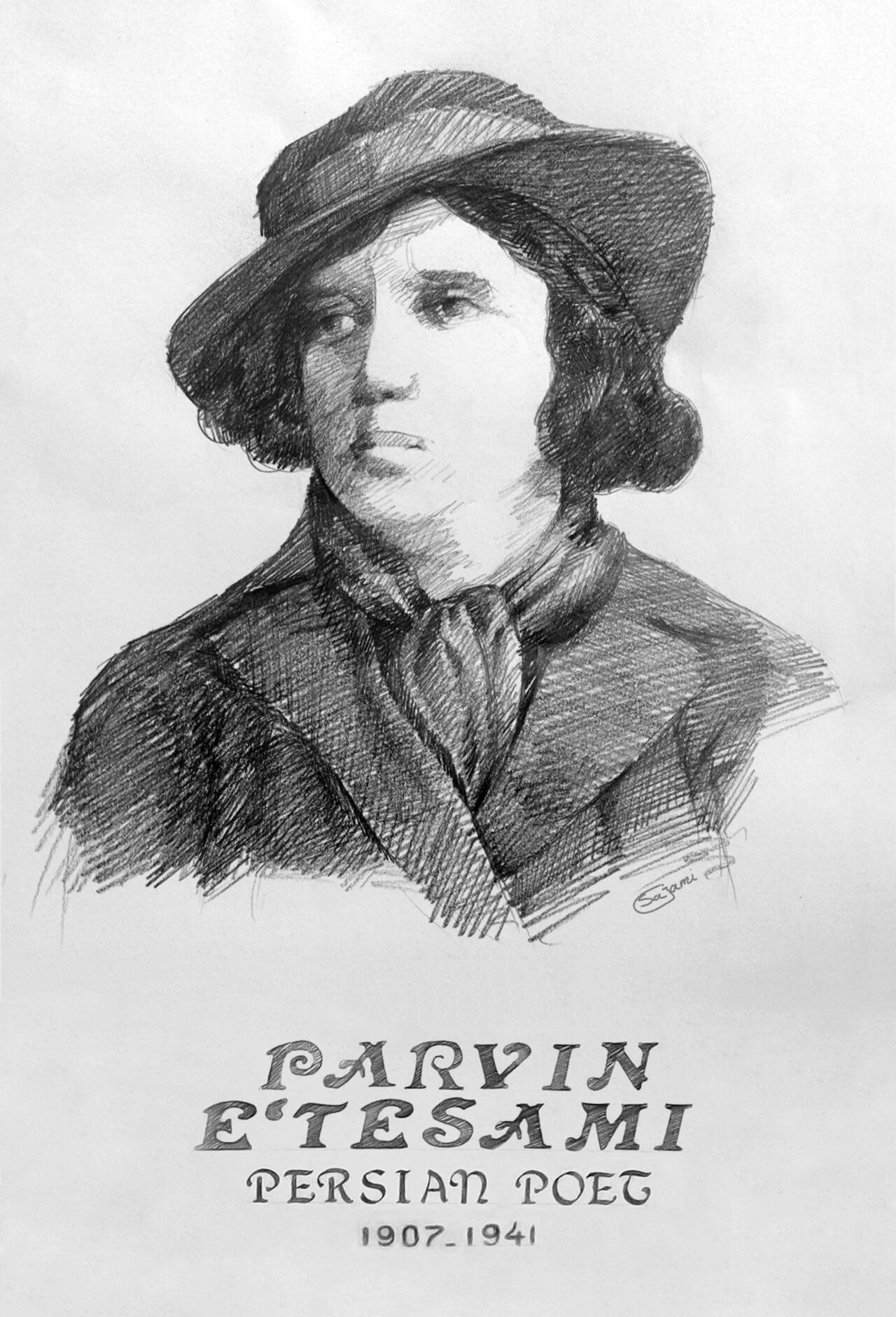

Life and background
Born into an educated household, Parvin received encouragement from her family and began writing at an early age. She published poems while still young and became known for the clarity of her voice and the moral seriousness of her subjects. Though she died in her mid-thirties, contemporaries and later readers recognized her facility with language and her ability to shape compact, pointed poems.
Style and themes
Parvin's poetry is notable for its use of allegory, personification and poetic dialogue. She often lets animals, objects or abstract concepts speak, using these voices to examine ethical questions, social inequalities and human conduct. Her lines combine elements of the classical Persian tradition with a direct, didactic tone: the result is verse that is formally attentive yet accessible, concerned with justice, compassion and responsibility.
Legacy and translations
Her poems have been collected in Persian anthologies and are frequently read and studied in Iran. Parvin's work has also attracted international attention: a modern English selection was translated by Alladin Pazargadi and published in 2000, helping to introduce her poems to readers who do not read Persian. Scholars and poets note her influence on later generations, particularly as a model of a sustained female literary voice within a modernizing literary culture.
Notable facts
- She began writing at about nine years old and was mentored by her father.
- Her style marries classical Persian poetic elements with a modern moral outlook.
- English-language readers can find selections translated (for example the 2000 translation by Alladin Pazargadi, linked as an English translation).
Related articles
Author
AlegsaOnline.com Parvin E'tesami — Iranian poet (1907–1941) Leandro Alegsa
URL: https://en.alegsaonline.com/art/74873