
Parasite (2019 film)
Parasite is a 2019 South Korean black comedy-thriller directed by Bong Joon-ho. Widely praised for its social satire and filmmaking, it won major awards including the Academy Award for Best Picture.
Parasite is a 2019 South Korean film directed and co-written by Bong Joon-ho. Blending dark humor and suspense, the movie examines social class, inequality and family dynamics through a tightly plotted story. The original Korean title appears as 기생충 (Hangul), shown in traditional characters as 寄生蟲 (Hanja) and romanized as Gisaengchung. Critics commonly describe its tone as a black comedy with elements of psychological thriller.
Image gallery
6 Images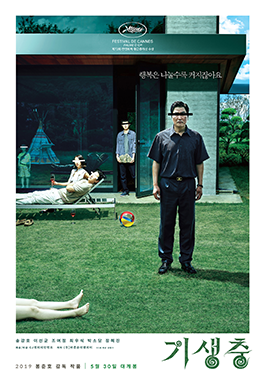




Plot and themes
At its core the film tells of two families from opposite ends of Seoul's economic spectrum. Without revealing key plot points, the story follows how carefully orchestrated deception and the desire for upward mobility expose moral compromises, power imbalances, and the instability of apparent security. Parasite uses genre shifts — from comedic to tense to tragic — to unsettle the audience and emphasize the unpredictability of economic struggle. Recurrent themes include space and architecture (how homes and basements divide lives), smell and intimacy as markers of class, and the ways survival strategies become ethically fraught under pressure.
Cast and characters
- Song Kang-ho as a central figure leading the lower-income family.
- Lee Sun-kyun and Cho Yeo-jeong as members of the wealthy household.
- Choi Woo-shik (actor link) and Park So-dam among the younger ensemble.
Production and release
The film premiered at the Cannes Film Festival on 21 May 2019, where it won the festival's top honor, the Palme d'Or, marking a milestone for South Korean cinema. Bong's direction emphasizes meticulous production design and camera movement to draw contrasts between interior and exterior worlds. The film achieved strong box office results, grossing around $131 million worldwide and becoming one of South Korea's most successful releases, often described as the third highest-grossing domestic film.
Reception and legacy
Parasite received widespread critical acclaim for its screenplay, performances and formal inventiveness. At major international awards it became especially notable: it received six Academy Award nominations and won several top honors, including the Best Picture trophy — the first non-English language film to do so — and recognition for Best Picture and Best Director. It also earned awards at the Golden Globes and other ceremonies. Beyond prizes, Parasite stimulated conversations about class representation in cinema and proved influential for filmmakers interested in mixing tones and social commentary.
Notable facts
- The film is frequently cited in discussions of contemporary world cinema for crossing cultural and language barriers.
- Its combination of humor and horror shows a deliberate refusal to fit neatly into a single genre.
- Parasite's international success expanded global interest in South Korean film and television.
For further reading on the director's work, production design, and critical responses, follow official festival and industry sources linked in coverage and archives.
Related articles
Author
AlegsaOnline.com Parasite (2019 film) Leandro Alegsa
URL: https://en.alegsaonline.com/art/74587
Sources
- indiewire.com : "2019 Critics Poll: The Best Films and Performances According to Over 300 Critics From Around the World"
- thewrap.com : "'Parasite' Sets New Record for Director Bong Joon-Ho at Indie Box Office"
- nbcnews.com : "'Parasite' makes history with Oscar nominations"