
Paramyxovirus
Paramyxoviruses are enveloped, negative-sense RNA viruses in the family Paramyxoviridae that cause a range of respiratory and systemic diseases in humans and animals, including measles, mumps and RSV.
Overview
Paramyxoviruses are a group of enveloped viruses classified in the family Paramyxoviridae. The name reflects Greek roots such as para- (beside, beyond) and virus (poison), and denotes a set of related pathogens that share common structural and genetic features. They belong to the order Mononegavirales and are important causes of disease in people and many animals.
Image gallery
5 Images


Structure and genome
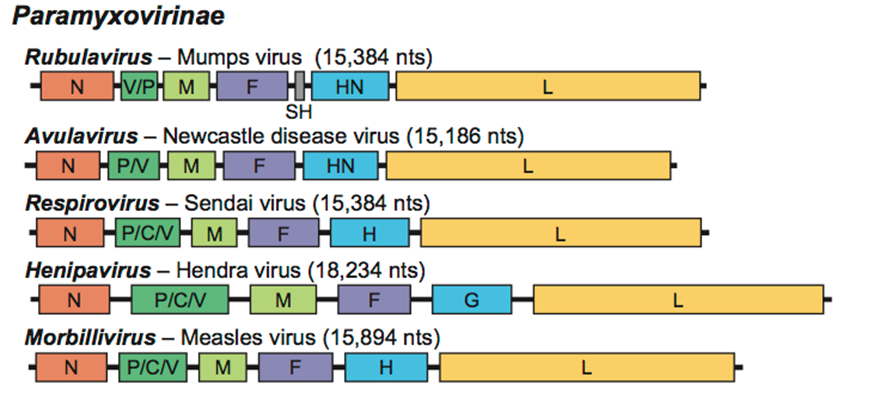
Members of this group are enveloped and typically display a pleomorphic or roughly spherical appearance. Internally they contain a helical nucleocapsid that packages a single, nonsegmented, negative-sense single-stranded RNA genome. The genome encodes a limited set of core proteins, including the RNA-dependent RNA polymerase, nucleoprotein, matrix protein and surface glycoproteins responsible for attachment and fusion.
Replication and cell entry
Paramyxoviruses enter host cells when an attachment glycoprotein binds cellular receptors and a separate fusion protein mediates merging of viral and cellular membranes. After entry the viral polymerase transcribes and replicates the genome in the cytoplasm. Infection often promotes formation of multinucleated cells (syncytia), a hallmark seen with several genera in this family.
Diseases and examples
These viruses are associated with a broad spectrum of clinical syndromes in humans and animals, ranging from mild respiratory illness to severe systemic disease. Notable human pathogens include:
- Measles virus — a highly contagious systemic illness that can cause severe complications.
- Mumps virus — classically causes parotitis and occasionally complications such as orchitis or meningitis.
- Respiratory syncytial virus (RSV) — a major cause of bronchiolitis and pneumonia in infants and the elderly.
- Human parainfluenza viruses — important causes of croup and other respiratory infections.
- Zoonotic examples such as Nipah and Hendra viruses — capable of causing severe and sometimes fatal disease after spillover from animal hosts.
Collectively these agents are responsible for many human and animal diseases worldwide and are a focus of public health surveillance.
Prevention, control and notable facts
Effective vaccines exist for some paramyxoviruses — for example, measles and mumps are vaccine-preventable and are commonly included together in combined immunization programs. For other members, such as RSV, prevention strategies include monoclonal antibodies for high-risk infants and ongoing vaccine development. Infection control relies on routine respiratory precautions, surveillance and, where applicable, vaccination campaigns.
History and classification
Paramyxoviruses were recognized during the expansion of modern virology in the mid-20th century and have since been subdivided into multiple genera based on genetic and antigenic characteristics. Molecular diagnostics and genome sequencing now play a central role in identifying strains, tracing outbreaks and studying virus evolution. Because several paramyxoviruses can jump between species, they remain an important subject of One Health approaches to infectious disease research.
Related articles
Author
AlegsaOnline.com Paramyxovirus Leandro Alegsa
URL: https://en.alegsaonline.com/art/74559