
Papal name (regnal name of the pope)
The papal name is the regnal name that a newly elected pope adopts. It signals spiritual priorities, honors predecessors or saints, and becomes his public identity in church and history.
Overview
A papal name, also called a regnal name, is the name taken by a pope at the moment of his election. The chosen name becomes the principal way the pontiff is known in public life, official acts, and historical records. It often appears with a Roman numeral when the same name has been used by earlier popes.
Image gallery
3 Images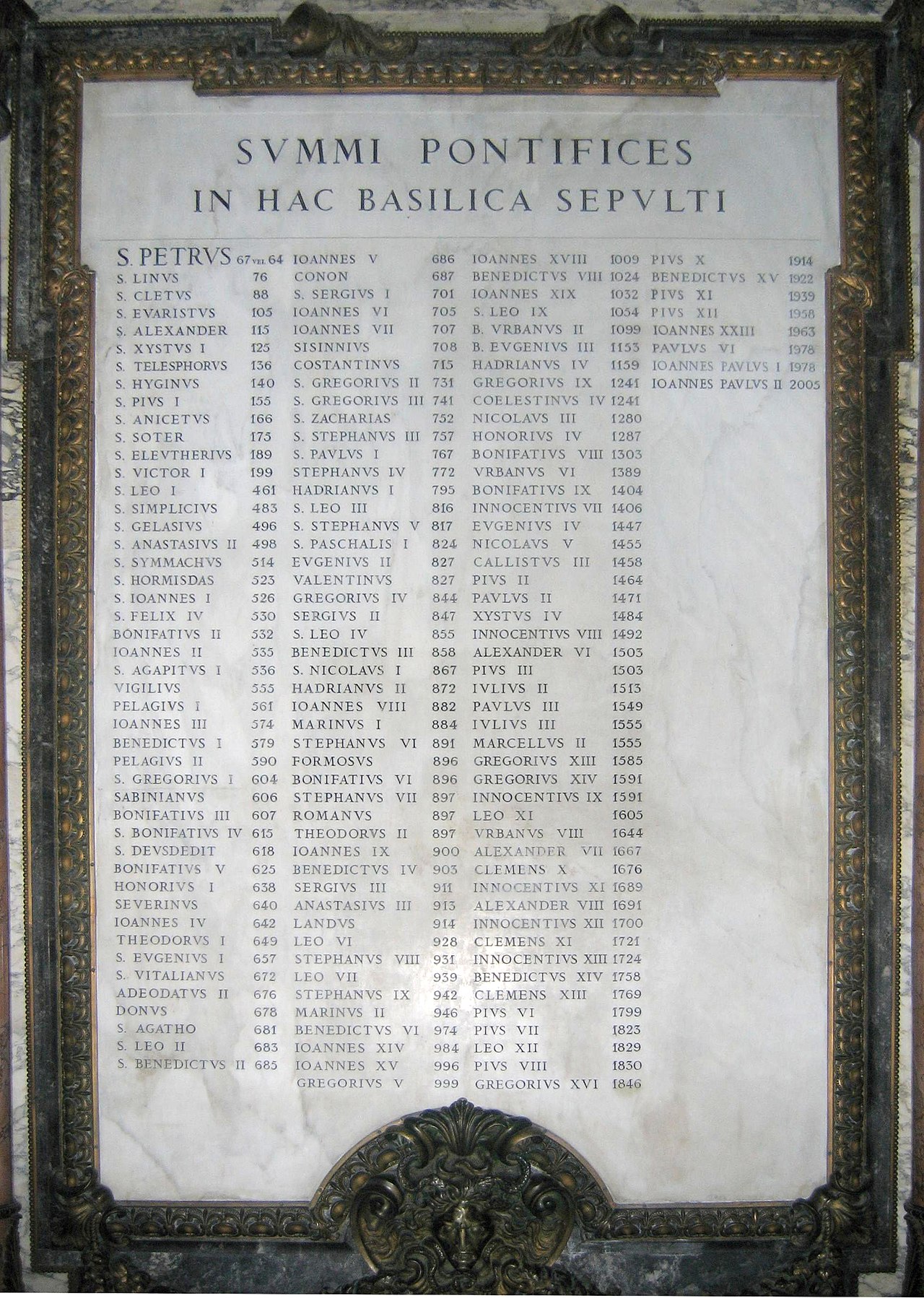

How the name is chosen
The selection is made immediately after election and is usually announced to the faithful. The new name may reflect a range of intentions: to honor a particular saint or predecessor, to signal continuity or renewal, or to express a programmatic emphasis for the pontificate. The pope’s baptismal name remains part of his personal identity but is generally superseded in formal and liturgical use by the chosen papal name.
History and development
In the early centuries of the church, most bishops of Rome used their birth names. Over time, changing the name at election became more common and then customary. By the medieval period taking a new name on becoming pope was an established practice. The custom reflects wider historical patterns in which rulers and religious leaders adopt new names to mark a change in role or mission.
Conventions and examples
- Common papal names include John, Paul, Benedict, Pius and Gregory, many repeated across centuries.
- The first pope to use a name is not given an ordinal; successors add Roman numerals (e.g., Paul VI).
- Occasional, noteworthy choices highlight intent—such as combining names or introducing a name used for the first time.
Significance and usage
The papal name serves practical and symbolic roles. It identifies the pontiff in official documents, encyclicals and liturgical celebrations, and it communicates theological or pastoral emphases both to Catholics and to the wider world. Historians and commentators often read a pope’s chosen name as a cue to his priorities, though the full significance unfolds through his actions as well as the name itself.
Related articles
Author
AlegsaOnline.com Papal name (regnal name of the pope) Leandro Alegsa
URL: https://en.alegsaonline.com/art/74430
Sources
- simple.wiktionary.org : Emblem
- msnbc.msn.com : "What’s in a pope’s name?"
- newadvent.org : "List of Popes,"
- smh.com.au : "How Pope gets named,"