
Owens Lake
A largely dry lakebed in California's eastern Sierra Nevada, Owens Lake was mostly drained by early 20th‑century water diversions. It is known for severe dust pollution, restoration efforts, and regional ecological importance.
Owens Lake lies on the floor of Owens Valley in eastern California, south of the town of Lone Pine and at the eastern base of the Sierra Nevada. Once a sizable saline lake fed by mountain streams, it is best known today for being largely dry after upstream diversion of inflow in the early 20th century. The change transformed the lakebed into an extensive alkali flat that became a regionally important source of airborne dust and a focal point for environmental restoration.
Image gallery
8 Images

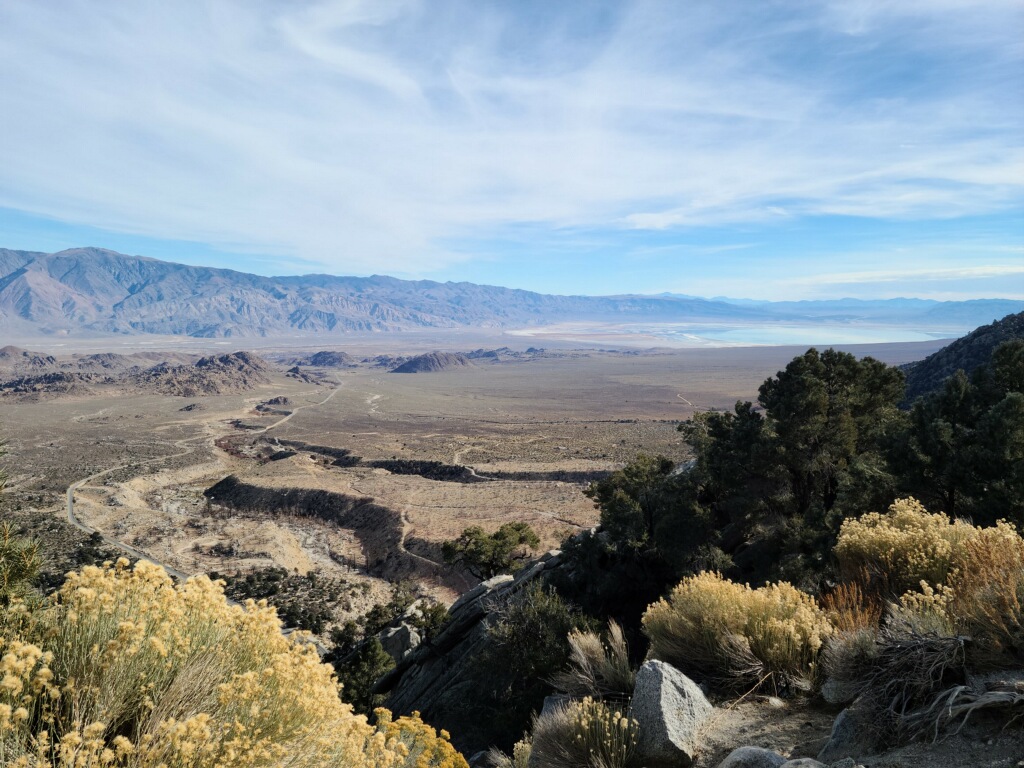


Physical characteristics and environment
The former lake occupies a broad, shallow basin. When water was present it supported saline and alkali habitats; once exposed, the lakebed developed fine silty sediments that are easily lifted by wind. Remnant wetlands and managed shallow flood areas now appear in parts of the basin, creating a mosaic of dry playa, salt crust, and seasonal shallow ponds that attract migratory birds and other wildlife.
History and human impact
In the early 1900s, regional water developments diverted much of the runoff that historically fed Owens Lake. As a result, the lake receded and by the 1920s large tracts of the bed were exposed. The loss of open water altered local climate, vegetation, and traditional land uses. The drying of the lake also contributed to a long-standing conflict between local communities and urban water interests, a topic often discussed in histories of California water policy.
Dust pollution and mitigation
With its loose, fine sediments, the dry lakebed became a major source of windblown particulate matter (PM), contributing to regional air-quality problems. In response to public-health and regulatory pressure, agencies and water managers implemented a range of mitigation methods to reduce dust emissions. Common approaches include:
- Controlled shallow flooding of selected areas to stabilize the surface.
- Managed vegetation and planting of salt-tolerant species to bind soils.
- Gravel or rock armoring of the most problematic zones.
- Mechanical crusting and other surface treatments to reduce erodibility.
These measures have restored water to portions of the former lake and reduced dust-generating surfaces, while creating habitat that supports birds and other wildlife. Discussions of trade-offs—water use, habitat value, and public health—continue among stakeholders.
Importance and notable facts
Owens Lake is often cited in discussions of Western water management as an example of how large-scale diversions can transform ecosystems and communities. The basin today is a mixture of managed wetlands, salt flats, and remediation projects that illustrate techniques for dust control and ecological restoration. For location details and maps, see Owens Lake location and regional information from Inyo County resources. Broader geological context is available through materials on the Basin and Range Province, and historical accounts of water diversion and restoration appear at related archives and studies.
Related articles
Author
AlegsaOnline.com Owens Lake Leandro Alegsa
URL: https://en.alegsaonline.com/art/73773