
Out (baseball): Definition, common plays, and significance
In baseball, an out removes a batter or runner from play; three outs end a half-inning. This article explains how outs occur, common types, special rules, and why outs shape strategy.
An out in baseball is a formal removal of a batter or baserunner from play. Outs are the primary means by which a defensive team ends an offensive team's turn at bat: when the fielding team records three outs in a half‑inning, the teams switch roles. Outs can be recorded by actions involving the batter or any runner, and many rules and tactical situations revolve around producing or avoiding them.
Image gallery
1 Image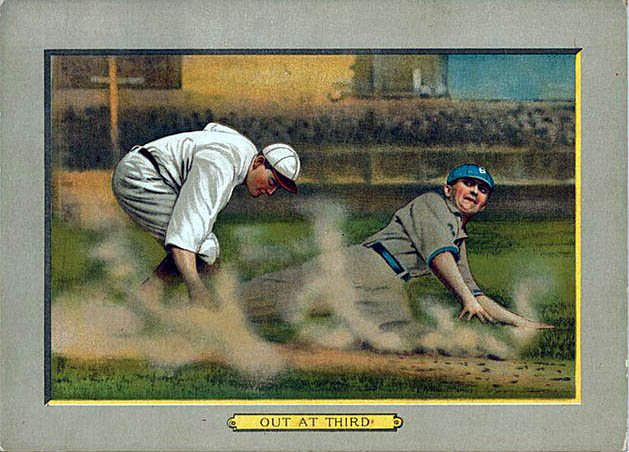
Common ways an out is recorded
- Fly out — a batted ball that is caught by a fielder before it touches the ground. This includes routine catches, foul pops, and line drives. See official guidance: catching rules.
- Strikeout — the batter accumulates three strikes during an at‑bat, typically by swinging and missing or failing to swing at good pitches.
- Force out — a runner is required to advance to the next base and a fielder touches that base while in possession of the ball before the runner arrives.
- Tag out — a runner who is not on a safe base is touched with the ball (or the glove that holds it) by a fielder.
- Ground‑ball outs and double plays — grounders can produce one or more outs if fielded and thrown to the proper base in time; two outs on one play are a double play.
There are also less common or technical outs, such as the appeal play (when the defense asserts a baserunning infraction like failing to tag up) and the infield fly rule, which protects baserunners in certain high‑risk situations.
Special and technical situations
Outs can arise from rule interpretations and procedural actions: a batter is out on a called third strike even if the catcher drops the ball under some conditions; a runner can be called out for interference; and batters may be declared out for illegal actions. Umpires and replay review can be involved in confirming close plays. For additional context and examples, consult general rules: baseball rules overview.
History, strategy, and significance
The three‑out half‑inning format is central to baseball’s structure and strategy. Managers construct defensive alignments, pitching changes, and batting orders to limit opponents to three outs before they can score. Conversely, offensive strategy (stealing bases, bunting, hit‑and‑run) often aims to avoid or delay outs. Defensive skill in producing outs efficiently is a core measure of a team’s success.
Notable distinctions and practical notes
Outs are recorded against the team on offense, not as individual penalties in most cases; a batter is credited with an at‑bat in many outs, which affects statistics. Unique plays such as triple plays (three outs on one continuous play) are rare and notable. For rule particulars and historical variants consult a rule compendium: detailed rules or general resources: learning guide.
Related articles
Author
AlegsaOnline.com Out (baseball): Definition, common plays, and significance Leandro Alegsa
URL: https://en.alegsaonline.com/art/73637