
Ouémé Department, Benin
Ouémé is a coastal department in southeastern Benin centered on Porto-Novo. It features riverine and lagoon landscapes, nine communes, a mixed economy of agriculture and fishing, and a long cultural history.
Overview
Ouémé is one of the twelve administrative departments of Benin, located in the southeastern part of the country along the Gulf of Guinea. Its regional capital is Porto-Novo, which serves as the official national capital. The department takes its name from the Ouémé River, a major watercourse that shapes the local landscape and economy.
Image gallery
3 Images

Geography and environment
The territory is dominated by low coastal plains, lagoons, river channels and floodplains formed by the Ouémé River and its tributaries. Mangrove belts and wetlands are common in the southern reaches, while the northern reaches give way to agricultural plains. Seasonal flooding and coastal erosion are recurring environmental issues that influence settlement patterns and land use.
Administration and communes
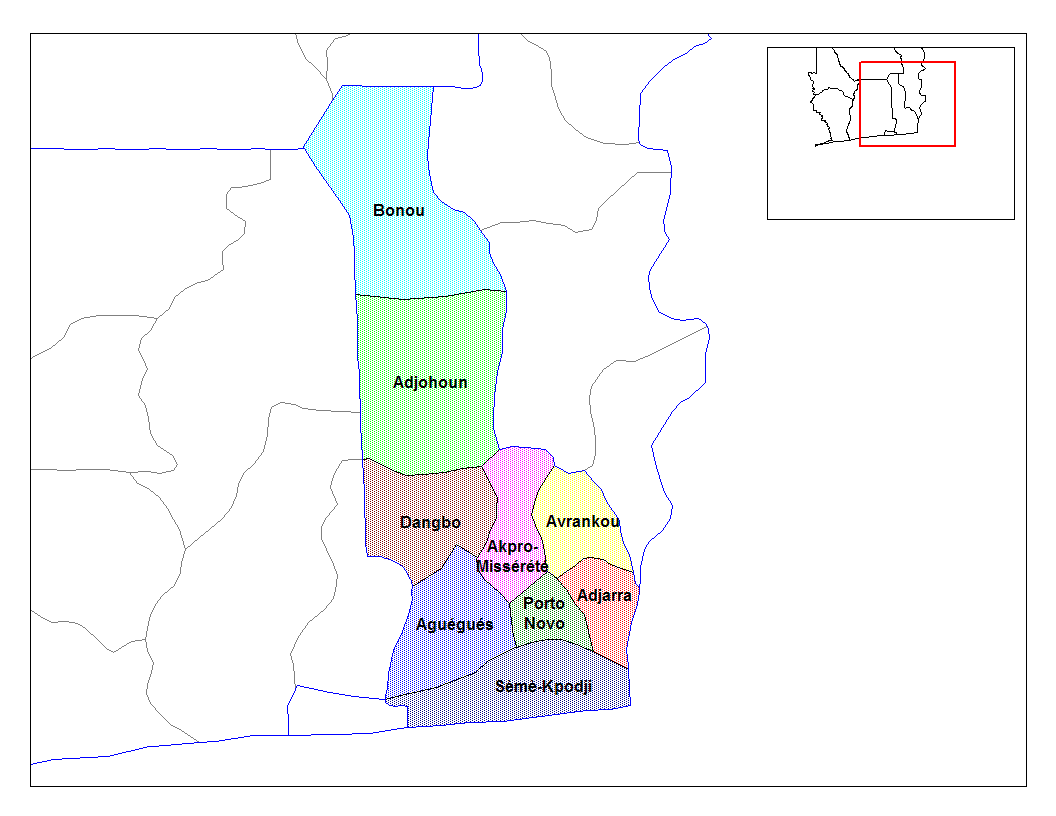
Ouémé is subdivided into nine communes that serve as the primary local governments. These communes vary from urban centers to rural districts and include important market towns and fishing villages. The communes are:
- Adjarra
- Adjohoun
- Aguégués
- Akpro-Missérété
- Avrankou
- Bonou
- Dangbo
- Porto Novo
- Sèmè-Kpodji
History and administrative changes
Ouémé has long been an inhabited corridor because of its fertile floodplains and access to waterways. During the colonial and postcolonial eras, Porto-Novo emerged as an administrative and cultural center. In 1999 the department underwent an administrative reorganization when its northern portion was separated to create the Plateau Department. That change adjusted boundaries and local governance but left Ouémé as a compact coastal department centered on its riverine network.
Economy, culture and significance
The local economy combines smallholder agriculture, artisanal and commercial fishing, market trade and services concentrated in Porto-Novo and other towns. Common crops include staples grown on the floodplain and in upland fields, while lakes and estuaries support fish and shellfish harvesting. The department is culturally diverse, with long-standing traditions, languages and festivals that attract regional visitors and sustain local identity.
Notable facts and challenges
Ouémé is notable for hosting the country’s constitutional capital while neighboring Cotonou remains the main commercial hub. Challenges include managing flood risk, protecting mangrove and wetland habitats, and balancing urban growth with the needs of rural communities. Ongoing development efforts focus on infrastructure, sustainable fishing and resilient agriculture to support livelihoods in the face of environmental change.
Related articles
Author
AlegsaOnline.com Ouémé Department, Benin Leandro Alegsa
URL: https://en.alegsaonline.com/art/73588