
Ouachita Mountains
A low, east–west mountain range spanning west-central Arkansas and southeastern Oklahoma, notable for folded Paleozoic geology, mixed pine–oak forests, recreation, and unique regional ecology.
The Ouachita Mountains form a compact, predominantly east–west trending highland region centered in west-central Arkansas and extending into southeastern Oklahoma. Unlike the north–south orientation of many American ranges, the Ouachitas consist of parallel ridges and broad valleys rather than jagged alpine peaks, making them distinct in North American physiography.
Image gallery
10 Images


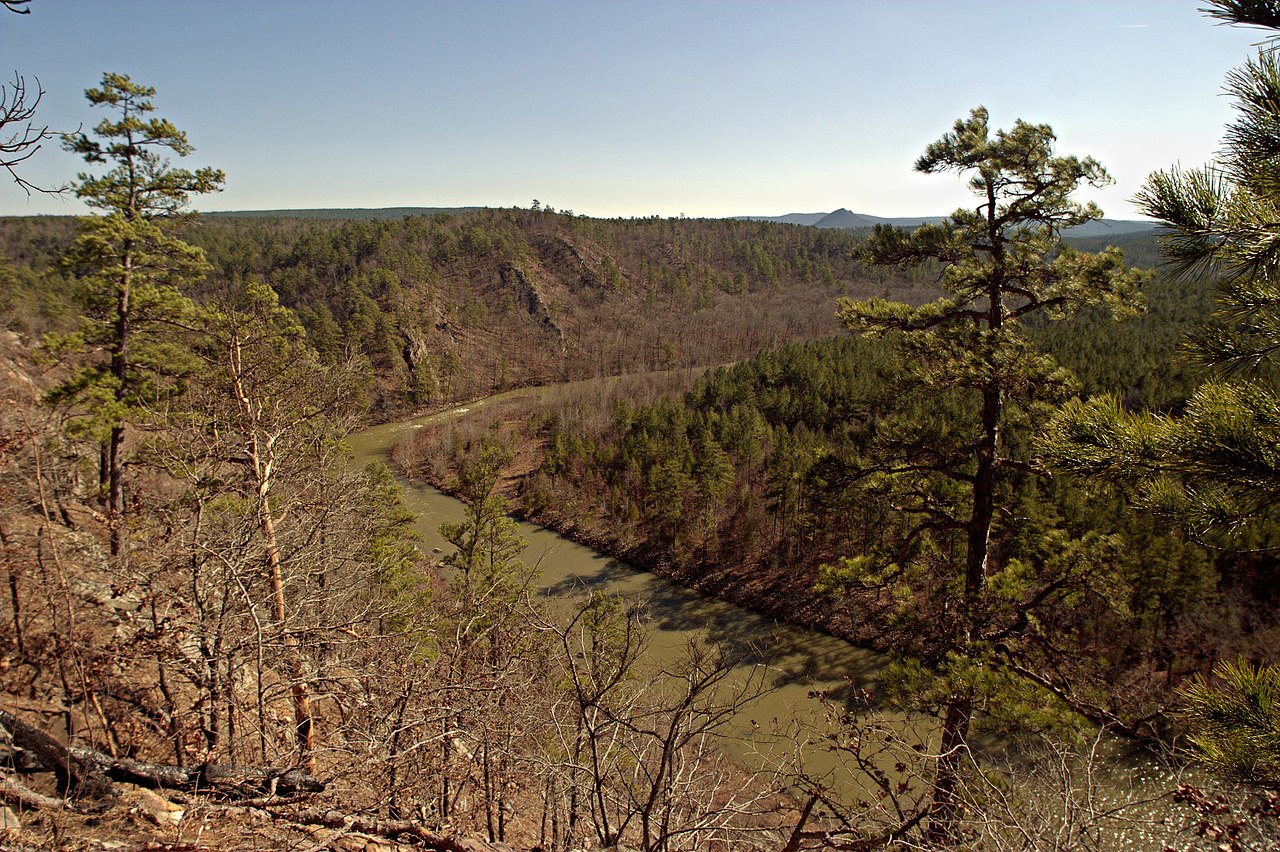





Geology and landscape
These mountains are the product of an ancient mountain-building event that folded and uplifted older sedimentary rock layers during the Paleozoic era. The terrain is marked by resistant ridges of sandstone and quartzite, intervening shale valleys, and rounded summits. Erosion has produced a subdued relief and numerous streams that drain into regional river systems.
Ecology and vegetation
Vegetation is dominated by mixed pine and oak forests interspersed with hardwoods, glades, and riparian corridors. The mosaic of habitats supports a variety of wildlife and some localized plant species. Forested slopes and sheltered hollows provide important wintering and breeding areas for birds and mammals, and several rivers rising in the Ouachitas sustain aquatic diversity downstream.
History and human use
Indigenous peoples used the Ouachita region for travel and resources long before European settlement. Later activities have included timber harvesting, small-scale mining, and the development of towns and recreational facilities. The landscape is valued today for outdoor recreation, scientific study, and as a source of scenic and cultural heritage.
Recreation and conservation
The Ouachitas contain a mix of protected lands, state parks, and trails that attract hikers, campers, anglers, and scenic drivers. Long-distance trails and designated scenic byways offer access to overlooks, waterfalls, and historic sites. Conservation efforts focus on managing forest health, protecting watersheds, and balancing recreation with timber and local economies.
Notable areas
- Ouachita National Forest and its managed recreation areas
- Designated scenic routes and overlooks such as the Talimena corridor
- Long-distance hiking opportunities like the Ouachita National Recreation Trail
- Hot springs and state parks that interpret regional natural and cultural history
As one of the few major east–west mountain systems in the United States, the Ouachitas are significant for their geology, relatively intact forests, and recreational value. Researchers study the range to better understand ancient tectonic processes and the ways in which long-settled landscapes are managed for multiple uses.
Related articles
Author
AlegsaOnline.com Ouachita Mountains Leandro Alegsa
URL: https://en.alegsaonline.com/art/73569