
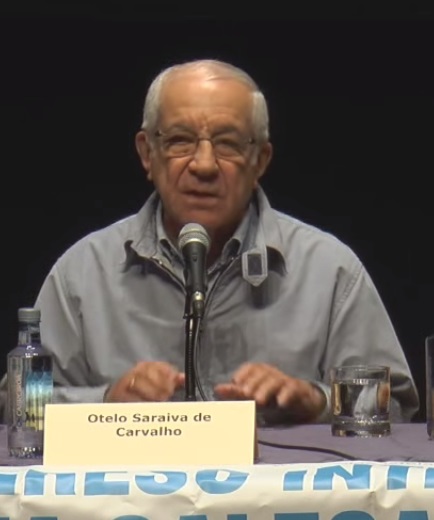
Otelo Saraiva de Carvalho: Portuguese military strategist and revolutionary
Portuguese military officer and planner of the 1974 Carnation Revolution. A central figure during Portugal’s transition, later a political candidate and a controversial public figure until his death in 2021.
Overview
Otelo Nuno Romão Saraiva de Carvalho (31 August 1936 – 25 July 2021) was a Portuguese military officer best known as the chief planner of the Carnation Revolution of 25 April 1974. A career army officer by background, he became one of the most prominent personalities of Portugal’s transitional period from authoritarian rule to democracy and remained a polarizing public figure through later political campaigns and controversies.
Image gallery
6 Images



Early life and military career
Born in Vila Franca de Xira, Otelo trained and served in the Portuguese Armed Forces. As a young officer he rose to prominence within the army’s engineering and operations branches. His military experience and organizational skills positioned him to play a leading role in the coordinated military operation that ended decades of authoritarian rule in Portugal.
Role in the Carnation Revolution
Otelo is widely credited as the principal strategist behind the April 25 operation that overthrew the Estado Novo regime. Working with other dissident officers and civilian allies, he devised the timetable and manoeuvres that allowed military units to seize key points in Lisbon and elsewhere while minimizing armed confrontation. The largely peaceful nature of the change — symbolized by civilians placing carnations into soldiers’ gun barrels — made the event internationally renowned as the Carnation Revolution.
Revolutionary leadership and politics
In the months after the uprising, Otelo held influential positions within revolutionary command structures and helped to shape the chaotic and contested Processo Revolucionário Em Curso (ongoing revolutionary process). He later sought elected office, standing as a candidate for President of Portugal in both 1976 and 1980, campaigns that attracted attention but did not result in election.
Later life, controversies and legacy
Otelo’s prominence during the revolutionary period made him a subject of both admiration and criticism. He was associated with left-wing currents and faced political marginalization as Portugal settled into parliamentary democracy. In later decades he was involved in public debate and at times subject to legal and political controversy; assessments of his career remain mixed, with supporters praising his role in ending dictatorship and critics questioning some of his actions during the revolutionary years.
Notable facts
- Full name: Otelo Nuno Romão Saraiva de Carvalho. See military background as a military officer.
- Principal strategist of the 25 April operation — often described as the chief strategist of the Carnation Revolution.
- The events unfolded in Lisbon and across Portugal on 25 April 1974.
- Two unsuccessful presidential bids in 1976 and 1980 linked him to post-revolutionary politics.
- He died on 25 July 2021 in hospital from heart failure, aged 84.
Otelo Saraiva de Carvalho remains an important figure in Portuguese 20th-century history: a skilled military planner whose actions helped end an authoritarian regime, and a controversial actor in the turbulent years that followed as Portugal built a democratic order.
Related articles
Author
AlegsaOnline.com Otelo Saraiva de Carvalho: Portuguese military strategist and revolutionary Leandro Alegsa
URL: https://en.alegsaonline.com/art/73491
Sources
- portstudies.umassd.edu : "Otelo Saraiva de Carvalho"