
Osborne's Bull: Spain's Iconic Roadside Silhouette
A concise account of Osborne's Bull — its origin as a 1956 advertisement, physical design, cultural adoption as a Spanish emblem, and the debates over its status and preservation.
Overview
The Osborne's bull is a large black silhouette of a fighting bull that began as a roadside advertisement in Spain. Commissioned in 1956 for a Spanish sherry and brandy company, the image was originally intended to mark routes and promote the product. Over decades the stark profile transcended its commercial purpose and is widely recognized today as a popular visual emblem associated with Spain.
Image gallery
6 Images


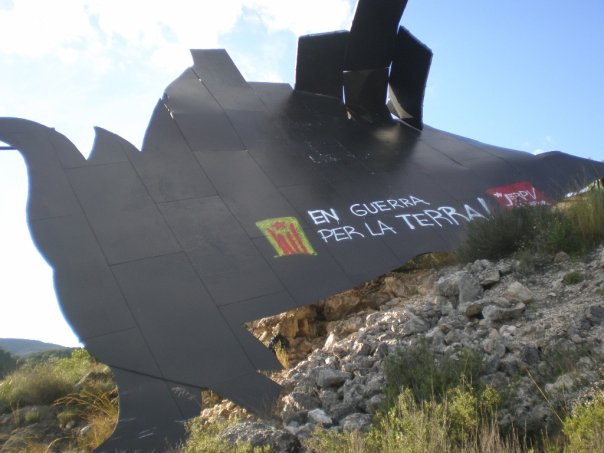

Design and construction
The typical figure is rendered in semi-profile and painted solid black to create an immediate, high-contrast shape against the skyline. Larger roadside versions are constructed from multiple metal plates assembled on a steel framework; many surviving examples stand at roughly 14 metres in height and are composed of dozens of welded plates. Smaller reproductions and graphic uses keep the same simplified silhouette, which helps the motif remain legible at great distances.
History and development
Introduced in 1956 as an advertising device for the Osborne company (the brand), the bull spent the second half of the 20th century multiplying across highways and prominent sites. As it became a commonplace landmark, the bull was increasingly discussed not just as an advertisement but as a cultural symbol. In later decades legal and civic debates addressed whether the figures should be treated as commercial signs or as objects with broader historical and social meaning (origins and rulings).
Uses, meanings and controversies
Beyond advertising, the silhouette appears on souvenirs, posters and promotional material and is frequently used to evoke Spanish identity in tourism and media. Reactions to the bull vary: some view it affectionately as a national icon, others see it as an emblem tied to contested traditions such as bullfighting, while urbanists sometimes criticize roadside examples as visual clutter. These differing perspectives have produced civic discussions about preservation, removal and reinterpretation (cultural context).
Notable facts
- The figure is intentionally simple, making it effective for long-distance roadside visibility.
- Its journey from commercial logo to cultural symbol illustrates how advertising imagery can gain civic meaning over time.
- Local interest, tourism, artistic appropriation and law have all played parts in its recent history.
Today the Osborne's bull endures as one of Spain's most recognizable silhouettes: part advertising relic, part landmark and part contested national emblem.
Related articles
Author
AlegsaOnline.com Osborne's Bull: Spain's Iconic Roadside Silhouette Leandro Alegsa
URL: https://en.alegsaonline.com/art/73324