
Oriel College, Oxford
Oriel College is a constituent college of the University of Oxford, tracing its origins to 1324. It is noted for medieval architecture, a historic foundation, and debates about its place among Oxford's oldest colleges.
Overview
Oriel College is one of the constituent colleges of the University of Oxford. It traces its institutional origins to 1324 and is commonly cited among a small group of colleges that claim to be the university's oldest foundation. The college's formal legal name is long and ceremonial: "The Provost and Scholars of the House of the Blessed Mary the Virgin in Oxford, commonly called Oriel College, of the Foundation of Edward the Second of famous memory, sometime King of England." The familiar name "Oriel" comes from an oriel — a projecting bay window — that once adorned an early college building.
Image gallery
10 Images


History and origins
Oriel began as a medieval foundation intended to support a small community of scholars. Over succeeding centuries it developed through royal patronage, private benefactions and the gradual accretion of buildings. Like several other Oxford colleges, Oriel's early records are fragmentary, which is why different colleges — notably University College, Balliol College and Merton College — each have arguments for seniority based on different interpretations of foundation dates and continuous operation.
Architecture and college plan
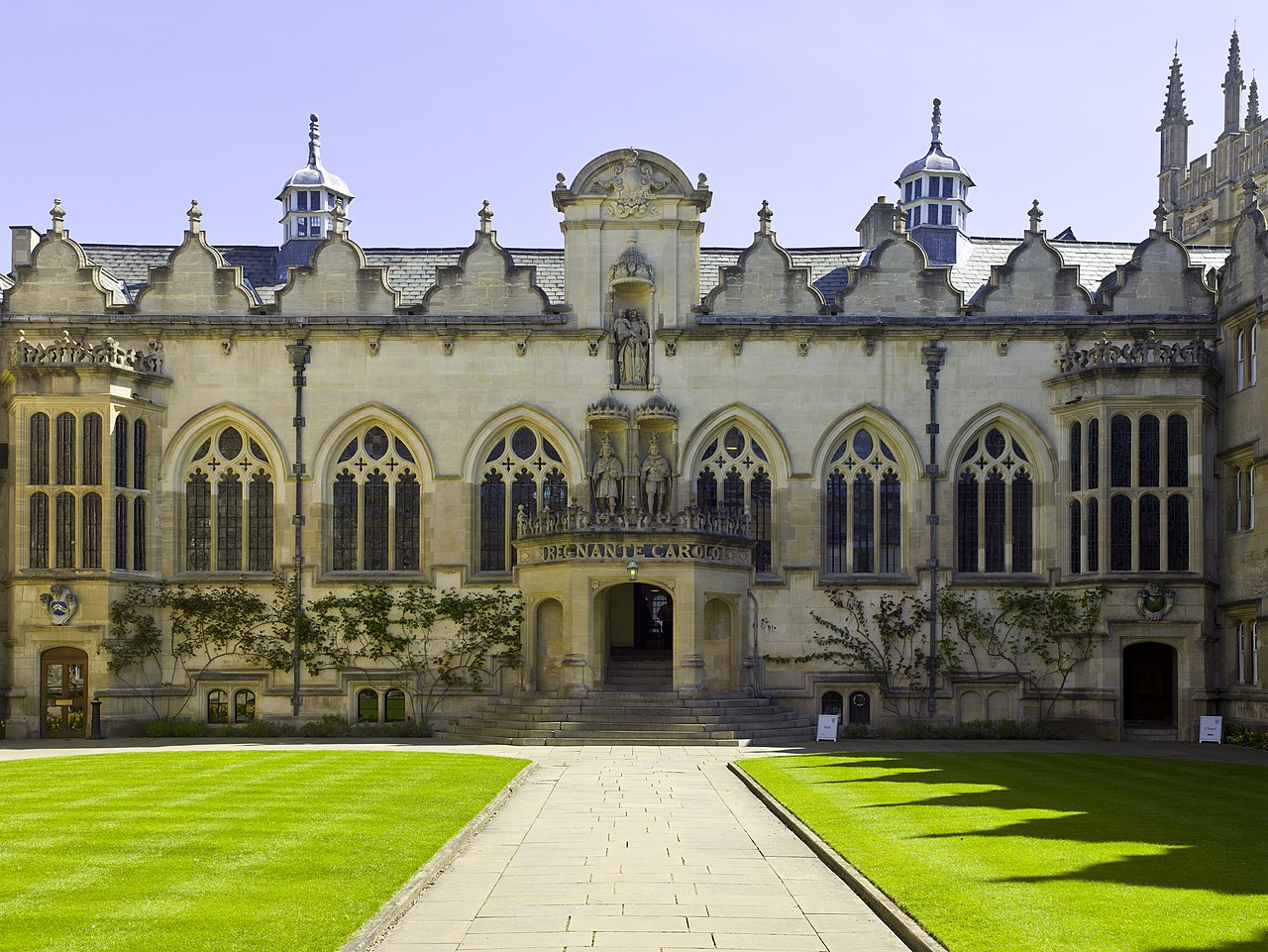
The college preserves a concentration of historic buildings clustered around a series of quadrangles and the college chapel. Its surviving medieval and later stonework, staircases and halls reflect building phases from the Middle Ages to the nineteenth century. The physical layout typically includes residential rooms for students and fellows, a dining hall, the provost's lodgings and communal study spaces. The architectural variety mirrors centuries of repair, extension and changing tastes.
Academic life, traditions and role
As with other Oxford colleges, Oriel combines residential, teaching and social functions. The college supports undergraduates and postgraduates across many disciplines, provides tutorial teaching, and maintains traditions peculiar to its community — ceremonies, formal dinners and historic offices such as the provost. Its small-college environment is intended to foster close academic supervision and collegiate identity alongside university-wide faculties and departments.
Notable developments and contemporary issues
Over its long existence the college has experienced periodic restoration projects, changes in governance, and debates about how to interpret and present its past. In recent years public discussion over the commemoration of contested historical figures has touched Oriel, reflecting a wider reassessment of how colleges handle heritage, memorials and links to imperial history. These conversations have influenced policy decisions and prompted wider engagement between the college, alumni and the public.
Distinctive facts and significance
- Oriel is often highlighted for its claim to great antiquity and for its evocative medieval core.
- The college's ceremonial, legal name preserves references to its medieval foundation and royal association.
- Its architecture and collections document changes in collegiate life from the Middle Ages to the present.
Oriel College remains an active academic community within the University of Oxford, combining historic buildings and traditions with modern teaching and research. For readers seeking institutional details, archives, visitor information or academic offerings, the college maintains published resources and official channels through the broader university network.
Related articles
Author
AlegsaOnline.com Oriel College, Oxford Leandro Alegsa
URL: https://en.alegsaonline.com/art/73119