
A Mathematician's Apology
G. H. Hardy's 1940 essay defending pure mathematics, mixing autobiography, reflections on beauty and usefulness, and thoughts on the creative life of mathematicians.
A Mathematician's Apology is a short, personal essay by the British mathematician G. H. Hardy written in 1940. Rather than a technical textbook, it is a reflective piece about the nature of mathematics, the life of a working mathematician, and the reasons why pure mathematics has value beyond immediate practical application.
Image gallery
3 Images
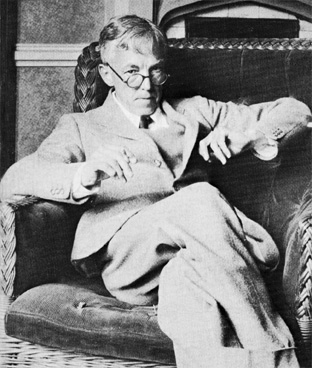

Contents and central themes
The book is organized as a series of candid chapters that combine autobiographical remarks with philosophical argument. Key themes include the aesthetic appreciation of mathematical proof, the distinction Hardy draws between pure and applied work, the pleasures of intellectual creativity, and the tension between usefulness and beauty. Hardy also writes openly about the decline of creative powers with age and the personal motives that drive a mathematician’s efforts.
Its tone is at once elegiac and polemical: elegiac in the sense that the author reflects on a lifetime already lived and the fading of youthful powers; polemical because he defends a viewpoint that privileges abstract, non-utilitarian inquiry. The prose is compact and literary, intended for both specialists and an educated general readership.
History and reception
Written late in Hardy’s career, the essay has become a classic in the literature on science and philosophy. It has been widely read and frequently cited in discussions about the purpose of research, the nature of mathematical beauty, and the responsibilities of scientists. At the same time, parts of Hardy’s argument—especially his sharp separation of pure from applied mathematics and his celebrated claim that “usefulness” is not the highest aim—have provoked critique and debate.
Scholars and teachers often assign passages from the work when introducing students to the culture of mathematical thought; philosophers and historians of science refer to it when examining how practitioners describe their intellectual ambitions. Its influence rests less on technical contribution and more on clarifying why mathematicians value certainty, elegance, and permanence.
Notable facts: the essay is brief and literary rather than systematic, it reads as both memoir and manifesto, and it continues to be reprinted and translated. For readers curious about the human side of mathematical practice, Hardy’s account remains a widely recommended starting point.
Tags
Related articles
Author
AlegsaOnline.com A Mathematician's Apology Leandro Alegsa
URL: https://en.alegsaonline.com/art/73
Sources
- www-history.mcs.st-andrews.ac.uk : "Hardy biography"