
Oranienburg — town north of Berlin
Oranienburg is a German town north of Berlin with about 45,000 residents. Founded as a Slavic settlement (Bóźow/Bötzow), it later became notable for Schloss Oranienburg and the Sachsenhausen memorial.
Oranienburg is a town in Germany, located a few dozen kilometres north of Berlin. Today it is the administrative centre of the surrounding district and is home to roughly 45,000 people. The town combines a long historical record, visible architecture and riverside landscapes with twentieth‑century sites of memory that make it a place of both local life and wider historical interest.
Image gallery
6 Images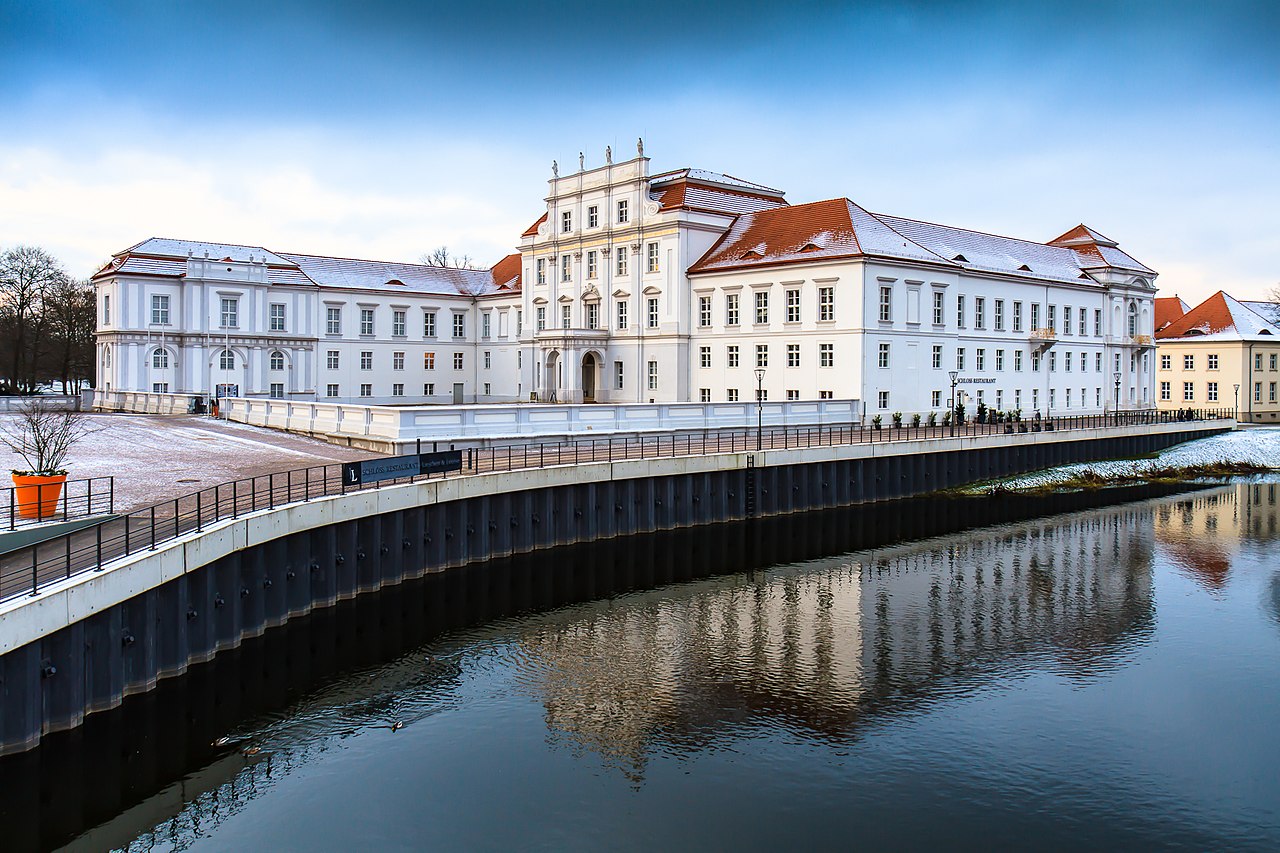


Name and early origins
The site of present‑day Oranienburg was first settled by West Slavic peoples; early medieval records preserve a Slavic name often rendered as Bóźow or Bochzowe. The settlement appears in written sources in 1216 under the form "Bothzowe", and in 1232 it was granted town rights. As Germanic settlers arrived in the region during the High Middle Ages, the original name survived in local usage as Bötzow for centuries.
Medieval to early modern development
A fortress was established on the strategically placed hill in the 13th century, reflecting the borderland character of the area. Over time the castle and its surrounding estate shaped local administration and landed life. In the 17th century the town acquired the name Oranienburg after members of the House of Orange (Oranien), who were linked to the Brandenburg court by marriage. A Baroque hunting palace, known as Schloss Oranienburg, was built and remodelled in this period and remains a prominent monument.
Modern history and twentieth century
The town grew with improved transport and industrial connections in the 19th and early 20th centuries, taking on commuter and manufacturing roles connected to the expanding Berlin region. During the Nazi era Oranienburg became widely known for the nearby Sachsenhausen concentration camp, established by the regime in 1936; the camp area is today preserved as a memorial and museum that documents the atrocities committed and commemorates victims. Post‑war reconstruction, administrative reforms and suburbanisation have shaped Oranienburg's contemporary urban fabric.
Landmarks, culture and environment
Key features of Oranienburg include:
- Schloss Oranienburg — a Baroque palace complex that reflects the town's 17th‑century transformation and now hosts cultural exhibitions;
- Sachsenhausen Memorial — a site of remembrance and education about the concentration camp era;
- Historic town centre and churches that echo medieval and later building phases;
- Rivers and green spaces along the Havel and connected waterways that support recreation and nature conservation.
Today: economy, transport and significance
Oranienburg functions as a regional service centre with light industry, retail, cultural institutions and commuter links to Berlin. Rail and road connections make it accessible for daily commuters and visitors; the town also serves as a gateway to lakes and recreational areas north of the capital. Interpretive centres and museums ensure that Oranienburg remains a point of encounter between local life and broader historical themes.
For more on the town’s Slavic roots and early forms of its name see Slavic name sources, and for broader local history resources consult regional archives and guides. These references provide deeper context about the linguistic, political and cultural layers that shaped Oranienburg over the centuries.
Related articles
Author
AlegsaOnline.com Oranienburg — town north of Berlin Leandro Alegsa
URL: https://en.alegsaonline.com/art/72966