
Oranienburg concentration camp (1933–1934)
An early Nazi concentration camp near Oranienburg, north of Berlin, active 1933–1934. Approximately 3,000 people were held; eight deaths are recorded. Not identical to the later Sachsenhausen camp.
Overview
The Oranienburg concentration camp was one of the earliest detention sites established by the Nazi regime after it came to power in 1933. Located close to the center of Oranienburg, north of Berlin, the facility operated for a short period between 1933 and 1934. It served primarily as a place to hold political opponents and others the regime considered dangerous during the initial consolidation of power. The site is distinct from the later, larger Sachsenhausen camp, which was built nearby and operated from 1936 to 1945.
Image gallery
3 Images

Location and physical characteristics
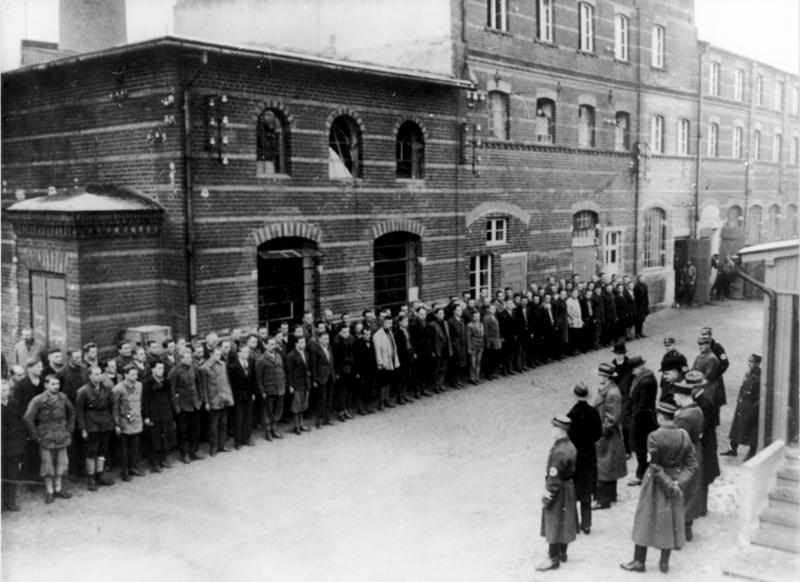
The camp occupied a small area near the town and used existing buildings and temporary structures rather than the planned, permanent barracks seen in later camps. Sources describe it as a local detention center rather than a large industrial complex. Contemporary accounts emphasize improvised accommodation, crowded sleeping quarters, and minimal sanitary arrangements. The Oranienburg site was one of several early camps established in towns and cities around Germany during 1933.
Detainees, treatment and recorded deaths
About 3,000 people were held at Oranienburg over the camp's brief lifetime. Detainees included political activists—particularly Communists and Social Democrats—trade unionists and others targeted by the new regime. Conditions were harsh: prisoners faced overcrowding, forced labour, poor nutrition and physical abuse by guards. Eight people who died in connection with imprisonment at Oranienburg are known by name; other individual fates are less well documented. The camp functioned more as an early instrument of repression than as part of the later industrialized killing system.
Historical context and closure
Oranienburg was established in the immediate aftermath of the Nazi takeover as part of a network of early camps created by the SA, SS and local police to detain opponents. In 1934 the central government began to reorganize and concentrate the camp system, and many small local camps were closed or absorbed into larger facilities. The brief lifespan of Oranienburg reflects this transition from ad hoc detention centres to a centrally administered system.
Legacy and distinctions
The historical significance of the Oranienburg camp lies in its role during the initial phase of Nazi repression and the way it illustrates the rapid expansion of state violence in 1933–1934. It is important to note that Oranienburg (1933–1934) is not identical with the nearby Sachsenhausen concentration camp, which was constructed later and became a major site of imprisonment and mass murder. Research, commemoration and local memory have focused on documenting detainees and preserving the historical record.
Notable facts and resources
- The camp was an early example of improvised detention sites used immediately after the Nazi seizure of power. (Nazi concentration camp)
- Approximately 3,000 people passed through during its existence; eight deaths are recorded by name.
- The site was part of a wider landscape of persecution in the town of Oranienburg and the surrounding area. (site information)
Further information is available in historical surveys of early Nazi repression and studies of the German concentration camp system. Local archives and memorial projects also preserve names and testimonies connected with Oranienburg and the later Sachsenhausen camp.
Related articles
Author
AlegsaOnline.com Oranienburg concentration camp (1933–1934) Leandro Alegsa
URL: https://en.alegsaonline.com/art/72965