
One Fine Day (children's picture book)
Overview of One Fine Day, Nonny Hogrogian's 1971 picture book: plot, illustration style, Caldecott Medal recognition, themes, and its place in children's literature.
One Fine Day is a short picture book retelling of a traditional folktale, written and illustrated by Armenian-American artist Nonny Hogrogian and first published in 1971. The book tells a compact, humorous story aimed at young readers in which a clever red fox takes a woman's milk, has his tail cut off in punishment, and then goes on a quest to retrieve it. Its clear narrative, repetitive motifs and bright imagery make it accessible for children and useful in read-aloud settings.
Image gallery
2 Images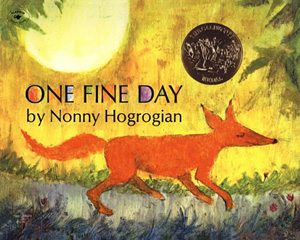

Illustration and style
Hogrogian's illustrations are notable for bold, flat colors, simplified shapes and expressive characters. The palette emphasizes the personality and mood of the protagonist — a red fox who is both mischievous and resourceful — while keeping backgrounds uncluttered so the action remains easy to follow. The interplay of text and picture is economical: short lines of text accompany full-page images, allowing young listeners and beginning readers to absorb plot and visual cues simultaneously.
Plot, themes, and educational uses
At its core the tale is about consequence and resourcefulness. The fox’s misdeed (stealing a woman's milk) leads to an immediate punishment that sets off the central journey — searching for a lost tail. Teachers and parents often use the book to discuss cause and effect, empathy, and problem-solving. Its repetitive structure supports vocabulary building and memory, and its humor encourages engagement without heavy moralizing.
Common classroom and library activities tied to the book include sequencing the story, dramatizing scenes, and exploring animal characters. The story’s folk origins make it a convenient entry point for conversations about oral tradition and how stories change across retellings.
Publication and recognition
Published by Macmillan in 1971, One Fine Day received the Caldecott Medal in 1972, awarded annually by the American Library Association to the artist of the most distinguished American picture book for children. The medal recognized Hogrogian’s combined strengths as author and illustrator: clarity of design, effective use of color and composition, and an engaging approach to a well-loved folktale.
While compact in length, the book endures through frequent inclusion on recommended picture-book lists and in collections that highlight retellings of folk and fairy tales. Its blend of visual simplicity, gentle humor and traditional narrative keeps it appealing for storytime and early literacy programs.
- Format: short picture book intended for young children and read-aloud use.
- Artistic features: flat color blocks, expressive characters, minimal text.
- Educational value: vocabulary, sequencing, moral discussion, dramatization.
Related articles
Author
AlegsaOnline.com One Fine Day (children's picture book) Leandro Alegsa
URL: https://en.alegsaonline.com/art/72570