
On the Road — Jack Kerouac and the Beat-era road novel
A concise encyclopedic overview of Jack Kerouac's On the Road: origins, style, themes, reception and its role in the Beat Generation and American literature.
On the Road is a landmark novel by American writer Jack Kerouac. Composed in the early 1950s and published in 1957, the book draws heavily on Kerouac's own cross-country journeys and friendships. Written in a fluid, improvisational voice, it became a touchstone for the Beat Generation and later countercultural movements. The narrative follows a restless narrator and his companions as they travel across mid‑century America, seeking experience, connection and meaning.
Image gallery
3 Images

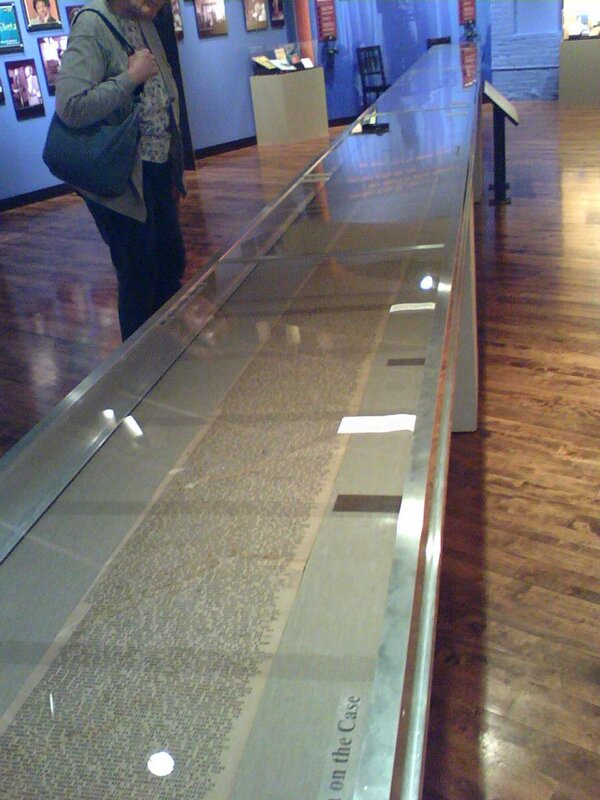
Form and style
Kerouac developed a rapid, freewheeling method often called "spontaneous prose." He typed much of the manuscript in a single extended session on a roll of paper, aiming to capture thought and speech in an immediate way. The prose emphasizes speed, rhythm and colloquial speech, with long sentences and jazz-inspired cadences. The book is usually read as a roman à clef: characters represent real people and episodes are based on actual trips, though names and details are fictionalized.
Characters and structure
- Sal Paradise: the novel's reflective narrator and stand‑in for Kerouac.
- Dean Moriarty: a charismatic, impulsive figure modelled on Neal Cassady.
- Other companions and episodic encounters populate the journeys, providing a panorama of American life.
The structure is episodic rather than tightly plotted; the emphasis is on movement and encounter rather than a conventional storyline.
Themes, context and reception
Central themes include wanderlust, friendship, spiritual searching, the allure of the open road and the tension between freedom and responsibility. The book captures postwar America’s highways, small towns and cities, as well as its cultural energies—jazz, drugs, and informal communities. Upon release it provoked mixed reaction: praised by many critics and embraced by young readers while also drawing controversy for frank language and unconventional values. Major outlets recognized its significance, and it has been anthologized and studied widely.
Legacy and significance
On the Road helped define a literary sensibility and influenced writers, musicians and filmmakers who followed. It remains studied as both a cultural document of 1950s America and a pioneering experiment in narrative voice. For biographical context and further reading see resources about Kerouac and autobiographical writing here, about mid‑century American travel and landscape here, and about broader Beat movement developments here.
Questions and answers
Q: Who is the author of On the Road?
A: The author of On the Road is Jack Kerouac.
Q: When was On the Road written?
A: On the Road was written in April 1951.
Q: When was On the Road published?
A: On the Road was published in 1957.
Q: Is On the Road autobiographical?
A: Yes, most of On the Road is autobiographical.
Q: What is On the Road about?
A: On the Road is about the road trips of Kerouac and his friends across mid-century America, and it is often considered a defining work of the postwar Beat Generation.
Q: What did the New York Times say about On the Road when it was originally released?
A: When On the Road was originally released, the New York Times hailed it as "the most beautifully executed, the clearest and most important utterance" of Kerouac's generation.
Q: What recognition did On the Road receive from TIME Magazine?
A: On the Road was chosen by TIME Magazine as one of the 100 best English-language novels from 1923 to 2005.
Related articles
Author
AlegsaOnline.com On the Road — Jack Kerouac and the Beat-era road novel Leandro Alegsa
URL: https://en.alegsaonline.com/art/72534
Sources
- graphics.nytimes.com : Books of the Times
- time.com : The Complete List | TIME Magazine - ALL-TIME 100 Novels