
Ōmi Province (Ōmi no kuni)
Historic Japanese province centered on Lake Biwa, corresponding to modern Shiga Prefecture. Known as Gōshū, with Ōtsu as its ancient capital and a long cultural and commercial history.
Overview
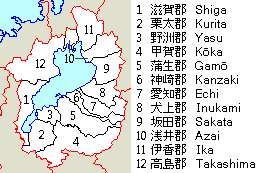
Ōmi Province, historically called Ōmi no kuni and also known by the alternative name Gōshū (江州), was an old province of Japan. Its territory corresponds largely to present-day Shiga Prefecture on the island of Honshū. The province was dominated by Lake Biwa, Japan's largest freshwater lake, which shaped its economy, transport, and settlement patterns.
Image gallery
3 Images

Geography and features
Lake Biwa occupies the center of the region and provided fish, irrigation and a natural transport corridor. Surrounding hills and mountain passes linked the province to neighboring regions and to the ancient capital area. The provincial government and religious institutions were centered near what is now Ōtsu, which served as the ancient provincial capital and a key staging point on routes leading to Kyoto.
History and development
Ōmi has been inhabited since ancient times and entered the historical record as a provincial unit in Japan's classical period. Throughout medieval and early modern eras its strategic position east of Kyoto made it important for military, pilgrimage and commercial routes. The traditional provincial system was reorganized after the Meiji Restoration; in 1871 the provinces were replaced by prefectures, and Ōmi's territory became the basis of modern Shiga Prefecture.
Economy, culture and people
The province developed a distinctive commercial culture. Notably, the Ōmi merchants (Ōmi shōnin) became famous for mobility, networks and business ethics that influenced later Japanese commerce. Agricultural products, freshwater fisheries from Lake Biwa and, in modern times, premium beef known as Ōmi (Ōmi-gyū) reflect the region's economic variety.
Notable sites and legacy
- Lake Biwa: central natural feature and transport route.
- Hikone Castle and other historical castles and towns that survive as cultural landmarks.
- Religious sites and monasteries on the lake's rim that played regional roles.
Today the memory of Ōmi Province survives in place names, cultural traditions and historical studies. Visitors can trace its legacy in museums, preserved towns and the continued importance of Lake Biwa to local life and ecology.
Related articles
Author
AlegsaOnline.com Ōmi Province (Ōmi no kuni) Leandro Alegsa
URL: https://en.alegsaonline.com/art/72511
Sources
- books.google.com : "Ōmi"
- books.google.com : "Ōtsu"
- books.google.com : "Biwa-ko"
- books.google.com : "Tōkaidō"
- books.google.com : "Provinces and prefectures"
- eos.kokugakuin.ac.jp : "Nationwide List of Ichinomiya," p. 2
- books.google.com : "Hiei-zan"