
Olivenza: the Iberian territorial dispute between Portugal and Spain
Olivenza (Olivença) is a disputed territory on the Portugal–Spain frontier. Long held by Portugal, it has been administered by Spain since 1801; sovereignty remains contested and the border is formally unresolved.
Overview
Olivenza (Portuguese: Olivença; Spanish: Olivenza) is a small border territory on the western side of the Iberian Peninsula that is claimed by both Portugal and Spain. Historically part of Portugal for several centuries, it has been under Spanish administration since the early 19th century. The dispute concerns sovereignty and the precise delimitation of the international border in this area; despite long-standing claims by Portugal, Spain exercises de facto control and integrates the territory into its provincial administration.
Image gallery
10 Images




Geography and settlements
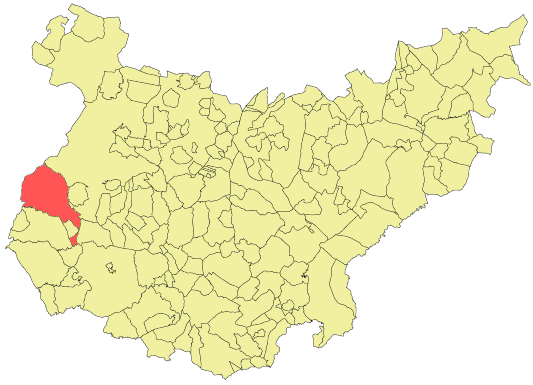
The Olivenza/Olivença territory covers roughly 750 km² and is located in the present Spanish province of Badajoz within the autonomous community of Extremadura. The area includes the principal town of Olivenza and several smaller villages and hamlets. Portuguese and Spanish place names are both used in reference to many localities, reflecting the region's shared cultural history.
- São Francisco (S. Francisco)
- São Rafael (S. Rafael)
- Vila Real / Villareal
- São Domingos de Gusmão / Santo Domingo de Guzmán
- São Bento da Contenda / San Benito de la Contienda
- São Jorge de Alor
- Táliga
History and legal background
The territory was formally placed under Portuguese sovereignty in the late 13th century after the Treaty of Alcañices (1297), which established borders that endured for centuries. In 1801, during a brief conflict known as the War of the Oranges, Spanish forces occupied Olivenza and the subsequent Treaty of Badajoz transferred the territory to Spain. After the Napoleonic Wars, Portugal maintained that international agreements reached at the end of the conflict required Spain to return Olivenza; these claims were advanced in diplomatic exchanges and referenced in 19th-century settlement discussions. Spain, however, continued to administer the territory, and effective control has remained with Madrid since 1801.
Administration and border status
In practical terms Olivenza is governed under Spanish civil and administrative law as part of the province of Badajoz. Residents are subject to Spanish institutions and jurisdiction. Portugal has not recognized the permanent cession and continues to assert a legal claim, which means that—at least from Portugal's point of view—the exact international boundary in this area has not been definitively settled by mutual agreement. Despite this formal disagreement, day-to-day movement and cross-border cooperation have been shaped by broader Iberian relations and European frameworks.
Cultural legacy and notable features
Olivenza exhibits a cultural blend of Portuguese and Spanish influences visible in architecture, language traditions and place names. Some churches, civic buildings and street names recall the town's Portuguese past, and bilingual usage of names is common in documents discussing the dispute. The local heritage is often cited in cultural and historical studies as an example of overlapping identities that can arise along long-standing frontiers.
Contemporary significance
The Olivenza question is a longstanding, low-intensity diplomatic issue rather than an active military dispute. It is chiefly significant as a legal and symbolic matter: it illustrates how historical treaties, war outcomes and later international agreements can leave unresolved claims. Both states have periodically discussed bilateral cooperation across their border, and Olivenza features in those conversations as a point where historical grievances intersect with present-day cross-border integration. For further context on official positions, see materials published by the relevant authorities of Portugal and Spain.
Related articles
Author
AlegsaOnline.com Olivenza: the Iberian territorial dispute between Portugal and Spain Leandro Alegsa
URL: https://en.alegsaonline.com/art/72393