
Odometer (vehicle distance-measuring instrument)
An odometer measures the distance a vehicle has traveled. Devices may be mechanical, electronic, or GPS-based, and are used for maintenance, navigation, vehicle valuation, and legal reporting.
Overview
An odometer, sometimes called an odograph, mileometer, or milometer, is an instrument that records the cumulative distance traveled by a vehicle. It is fitted to many kinds of wheeled vehicles, from bicycles to cars and trucks. Modern equipment can be wholly mechanical, wholly electronic, or a hybrid of both approaches. A related feature, the trip meter, measures shorter journeys independently of the vehicle’s total reading.
Image gallery
8 Images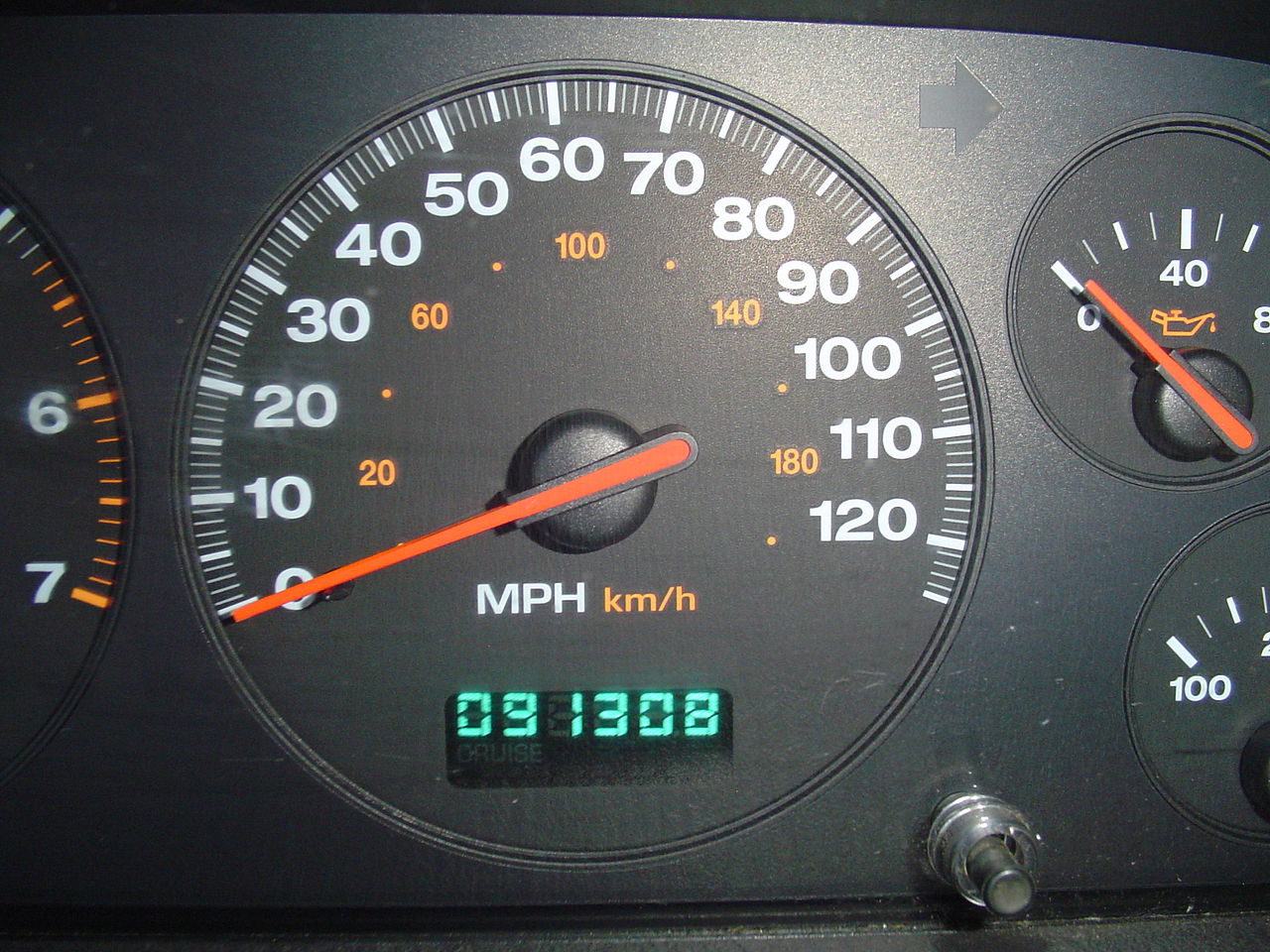


Design and key components
At its simplest, an odometer converts rotations of a wheel or driveshaft into linear distance. The basic relationship multiplies the number of wheel rotations by the wheel circumference to produce distance. Components and implementations commonly include:
- Mechanical register: a series of geared odometer drums driven by a cable or gear train.
- Electronic sensors: magnetic or optical sensors that count rotations and send pulses to a control unit.
- Processor/display: an electronic module that integrates pulses and shows the result on an LCD or digital cluster.
- Trip meter: resettable counters for short-term distance tracking.
- Recording devices: odographs that log or plot distance over time for analysis.
History and terminology
The term derives from Greek words for "path" and "measure" (hodós + métron), and instruments to measure travel distance have existed in several forms for centuries. Mechanical odometers became common with the rise of bicycles and later automobiles; electronic and satellite-based solutions appeared as vehicle electrical systems and navigation technology matured in the late twentieth century.
Uses, importance and limitations
Odometers serve practical and legal purposes: they guide maintenance schedules, inform fuel-economy calculations, assist navigation, and provide a record of vehicle usage that affects resale value. Accuracy depends on proper calibration, correct tire size, and reliable sensors. Factors that affect readings include tire wear or replacement with differently sized tires, slippage, and installation errors. Increasingly, manufacturers integrate odometer data with vehicle networks for diagnostics and fleet management.
Legal and consumer aspects
Because odometer readings influence vehicle valuation, tampering—often called "rollbacks"—is illegal in many jurisdictions and subject to penalties. Buyers are advised to compare service records, vehicle history reports and inspection results when assessing mileage. Alternative distance-tracking methods such as GPS can confirm or supplement odometer data; many modern vehicles and aftermarket trackers use satellite positioning for independent distance logs (automobiles, bicycles and fleets).
For more technical details or standards related to how distance is measured and reported, readers can consult manufacturer documentation or technical resources linked here: distance measurement basics, bicycle instrumentation, automotive instrumentation, and etymology and terminology.
Related articles
Author
AlegsaOnline.com Odometer (vehicle distance-measuring instrument) Leandro Alegsa
URL: https://en.alegsaonline.com/art/71977
Sources
- oed.com : "Oxford English Dictionary (online):''odograph''"
- dictionary.reference.com : "American Heritage Dictionary (online: Dictionary.com): ''odograph''"