
Ocean's Twelve (2004) — overview of the heist sequel
Ocean's Twelve is a 2004 American heist film directed by Steven Soderbergh. The sequel to Ocean's Eleven features an ensemble cast, mixed reviews, strong box office returns, and completes the trilogy with Ocean's Thirteen.
Ocean's Twelve is a 2004 American heist film and the direct sequel to Ocean's Eleven. Directed by Steven Soderbergh, it continues the story of a group of professional thieves led by Danny Ocean. The movie follows the same caper-comedy tone as its predecessor but shifts part of the action to European locations and introduces a rival thief who complicates the crew's plans. Released in the United States on December 10, 2004, it became a commercial success while receiving a range of critical responses.
Image gallery
1 Image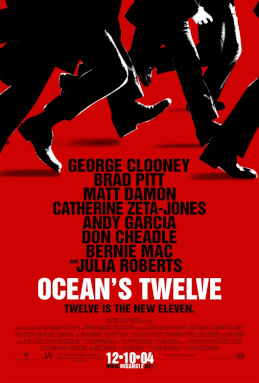
Premise and structure
The film opens after the events of the previous installment, with the team enjoying the proceeds of a major Las Vegas heist. Their former victim pursues legal and personal retribution, prompting the crew to undertake a new series of thefts to repay their debt and regain freedom. The narrative mixes straightforward caper set pieces with elements of comedy, romance, and a self-referential subplot that plays with celebrity and identity. Scenes move between American and European settings, producing a different visual rhythm and pacing than the Las Vegas-centered original.
Principal cast and characters
As an ensemble picture, Ocean's Twelve brings back many of the original actors and adds new faces. Principal members include:
- George Clooney as the conspiratorial leader.
- Brad Pitt as a smooth-talking member of the team.
- Matt Damon in a key supporting role with comic beats.
- Catherine Zeta-Jones as a new character central to the plot.
- Andy García returning in a role tied to the earlier film's fallout.
- Julia Roberts reprising a leading role with a notable subplot.
- Don Cheadle as a technical specialist and comic foil.
- Bernie Mac among the ensemble contributing memorable moments.
Production, style and notable elements
Steven Soderbergh maintained a breezy visual approach, using varied camera work and an energetic editing rhythm to convey both the planning and execution of thefts. The film expands the geographic scope of the series, staging scenes in European cities and introducing a charismatic antagonist known for testing the crew's skills. A recurring motif is the collision of real-world celebrity culture with the characters' criminal lives, including a playful scene that blurs actor and character identities.
Reception and legacy
Critics delivered mixed assessments: some praised the cast chemistry, production values, and playful tone, while others found the plot less focused than the first film. Despite the uneven reviews, the movie performed strongly at the box office, earning several hundred million dollars worldwide and cementing the popularity of the franchise. Ocean's Twelve occupies the middle slot in the original trilogy; it was followed by Ocean's Thirteen (2007), completing what is often called the Ocean's trilogy.
Why it matters
Ocean's Twelve illustrates how ensemble heist films can evolve between installments—shifting settings, introducing new rivals, and experimenting with self-referential humor. It remains notable for its high-profile cast, for extending the heist formula beyond a single location, and for influencing later caper films that balance suspense with light comedy. For readers interested in modern ensemble filmmaking or in the careers of the principal actors and director, the film is a frequently cited example of early-21st-century studio-driven franchise cinema.
Further information on the preceding film, the director and principal cast can be found via the linked entries above for additional context on production and reception.
Questions and answers
Q: What is Ocean's Twelve?
A: Ocean's Twelve is a 2004 American heist movie and the first sequel to Ocean's Eleven.
Q: Who directed Ocean's Twelve?
A: Steven Soderbergh directed Ocean's Twelve.
Q: Who starred in Ocean's Twelve?
A: George Clooney, Brad Pitt, Matt Damon, Catherine Zeta-Jones, Andy García, Julia Roberts, Don Cheadle, and Bernie Mac starred in Ocean's Twelve.
Q: When was Ocean's Twelve released in the United States?
A: Ocean's Twelve was released in the United States on December 10, 2004.
Q: How did the critics respond to Ocean's Twelve?
A: The movie received mixed reviews from critics.
Q: Was Ocean's Twelve a financial success?
A: Yes, Ocean's Twelve was a financial success, grossing $435 million and becoming the tenth highest-grossing movie of 2004.
Q: Was there a third movie in the Ocean's series?
A: Yes, a third movie, Ocean's Thirteen, was released on June 8, 2007, in the United States—thus forming The Ocean's Trilogy.
Related articles
Author
AlegsaOnline.com Ocean's Twelve (2004) — overview of the heist sequel Leandro Alegsa
URL: https://en.alegsaonline.com/art/71858