
O (Cyrillic letter)
Cyrillic letter O (О, о): a round vowel letter derived from Greek omicron, representing /o/ in many languages and appearing in several modified forms for other vowel values.
Overview
The Cyrillic letter O, written О in uppercase and о in lowercase, is the round vowel symbol used across many alphabets that employ the Cyrillic script. It corresponds visually and historically to the Latin letter O and to the Greek omicron. In printed form it is nearly identical to the Latin O, which can cause confusion in mixed‑script text.
Image gallery
2 Images
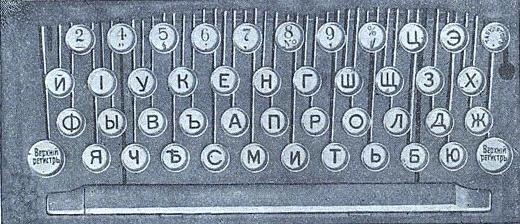
Phonetics and usage
In most Slavic and non‑Slavic languages that use Cyrillic, О represents a close‑mid or close back rounded vowel commonly transcribed as /o/. When stressed it is realized clearly as [o], for example Russian дом (dom, "house"). In several languages, and most famously in Russian, unstressed instances of О undergo vowel reduction and are pronounced nearer to [a] or [ɐ]; a common illustrative word is молоко (moloko, "milk"), where unstressed o sounds differ from the stressed one.
History and origin
The letter O in Cyrillic descends from the Greek omicron, whose name literally means "small o" (o mikron). It was incorporated into the early Cyrillic alphabet formed by followers of Saints Cyril and Methodius and used in Old Church Slavonic texts. Over time the basic shape remained stable, keeping the familiar circular form.
Variants and related letters
Several languages have developed modified forms of O to represent different vowel qualities. Examples include letters with diacritics such as Ӧ (O with diaeresis) and separate characters like Ө (barred O or Oe) used in some non‑Slavic Cyrillic orthographies to denote front rounded vowels. Accent marks (e.g., О́) are sometimes added in educational or dictionary material to indicate stress.
Typography and encoding
Uppercase O and lowercase o appear similar in many typefaces; italic forms may differ slightly depending on font design. In Unicode the code points are U+041E for О and U+043E for о. Because of its likeness to the Latin O and to the digit zero, care is sometimes needed in multilingual typography and data processing to avoid misidentification.
Quick facts
Related articles
Author
AlegsaOnline.com O (Cyrillic letter) Leandro Alegsa
URL: https://en.alegsaonline.com/art/71580