
Ö (O with diaeresis or umlaut)
Letter Ö (ö) is O with two dots used in several alphabets to mark front rounded vowels; this article covers pronunciation, history, orthography, computing, and distinctions.
Overview
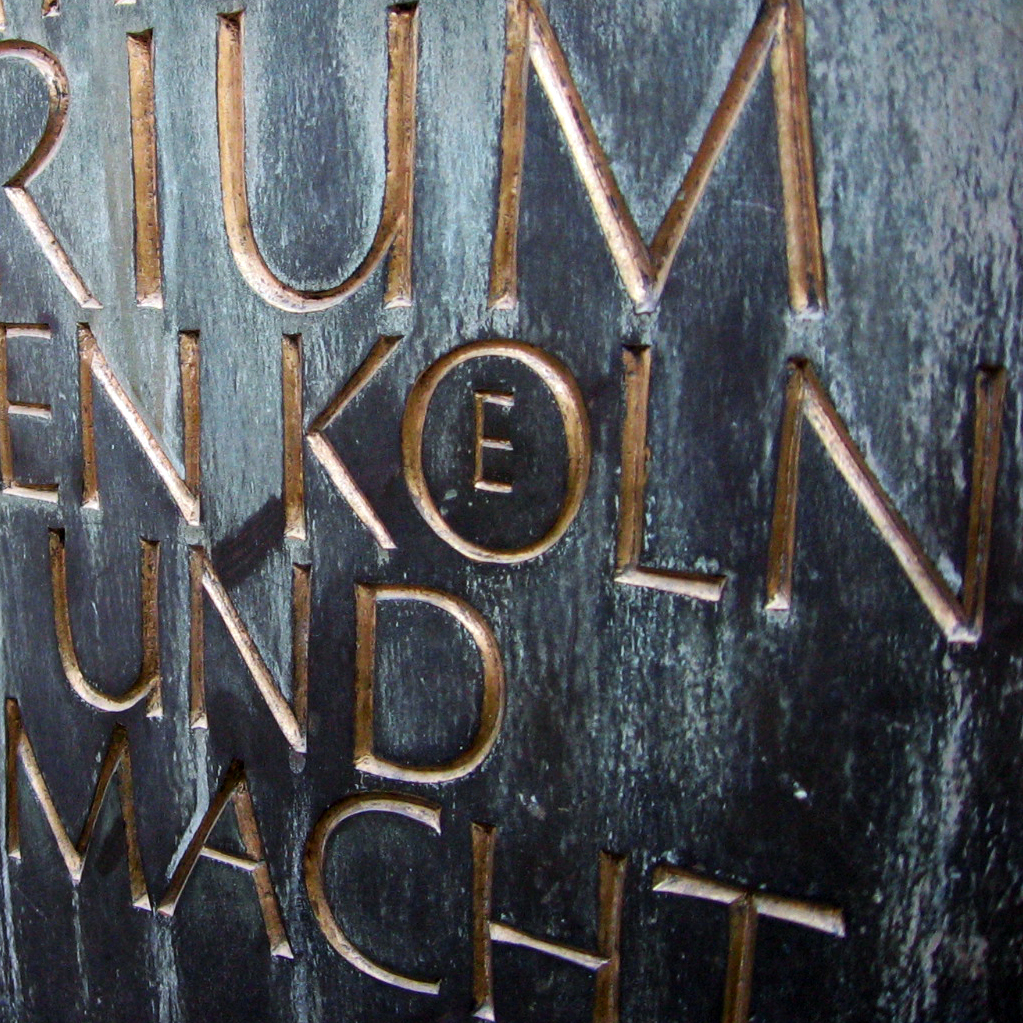
The character Ö (uppercase) and ö (lowercase) is an O marked with two dots. It appears in many European and Turkic alphabets but is not native to English. Languages that employ this glyph include German, Finnish, Estonian, Hungarian, Turkish, Swedish and Icelandic, among others. Depending on the language, Ö may be treated as a separate letter or as a modified form of O.
Image gallery
2 Images
Pronunciation and examples
In most languages Ö represents a front rounded vowel — sounds that have no single-letter equivalent in English. The pronunciation is often comparable to the French vowel spelled eu/œ. Illustrative words include German "schön" (beautiful), Swedish "söt" (cute), Turkish "göz" (eye), Hungarian "kör" (circle) and Finnish "yö" (night). Exact quality and vowel length differ by language and dialect.
History and orthographic role
The two-dot mark derives from a medieval notation (a small e written above a letter) that later condensed into dots; in German contexts it is called an umlaut, while in other languages it may be referred to as a diaeresis or trema. Orthographically, some alphabets treat Ö as a distinct letter with its own place in the sort order (for example Swedish places it after Z), whereas German typically regards it as a variant of O and allows the alternate spelling "oe" when diacritics are unavailable.
Computing, typography and distinctions
Ö has dedicated Unicode code points: U+00D6 for 'Ö' and U+00F6 for 'ö', and it can also be formed by combining O (U+004F or U+006F) with the combining diaeresis U+0308. In HTML contexts the named entities Ö and ö are common. Typographically the two dots must be legible at small sizes; historically some typefaces rendered the mark as a small superscript e. Ö is graphically distinct from the Scandinavian slashed letter Ø/ø and from the ligature Æ/æ or Œ/œ, though they may represent similar vowel qualities in different languages.
Practical notes
When transcribing or entering names and words that include Ö, common approaches are to keep the diacritic, substitute "oe" (common for German), or use the plain O when technical limits exist. Awareness of language-specific sorting and pronunciation helps preserve meaning: in dictionaries, databases and personal names the choice of representation can affect ordering and recognition. For further reading on each language's conventions consult language-specific sources or orthography references.
Questions and answers
Q: Is Ö a letter used in English?
A: No, it is not a letter used in English.
Q: In which other languages is Ö used?
A: Ö is used in German, Finnish, Estonian, Hungarian, Turkish, Swedish and Icelandic.
Q: What is the sound of Ö?
A: The sound of Ö varies depending on the language, but it is generally a vowel with a rounded lip shape.
Q: Are there any English words that contain Ö?
A: There are no English words that contain Ö, as it is not a letter used in the English language.
Q: Why is Ö used in some languages but not in English?
A: Different languages have different phonetic sounds, and Ö is used in those languages to represent those specific sounds. English does not have that sound, and therefore does not use the letter Ö.
Q: Can Ö be replaced with another letter in the languages that use it?
A: No, Ö cannot be replaced with another letter in the languages that use it, as it represents a specific sound that is not found in other letters.
Q: What is the origin of the letter Ö?
A: The letter Ö has its origins in the Latin script and was developed to represent specific phonetic sounds in various languages.
Related articles
Author
AlegsaOnline.com Ö (O with diaeresis or umlaut) Leandro Alegsa
URL: https://en.alegsaonline.com/art/71592