
Notre Dame Stadium
Historic college football stadium on the University of Notre Dame campus in Indiana; opened in 1930, home to the Fighting Irish and known for its traditions and large capacity.
Overview
Notre Dame Stadium is the principal football venue for the University of Notre Dame and the home field of the Fighting Irish. Located on campus in Notre Dame, Indiana, just north of South Bend, the stadium opened in 1930 and today can accommodate more than 80,000 spectators. The facility is widely recognized for its place in college football history and for the game-day traditions that surround it; for basic information see the stadium's home page.
Image gallery
10 Images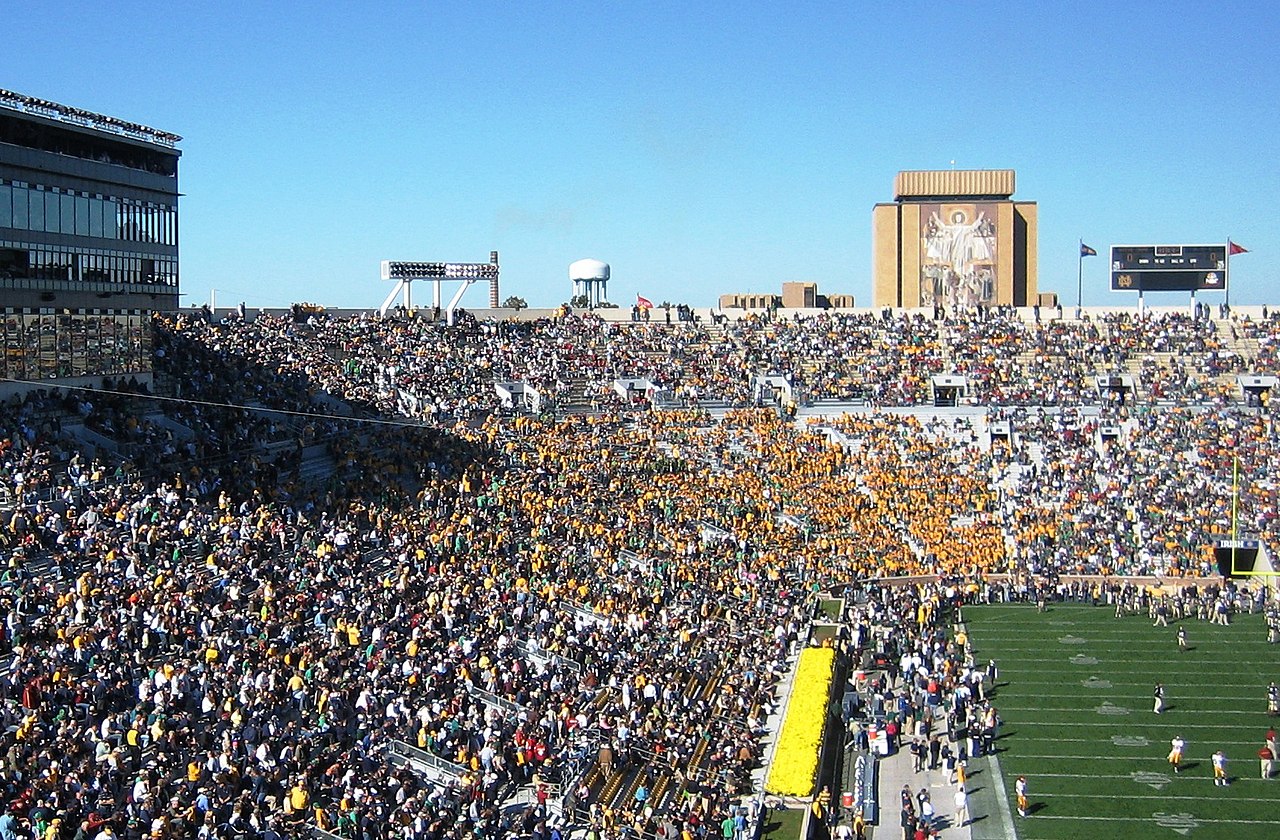


Design and features
The stadium follows a classic collegiate bowl configuration with seating on both sidelines and end zones to create an intense atmosphere. Key features commonly noted by visitors and media include:
- Large seated bowl that rises steeply to bring fans close to the field.
- Modern press and broadcast facilities to support national television coverage and radio teams.
- Player and coaching areas, premium suites, and expanded concourses added during successive upgrades.
- Scoreboards and video displays that supplement traditional stadium architecture.
History and development
Built and opened in 1930, Notre Dame Stadium was constructed to consolidate and modernize the university's intercollegiate football site. Over time it has undergone multiple renovation and improvement programs to update safety systems, spectator amenities and media accommodations while retaining many of the visual elements that link it to its early 20th-century origins. Further details about specific projects and seating changes can be found on official pages addressing capacity and facilities: stadium capacity and facts and stadium history.
Uses, traditions and importance
Aside from serving as the venue for home football games, the stadium hosts pregame ceremonies, marching band performances and alumni events that reinforce its role in campus life. Traditions associated with Notre Dame Stadium are an important part of its identity; fans and players participate in rituals before kickoff that have become part of the university's public image. The site is also a frequent choice for nationally televised contests, underscoring its relevance to college football fans across the country.
Notable facts and distinctions
Notre Dame Stadium is frequently cited for its historic significance and strong fan culture. While it has been adapted for modern use, many observers note the balance the venue strikes between preserving tradition and providing contemporary amenities. The stadium's size and prominence mean that home games often influence schedules and media coverage for the wider sport. For visitors planning a trip or to learn more about game-day operations, check the stadium resources linked above.
Questions and answers
Q: What is Notre Dame Stadium?
A: Notre Dame Stadium is the home football stadium for the University of Notre Dame.
Q: What is the name of the football team that plays at the stadium?
A: The football team that plays at Notre Dame Stadium is called the Fighting Irish.
Q: Where is Notre Dame Stadium located?
A: Notre Dame Stadium is located on the University of Notre Dame's campus in Notre Dame, Indiana, just north of the city of South Bend.
Q: When was Notre Dame Stadium opened?
A: Notre Dame Stadium was opened in 1930.
Q: How many people can the stadium seat?
A: The stadium can seat over 80,000 people.
Q: Is Notre Dame Stadium only used for football games?
A: The text does not provide any information about whether Notre Dame Stadium is only used for football games.
Q: What is the significance of Notre Dame Stadium?
A: The text does not provide any information about the significance of Notre Dame Stadium, but it may be considered significant as the home of the Fighting Irish football team and an important landmark on the University of Notre Dame's campus.
Related articles
Author
AlegsaOnline.com Notre Dame Stadium Leandro Alegsa
URL: https://en.alegsaonline.com/art/71186
Sources
- library.nd.edu : Hesburgh (Main) Library Word of Life Mural
- tour.nd.edu : Hesburgh Library
- articles.chicagotribune.com : Touchdown Jesus