
Northern Arizona University
Public research university in Flagstaff, Arizona, founded in 1899. Offers undergraduate through doctoral programs, notable for environmental and health sciences, with about 22,000 students and NCAA Division I athletics.
Overview
Northern Arizona University is a public research university based in Flagstaff, Arizona. It enrolls approximately 22,000 students across undergraduate, graduate and professional programs and combines teaching, research and community engagement. The institution awards bachelor's, master's and doctoral degrees and serves a statewide student population through multiple campuses and online offerings.
Image gallery
9 Images





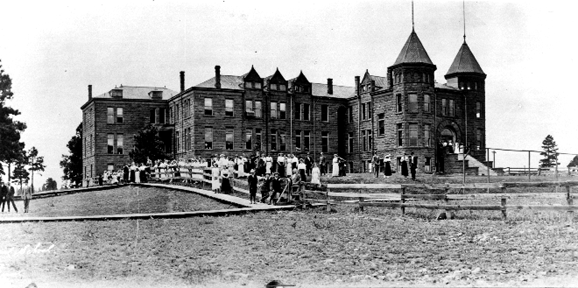

History and development
The university traces its origins to 1899 when it was founded to prepare teachers and meet regional educational needs; it later expanded into a comprehensive university with a broad curriculum. Over the 20th and 21st centuries the campus and academic scope grew to include professional schools, research centers and partnerships with state agencies. Governance is typical of American public universities, with executive leadership supported by a governing board.
Academics and research
Academic programs span liberal arts, sciences, education, business, engineering, health professions and other professional fields. NAU emphasizes areas tied to its mountain and desert setting, including environmental science, forestry, natural resource management and sustainable energy. Research activities often focus on regional ecosystems, climate studies, public health and indigenous studies, and involve collaborations with federal and state organizations.
Campus, community and student life
The Flagstaff campus sits at high elevation and offers outdoor recreation closely linked to coursework and student activities. Students have access to cultural centers, laboratories, internships and community outreach programs. NAU also maintains branch campuses and instructional sites across the state to broaden access. Student organizations, service groups and residential life play major roles in campus culture.
Athletics, identity and notable facts
NAU's athletic teams are known as the Lumberjacks and compete in NCAA Division I, notably in the Big Sky Conference. The university's identity reflects its northern Arizona setting, with academic strengths that leverage local landscapes and climates. For a concise institutional timeline and official information, see the university's historical overview and founding year 1899, or consult institutional resources for current leadership and enrollment figures.
- Types of degrees: bachelor's, master's, doctoral
- Common research themes: environment, forestry, health sciences
- Service model: main campus plus statewide sites and online programs
Related articles
Author
AlegsaOnline.com Northern Arizona University Leandro Alegsa
URL: https://en.alegsaonline.com/art/71005