
North by Northwest
1959 Alfred Hitchcock spy-thriller about an innocent man forced into a world of espionage. Noted for its crop-duster attack, Mount Rushmore finale, Bernard Herrmann score and Saul Bass title design.
Overview
North by Northwest is a 1959 spy thriller directed by Alfred Hitchcock. The film blends suspense, light comedy and romantic elements into a brisk narrative about mistaken identity. Its combination of set-piece action and urbane wit helped define a strand of Cold War-era entertainment that remains influential.
Image gallery
6 Images


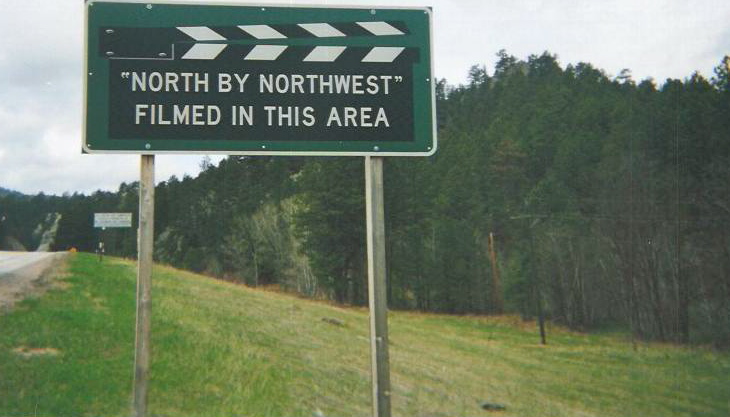
Production and creative team
The screenplay was written by Ernest Lehman and shaped around Hitchcock's sense of pacing and visual storytelling. The score by Bernard Herrmann underscores the film's urgency, while the opening sequence — among the first to use animated, moving text on screen — was designed by Saul Bass. Technically and stylistically the film emphasizes clear staging and sustained set pieces typical of Hitchcock's work in this period.
Plot and main characters
Cary Grant (Cary Grant) stars as Roger Thornhill, a New York advertising executive who is mistakenly identified as a government agent and pursued across the United States. He is aided and complicated by Eve Kendall, played by Eva Marie Saint, while the antagonist is portrayed by James Mason. The narrative moves from metropolitan New York to remote highways and ultimately to a landmark climax, tracking the protagonist's struggle to prove his innocence.
Notable scenes and film craft
North by Northwest is best remembered for a handful of iconic sequences: a seemingly empty road where a biplane launches a low-altitude attack (the crop-duster scene) and the dramatic finale set on Mount Rushmore. These sequences demonstrate Hitchcock's skill at turning simple situations into intense cinematic suspense. The film also showcases visual motifs and editing that heighten the sense of peril and mistaken identity, while retaining moments of humor and romantic tension.
Reception and legacy
On release the picture was praised for its entertainment value and technical accomplishment and has since been regarded as one of Hitchcock's most popular films. Critics and historians cite it as an important influence on later spy and action cinema, and it often appears on lists of notable American films of the era. Its combination of star performance, memorable set pieces and distinctive music have kept it in public and critical view.
Principal cast and credits
- Director: Alfred Hitchcock
- Screenplay: Ernest Lehman
- Lead actor: Cary Grant as Roger Thornhill
- Lead actress: Eva Marie Saint
- Villain: James Mason
- Music: Bernard Herrmann
- Title design: Saul Bass
For further reading on the film's production, technique and influence, see contemporary analyses and retrospectives listed under related film studies resources: analysis, production notes.
Related articles
Author
AlegsaOnline.com North by Northwest Leandro Alegsa
URL: https://en.alegsaonline.com/art/70836