
Nonsuch Palace
A Tudor royal palace built by Henry VIII in Surrey, renowned for its lavish decoration, unique name, and eventual demolition in the late 17th century; the site now lies within Nonsuch Park.
Overview
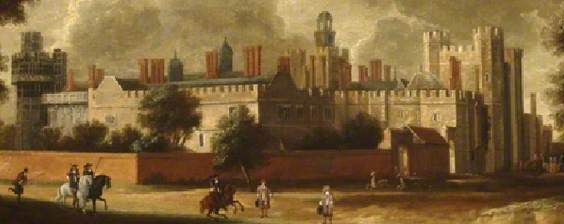
Nonsuch Palace was a Tudor royal residence erected by King Henry VIII beginning in 1538 near Ewell in Surrey. Its name, often rendered as "none such," expressed the king's intention that it be matchless in design and ornament. Although relatively small compared with some of Henry's other palaces, contemporary accounts describe it as extraordinarily sumptuous.
Image gallery
10 Images




Design and notable characteristics
The palace combined late medieval building techniques with early Renaissance details. It was notable for richly modelled facades, sculpted ornament, patterned brickwork and decorative tiles. Interiors reportedly contained elaborate fireplaces, carved woodwork and tapestries, while the exterior featured heraldic and classical motifs intended to proclaim royal taste and power.
History and development
Construction began in the late 1530s and work continued through the 1540s under royal patronage. Henry VIII used the house for courtly display and hospitality. Over the following century it passed through various owners and uses. In 1682–1683 the palace was demolished and many of its decorative elements were removed and sold. The physical site survives as part of a public park in modern Surrey, where archaeological study and documentary evidence preserve its memory.
Legacy and significance
Nonsuch is often cited as an example of Tudor ambition to blend traditional English royal architecture with continental ornament. Although the building no longer stands, fragments and descriptions have permitted scholars and museums to reconstruct aspects of its appearance. The palace's fame also endures in place names and in discussions of Henry VIII's architectural projects.
Notable facts
- The palace's name literally meant that there should be "none such" another like it.
- It was regarded as extremely grand despite being one of the smaller royal houses of the period.
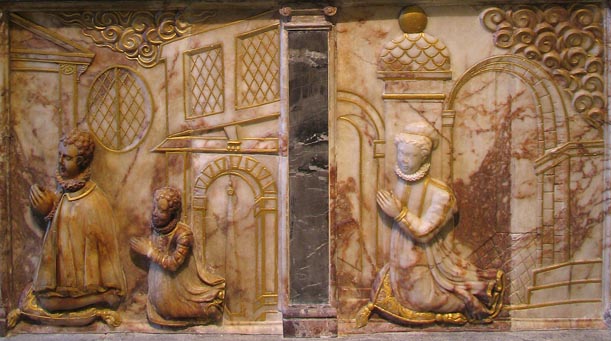
- After demolition, decorative panels and fittings were dispersed into private collections and public institutions.
- The former site is associated with later public parkland and local heritage initiatives in Surrey.
Although Nonsuch Palace survives only in prints, inventories and scattered fragments, it remains an important reference point for the study of Tudor patronage, royal display and the adoption of Renaissance detail in England.
Related articles
Author
AlegsaOnline.com Nonsuch Palace Leandro Alegsa
URL: https://en.alegsaonline.com/art/70626