
Nicholas of Cusa (Nicolaus Cusanus)
German Renaissance philosopher, theologian, jurist and cardinal (1401–1464). Known for 'learned ignorance', mystical negative theology, speculative cosmology and influence on humanism and later thinkers.
Nicholas of Cusa (Latin: Nicolaus Cusanus; 1401–11 August 1464) was a German thinker and churchman whose work bridged medieval scholasticism and Renaissance humanism. He combined theological mysticism with philosophical speculation and mathematical metaphors to explore the limits of knowledge and the nature of God.
Image gallery
8 Images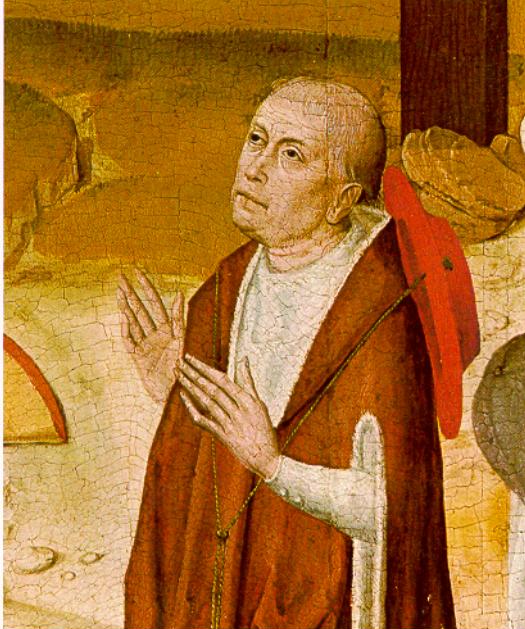




Biography
Born in what is now Germany, Cusanus trained in law and theology and served the papal curia in a variety of administrative and diplomatic roles. He was elevated to the cardinalate and later held episcopal office. His duties as a papal representative took him to councils and courts across Europe, shaping his practical concerns about church reform and political reconciliation.
Ideas and method
Cusanus is best known for the doctrine of "learned ignorance" (docta ignorantia), which argues that human knowledge is always relative and that true knowledge of God must begin with recognition of our limits. He developed the notion of the coincidentia oppositorum — the union of opposites in the divine infinity — and employed negative or apophatic theology to describe God as beyond all predicates.
He also used geometric and mathematical imagery to make philosophical points, treating the finite and the infinite in terms of approximation and limit. His approach blended Neoplatonic and Christian resources and emphasized paradox as a route to higher understanding.
Science, cosmology and practical work
Cusanus wrote on cosmological questions, arguing for the possibility of a universe that exceeded classical finite models and proposing speculative ideas about the plurality of worlds and the relativity of motion. While not an experimental scientist in the modern sense, he saw mathematical reasoning as a key tool and took an unusually modern stance on several astronomical issues for his time.
Major writings
- De Docta Ignorantia (On Learned Ignorance)
- De Visione Dei (On the Vision of God)
- De Coniecturis (On Conjectures)
- Various treatises on law, reform, and pastoral administration
- Shorter philosophical and devotional texts and letters
His prose ranges from dense philosophical argument to meditative, almost poetic passages. He wrote for scholars and ecclesiastical rulers alike, combining abstract reflection with concrete proposals for church governance and dialogue.
Legacy
Nicholas of Cusa influenced later Renaissance humanists, metaphysicians and scientists by stressing the interplay between reason and the recognition of mystery. His work informed debates about theology, epistemology and cosmology and was studied by figures interested in the transition from medieval to early modern thought. Contemporary scholarship treats him as a pivotal, often paradoxical thinker who sought a synthesis of faith, philosophy and mathematical insight.
Related articles
Author
AlegsaOnline.com Nicholas of Cusa (Nicolaus Cusanus) Leandro Alegsa
URL: https://en.alegsaonline.com/art/69940
Sources
- newadvent.org : "Nicholas of Cusa"