
New Safe Confinement (Chernobyl) — containment structure and programme
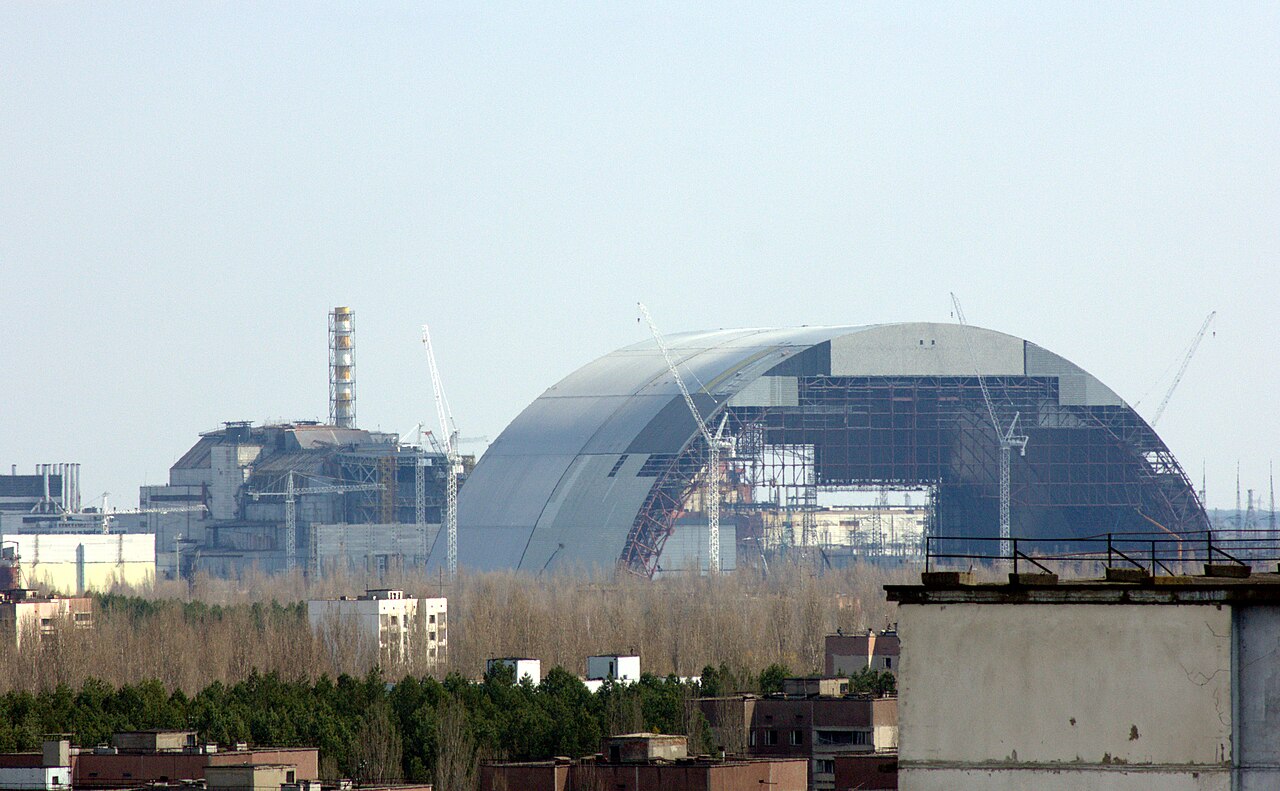
Arch-shaped steel structure built to enclose Chernobyl Reactor 4 and its sarcophagus. Designed to confine radioactive material, enable dismantling and long-term monitoring under an international shelter plan.
Overview
The New Safe Confinement (NSC) is a large arch-shaped steel structure erected to enclose the damaged fourth reactor at the Chernobyl Nuclear Power Plant. Built under an international shelter programme and funded through a multilateral mechanism, the NSC replaces and contains the unstable concrete-and-steel 'sarcophagus' erected shortly after the 1986 accident. It was assembled near the reactor and then slid into place over the old shelter to improve safety and enable further remediation work. For context about the site, see Chernobyl.
Image gallery
6 Images



Design and principal components
The NSC is a prefabricated steel arch that encloses the reactor and its existing containment. Inside the arch are systems to monitor radiation levels, ventilate and filter air, control humidity, and support remote handling equipment. A remotely operated crane and other tools allow workers to remove highly radioactive debris and dismantle unstable elements of the original shelter without exposing personnel to direct radiation.
Construction and deployment
Construction was carried out by an international consortium and managed by the fund established to implement the shelter plan. Major sections were built adjacent to the site, then moved and slid along tracks to cover the reactor and the old sarcophagus. This approach reduced workers' exposure during assembly above the most contaminated areas and allowed the structure to be completed with minimal time spent directly over the reactor.
Purpose and importance
The NSC serves several interrelated goals: to confine radioactive dust and debris, to reduce environmental releases, to protect the public and cleanup teams, and to provide a controlled environment for dismantling operations and waste management activities. By enclosing the unstable original shelter, it helps lower the risk of collapse and subsequent spread of contamination while long-term solutions are developed.
Notable facts and legacy
- The NSC is often described as one of the largest movable land-based structures ever constructed.
- Its design emphasizes remote operation and monitoring to limit human exposure to radiation.
- The structure is intended as an intermediate, durable enclosure that supports decades of decommissioning and waste-removal work.
While the NSC does not eliminate contamination, it is a major engineering and international cooperative effort that secures the most hazardous part of the Chernobyl site and enables systematic remediation over the long term.
Related articles
Author
AlegsaOnline.com New Safe Confinement (Chernobyl) — containment structure and programme Leandro Alegsa
URL: https://en.alegsaonline.com/art/69602