
Nax (former municipality in Valais, Switzerland)
Nax was a small French-speaking municipality in the district of Hérens, canton of Valais, Switzerland. In 2011 it merged with Mase and Vernamiège to form the new municipality Mont-Noble.
Overview
Nax was a small rural municipality located in the district of Hérens within the canton of Valais (Valais), in Switzerland. Situated in the Pennine Alps, it was one of numerous mountain communities that combine pastoral life with seasonal tourism. The local language is French and the settlement pattern is typical of Valais alpine villages: clustered hamlets, farmsteads and summer alpine pastures.
Image gallery
6 Images


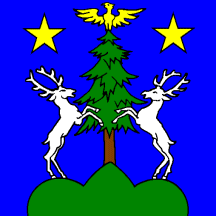
Geography and characteristics
Nax occupied a hillside and valley landscape characterized by steep slopes, alpine meadows and wooded areas. The village environment supports traditional stone and wood chalets, terraced fields and routes used for hiking and pastoralism. The community relies on a combination of small-scale agriculture, cattle grazing and services catering to visitors to the surrounding mountains.
History and administrative change
Like many small Swiss municipalities, Nax experienced changes in local governance to improve services and reduce administrative overhead. On 1 January 2011 the former municipalities of Nax, Mase and Vernamiège merged to form the new municipality of Mont-Noble. The merger joined resources, simplified municipal administration and created a single municipal council for the area.
Culture, economy and uses
Local life in Nax combined livestock rearing—often linked to the region's well-known Hérens cattle breed—with small-scale farming, forestry and hospitality. The area attracts hikers and nature enthusiasts in summer and offers scenic rural tourism year-round. Traditional festivals and mountain customs remain important to community identity.
Notable facts and distinctions
- Nax is representative of small Valais mountain communes that merged in the 21st century to form larger administrative units.
- The location provides access to alpine trails and cultural experiences typical of the Hérens district, including regional cattle fairs and local alpine agriculture.
- Its integration into Mont-Noble preserves local heritage while centralizing public services for residents of Nax, Mase and Vernamiège.
For readers interested in administrative geography, Nax illustrates how Swiss municipal consolidation balances historical village identity with modern governance needs.
Related articles
Author
AlegsaOnline.com Nax (former municipality in Valais, Switzerland) Leandro Alegsa
URL: https://en.alegsaonline.com/art/68866