
Navy Pier, Chicago
Navy Pier is a major public landmark on Chicago's Lake Michigan shoreline, known for its historic 1916 construction, attractions including a Ferris wheel, cultural venues, and year-round public events.
Overview
Navy Pier is a prominent public pier extending from the Chicago shoreline into Lake Michigan. Originally conceived as part of a larger urban plan, it functions today as a mixed-use waterfront destination combining open promenades, performance spaces, dining, and family attractions. The pier stretches about 3,300 feet and is located in the Streeterville neighborhood on the Near North Side.
Image gallery
10 Images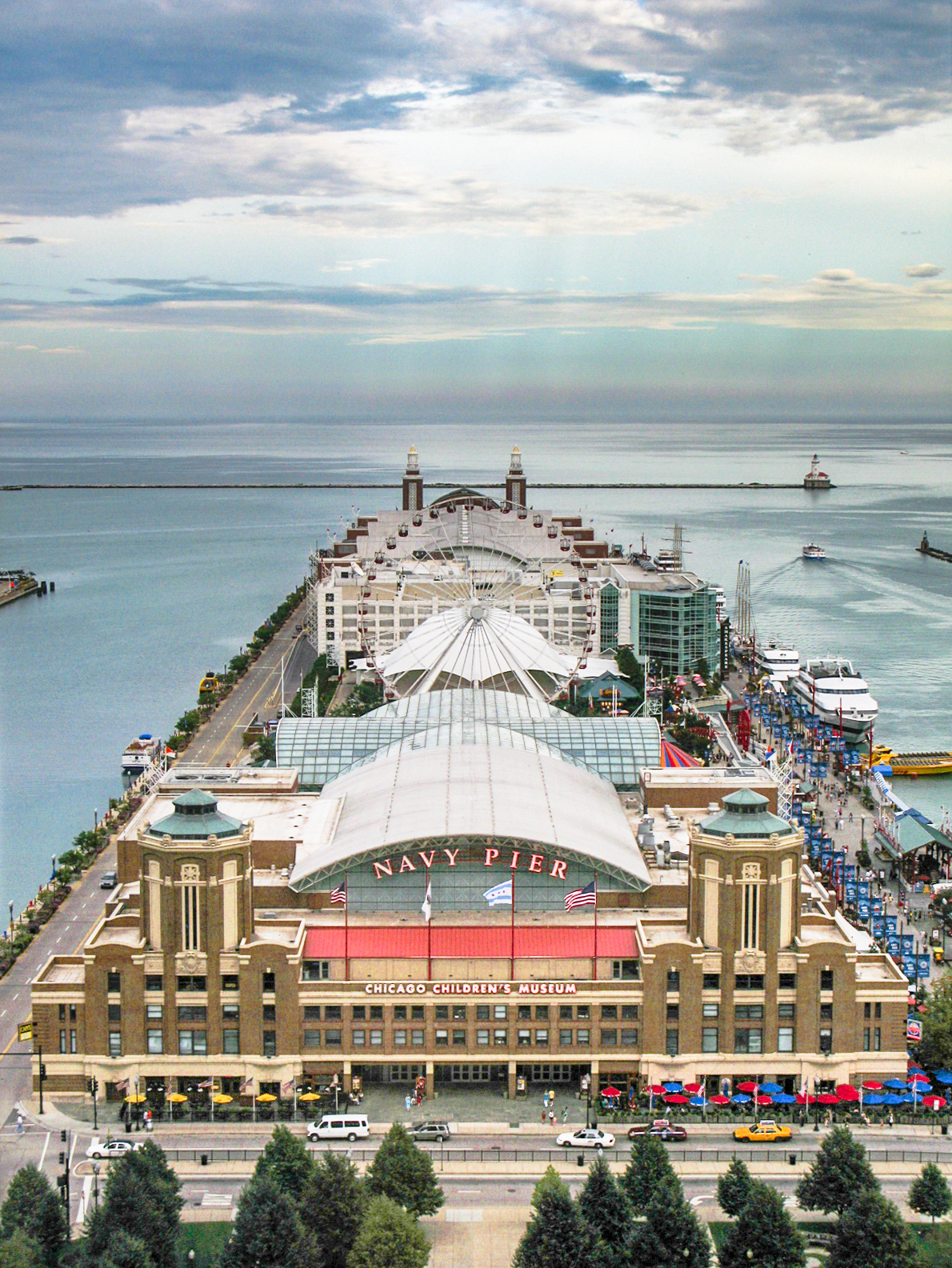



History and development
Construction of the pier began in the early 20th century and the facility opened in 1916. It was developed in the spirit of the Plan of Chicago, the influential civic design prepared by architect and city planner Daniel Burnham and his collaborators. The original cost and program reflected civic ambitions for public space, shipping, and transportation; over the decades Navy Pier has been adapted repeatedly to serve military, commercial, and recreational purposes.
Design and notable features
The pier's long, linear layout provides extensive shoreline access and panoramic views of the city and lake. A number of permanent structures along the deck house theaters, exhibition halls, restaurants, shops, and parks. One of the most recognizable attractions is a large Ferris wheel, a landmark visual anchor that rises above the pier's midsection; park and ride amenities, open lawns, and seasonal gardens are integrated into the site.
Attractions and uses
- Family-oriented rides and waterfront amusements, including the Ferris wheel (see Ferris wheel).
- Performance venues and theaters that host concerts, plays, and festivals.
- Restaurants, markets, and exhibition halls used for public gatherings and trade shows.
- Public promenades and green spaces for walking, biking, and seasonal events such as fireworks displays and holiday programming.
Cultural and civic importance
Navy Pier serves as one of Chicago's most visited civic spaces, drawing residents and tourists year-round. Its blend of entertainment, cultural programming, and open public space has made it a focal point for community events and a symbol of the city's relationship to its lakefront. Ongoing management has emphasized adaptive reuse, accessibility, and maintaining the pier as a versatile venue for both large-scale events and everyday recreation.
Distinctions and notable facts
While the pier's original function included shipping and municipal services, it is best known today for recreation and cultural activity. It occupies a place in Chicago's urban history tied to the Burnham plan and subsequent efforts to make the lakefront publicly accessible. Visitors can find informational displays and guided opportunities to learn about the pier's past as well as its contemporary programming.
For further information on city planning context, waterfront design, and visitor details, consult local resources and visitor guides available through municipal and cultural organizations.
Related articles
Author
AlegsaOnline.com Navy Pier, Chicago Leandro Alegsa
URL: https://en.alegsaonline.com/art/68857