
N'Djamena: Capital and Principal City of Chad
An overview of N'Djamena, Chad's largest city and administrative capital: geography, history, economy, culture, institutions, and transport, with links to further resources.
N'Djamena is the capital and largest city of the central African country of Chad. It sits on the western bank of the Chari River, near Chad's border with Cameroon, and functions as the nation's political, economic and cultural hub. The city grew from a trading post into a densely populated urban region and today serves as the principal port on the Chari for river transport and local commerce. The coordinates commonly cited for N'Djamena are given in geographic references (coordinates).
Image gallery
10 Images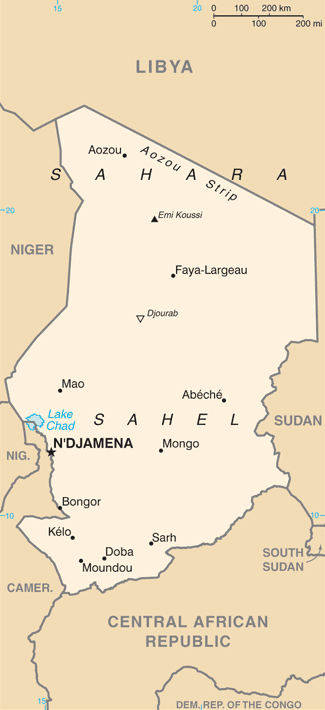


Geography and urban character
N'Djamena occupies a strategic location where the river valley opens onto more arid savanna. The climate is typically Sahelian, with a hot dry season and a shorter rainy season. Urban development is patchy: formal neighborhoods and government buildings coexist with informal settlements and markets. The riverfront remains important for local trade and for seasonal transportation of goods by boat.
History and development
The city began as a colonial administrative post and expanded during the 20th century as political and commercial activity concentrated there. Independence, internal migrations, regional conflicts and economic centralization have all shaped its growth. Periods of unrest in Chad's modern history have affected N'Djamena directly, prompting rebuilding and urban renewal projects at different times.
Economy and marketplaces
N'Djamena is the country's main marketplace for livestock, agricultural produce and regional trade. Local industries include meat processing and other activities tied to agriculture and the food chain. Typical market goods include livestock, salt, dates and grains. Small-scale manufacturing, retail services and public administration are also major employers.
- Major goods traded: livestock, salt, dates, cereals.
- Principal industries: meat processing, market trade, services.
- Transport nodes: river port on the Chari River and the international airport outside the city.
Culture, institutions and attractions
The city's population is religiously and ethnically diverse, with significant Muslim and Christian communities and traditional beliefs present. Cultural institutions include the national museum and various religious sites such as cathedrals and mosques. N'Djamena hosts higher-education institutions and professional schools, including faculties for administration and veterinary medicine, as well as international schools serving expatriate families.
Notable public institutions and points of interest include the Chad National Museum, places of worship that reflect the city's plural religious life, and a range of markets and civic facilities. The city also serves as a base for many international and non-governmental organizations working in Chad.
Transport and administration
N'Djamena is administered as a special-status region within Chad and functions as the seat of national government. The city is served by N'Djamena International Airport just outside the urban area, which connects the capital to regional and international destinations. Road links to other parts of Chad and to neighboring Cameroon support trade; river transport remains seasonally important.
Further information and resources
- Country overview
- City population and demographics
- National administrative structure
- Chari River and waterways
- Regional trade and markets
- Livestock commerce
- Salt and mineral trade
- Grain and agricultural produce
- Meat processing industry
- Local industry overview
- Population estimates
- Religious sites and cathedral
- Mosques and religious life
- Religious composition
- Islamic communities
- Administrative schools and training
- Veterinary education
- International and private schools
For travelers and researchers, N'Djamena offers a concentrated view of Chad's political life, cultural diversity and regional commerce. Its riverside location and role as a transport node continue to shape its economic and social profile while ongoing urban challenges and development needs remain central to local planning.
Questions and answers
Q: What are the coordinates of N'Djamena?
A: The coordinates of N'Djamena are 12°6′43″N 15°2′6″E / 12.11194°N 15.03500°E / 12.11194; 15.03500.
Q: What is the main industry in N'Djamena?
A: Meat processing is the main industry in N'Djamena.
Q: How many people live in N'Djamena?
A: There are approximately 721,000 people living in N'Djamena.
Q: What attractions can be found in the city?
A: Attractions in the city include the Chad National Museum, a cathedral and several mosques.
Q: Is there a university located in N'Djamena?
A: Yes, there is a university located in N'Djamena as well as schools of administration and veterinary medicine, and the American International School of N’Djamena.
Q: Is there an airport near to or within the city limits?
A: Yes, there is an airport located just outside of the city called N’Djamena International Airport.
Q: What religion do most people practice in this city?
A: Most people living in this city practice Islam although it is very mixed religiously speaking with other religions also present among its population.
Related articles
Author
AlegsaOnline.com N'Djamena: Capital and Principal City of Chad Leandro Alegsa
URL: https://en.alegsaonline.com/art/68911
Sources
- news.bbc.co.uk : Chad confronts rebels in capital