
Naughton, Suffolk
Naughton is a small rural village in Suffolk, England, with historic roots and a parish church dedicated to St Mary, set within the agricultural landscape of the East of England.
Naughton is a small village in the English county of Suffolk. Situated in a predominantly agricultural area of the East of England, it is characteristic of the county's scattered rural settlements: lanes and hedgerows, farmsteads and a compact cluster of dwellings. The parish church, dedicated to St Mary, has long been the focal point of village life.
Image gallery
1 Image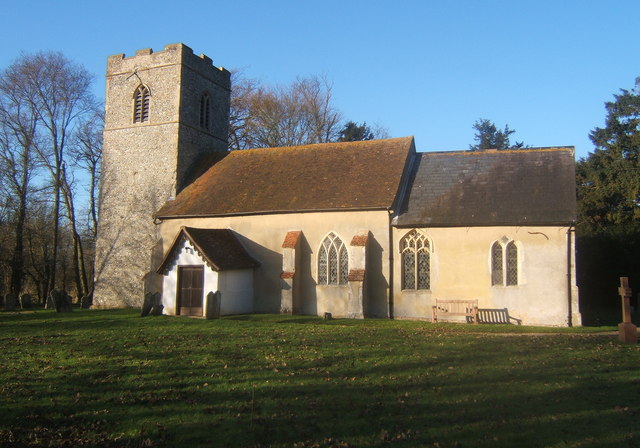
Character and landscape
The settlement is surrounded by arable fields and pasture and shows the typical features of Suffolk's countryside. Buildings in and around the village commonly include older brick and timber-framed houses, outbuildings and traditional farm complexes. The landscape and quiet lanes make the area attractive for walking and for those interested in rural heritage.
History and name
Like many Suffolk villages, Naughton has medieval origins and developed around its church and agricultural economy. The place-name likely has Old English roots, though precise derivations vary in different sources; such names often reflect a topographical feature or an early landholder. Over the centuries the village's pattern of fields, lanes and smallholdings has changed with agricultural practices and local land ownership.
St Mary’s church
The parish church of St Mary is the historic and social centre of the community. Churches of this dedication in Suffolk frequently contain medieval fabric, with a simple plan of nave and chancel, and traditional features such as a tower, stonework details and a churchyard. The building continues to host services and community events, linking present-day village life to its longer past.
Community and significance
Naughton’s small size gives it a quiet, rural character, and nearby towns and villages provide services and connections. The village illustrates the broader patterns of settlement, farming and parish organization that have shaped much of rural Suffolk. For further local information see Naughton.
- Typical features: parish church, farmhouses, country lanes
- Landscape: arable fields and hedgerows
- Interest: rural heritage, walking and local history
Related articles
Author
AlegsaOnline.com Naughton, Suffolk Leandro Alegsa
URL: https://en.alegsaonline.com/art/68802
Sources
- suffolkchurches.co.uk : "Suffolk Churches"
- crsbi.ac.uk : crsbi.ac.uk