
Navassa Island
Navassa Island is an uninhabited Caribbean island claimed by both the United States and Haiti. Once a guano-mining site, it is now administered as a U.S. national wildlife refuge with restricted access.
Navassa Island is a small, uninhabited island in the Caribbean Sea that lies roughly two square miles in area. It sits between Haiti and Jamaica and has long been notable for its remote position, lack of permanent fresh water, and dramatic limestone cliffs. The United States currently exercises administrative control and lists the island under the jurisdiction of the U.S. Fish and Wildlife Service, while Haiti retains a competing claim.
Image gallery
10 Images


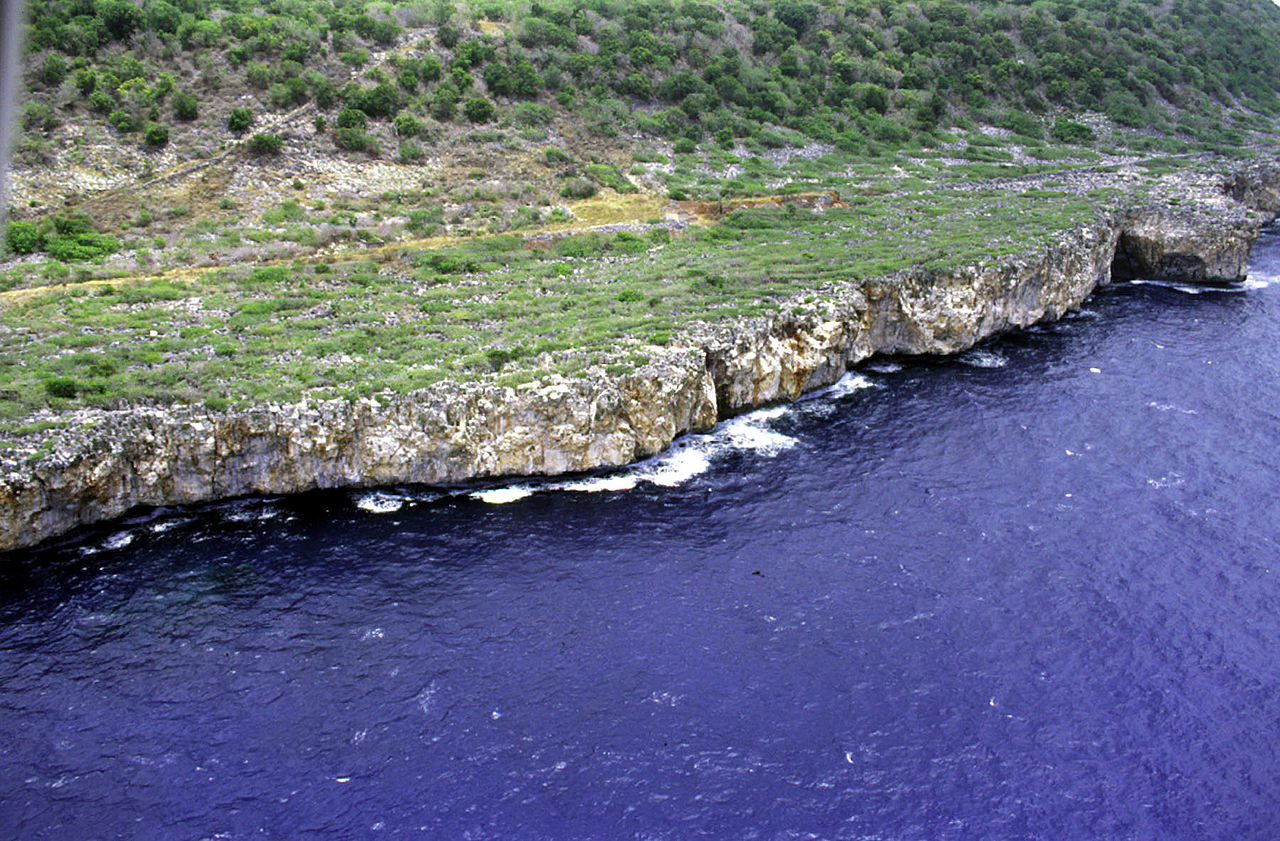


Geography and natural features
The island is rocky and largely treeless, with steep shorelines and a few limited beaches and coves. Natural habitats include coastal scrub, seabird nesting sites and surrounding coral reefs that support marine life. Because of its isolation and relatively undisturbed shoreline, Navassa is important for migratory and resident sea birds and for reef and reef-associated species.
Human history and uses
European mariners recorded the island as early as the 16th century, noting its scarcity of fresh water and its hazardous reefs. In the 19th century, Navassa became economically important to the United States under the Guano Islands Act: guano (bird droppings) was harvested as fertilizer and sparked a period of industrial activity. Mining operations ceased toward the end of the 19th century, and the island has not supported a permanent civilian population since the early 20th century. A lighthouse and other small facilities were established for navigation, especially after the opening of the Panama Canal increased trans-Caribbean shipping.
Legal status and administration
Navassa’s sovereignty has been disputed. Haiti has asserted a claim to the island based on geographic proximity and historical ties, while the United States maintains a claim based on actions taken under American law in the 19th century and subsequent administrative control. Although the dispute has not resulted in formal international adjudication, the United States has maintained effective administration, transferring responsibility to the Department of the Interior and later to the U.S. Fish and Wildlife Service. The island is managed as a protected area with limited access.
Conservation, access, and current importance
Today Navassa Island is managed primarily for conservation. It was designated as a national wildlife refuge and access is restricted to scientific, conservation, or government visits by permit. Protections focus on seabird colonies, marine ecosystems, and removal of invasive species where feasible. The surrounding waters are valued for their coral communities and fisheries, and the island serves as a reference site for studies of relatively undisturbed Caribbean coastal ecology.
Notable facts and context
- Historically associated with guano mining during the 19th century and the Guano Islands Act era.
- Longstanding sovereignty claims by Haiti and administration by the United States; the dispute is approached cautiously in international contexts.
- Uninhabited today and managed for wildlife conservation; most visits require official permission.
External links and references
- Haitian Creole name and related material
- Basic geographic description
- Caribbean Sea context
- Location relative to Guantanamo Bay, Cuba
- United States governance and claims
- Historic maritime accounts
- Early European sightings
- 16th-century references
- Fresh water scarcity notes
- Peter Duncan and 19th-century events
- Guano mining history
- Labor unrest and events
- Late 19th-century timeline
- Regional effects from the Spanish–American War
- Panama Canal and shipping routes
- Early 20th-century maritime history
- Lighthouse and navigation aids
- World War II era status
- Administrative changes in the 1990s
- Department of the Interior transfer
- Fish and Wildlife Service management
Questions and answers
Q: What is the name of the island?
A: The island is called Navassa Island, or La Navase in Haitian Creole.
Q: Where is it located?
A: It is located ninety miles south of Guantanamo Bay, Cuba.
Q: Who claims ownership of the island?
A: The United States government and Haiti both claim ownership of the island.
Q: How was it named?
A: Some sailors sailing with Christopher Columbus named Navassa in 1504 because no fresh water could be found there.
Q: When did Peter Duncan give it to the U.S.?
A: Peter Duncan gave it to the U.S. in the late 1850s for guano mining purposes.
Q: Why was a lighthouse built on Navassa Island?
A: A lighthouse was built on Navassa Island after the opening of the Panama Canal in 1914 as a navigational aid for ships passing through that area.
Q: When did no one live on Navassa again?
A After World War II, no one lived on it again.
Related articles
Author
AlegsaOnline.com Navassa Island Leandro Alegsa
URL: https://en.alegsaonline.com/art/68841
Sources
- cia.gov : "Navassa Island" at CIA World Factbook