
Nassogne
Nassogne is a French-speaking municipality in the Belgian province of Luxembourg (Wallonia), known for its rural character. Population was about 5,045 in 2007; coordinates 50°07′N, 05°20′E.

Overview
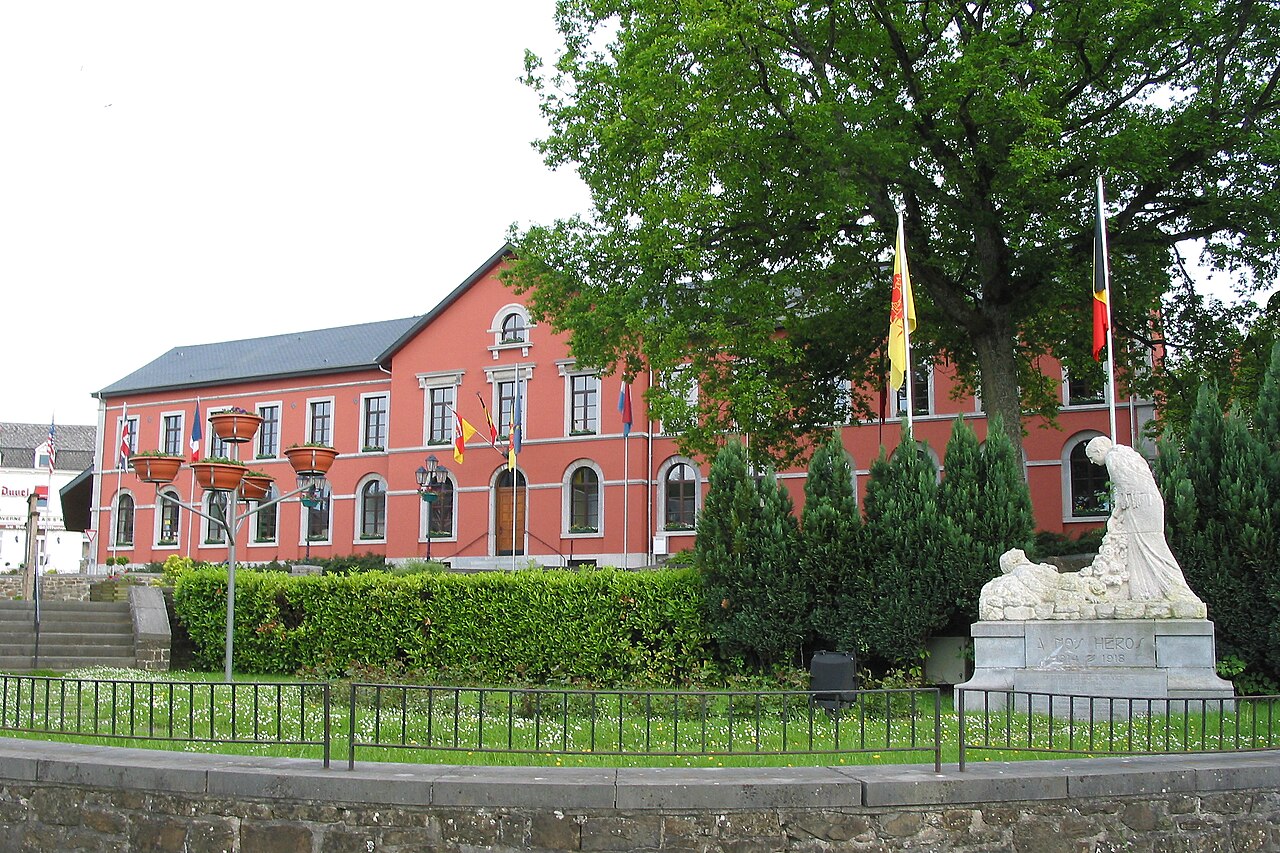
Nassogne is a municipality in the Walloon Region of Belgium. It lies in the southeastern part of the country within the province of Luxembourg, an administrative area distinct from the neighboring Grand Duchy of Luxembourg. The local authority administers a predominantly rural territory and provides municipal services for several villages and hamlets in its area. For an official municipal description see the local municipality resources.
Image gallery
4 Images


Geography and climate
Nassogne is located at approximately 50°07′ North, 05°20′ East. Its landscape is typical of the Ardennes and southern Wallonia, with rolling hills, mixed forests and agricultural land. The area experiences a temperate maritime climate with relatively cool summers and mild winters, and higher precipitation than the national average due to elevation and topography.
Demographics and language
The municipality had about 5,045 inhabitants in 2007, illustrating its small-town character. The population is predominantly French-speaking, reflecting the linguistic profile of Wallonia. Like many rural Belgian communes, Nassogne has a demographic mix of long-term residents, farming families and commuters who work in larger nearby towns.
History and development
Nassogne has historical roots typical of the region, with settlement patterns influenced by medieval landholding, agriculture and forest resource use. Over time, municipal boundaries were shaped by administrative reforms in Belgium. Many local landmarks and churches date from historical periods but have been adapted or conserved by the community.
Economy, culture and points of interest
The local economy is based largely on agriculture, forestry and small-scale commerce, supplemented by rural tourism and local services. Community life often centers on village festivals, markets and parish activities. Visitors appreciate countryside walking routes, seasonal events and quiet village atmospheres rather than large urban attractions.
Notable distinctions
- Administrative note: The province of Luxembourg in Belgium should not be conflated with the neighboring country of Luxembourg.
- Practical info: Coordinates, local governance and population figures are useful starting points for further research; see the municipal page or provincial resources for up-to-date statistics and visitor information.
Related articles
Author
AlegsaOnline.com Nassogne Leandro Alegsa
URL: https://en.alegsaonline.com/art/68466
Sources
- statbel.fgov.be : Werkelijke bevolking per gemeente op 1 januari 2007 / Population de droit par commune au 1 janvier 2007 (.xls)
- statbel.fgov.be : Geografische coördinaten van de gemeenten (.xls)