
Myra (ancient Lycian city)
Ancient city in Lycia near modern Demre (Kale) in Antalya Province, Turkey, noted for Lycian rock-cut tombs, a large Roman theatre and its association with Saint Nicholas.
Overview
Myra was an important urban centre of ancient Lycia, situated on the fertile floodplain of the river Myros (today the Demre Çay). The site lies close to the modern town of Kale (Demre) in Antalya Province, Turkey, and is reached from coastal roads that cross the alluvial plain between the nearby mountain ranges and the former coastline. Myra's position once gave it access to the sea, but centuries of river silting transformed its harbour and shoreline.
Image gallery
10 Images





Location and landscape
The ancient settlement occupied low ground between Alaca Dağ and the Massikytos range and benefited from rich agricultural land irrigated by the Myros. The river is now called the Demre Çay; its changing course and repeated deposition of sediment have altered the character of the coast since antiquity. The site is within the modern administrative boundaries of Antalya Province and is commonly identified in the field with the ruins visible near the town of Kale (Demre).
History and development
Archaeological and literary evidence show that Myra was occupied from the early first millennium BCE and became one of the principal cities of the Lycian League. It continued to flourish under Hellenistic and Roman rule, when public buildings and monuments were constructed and the city functioned as a regional centre of administration and trade. In late antiquity Myra was an episcopal seat and retained religious significance into the Byzantine period.
Archaeological remains
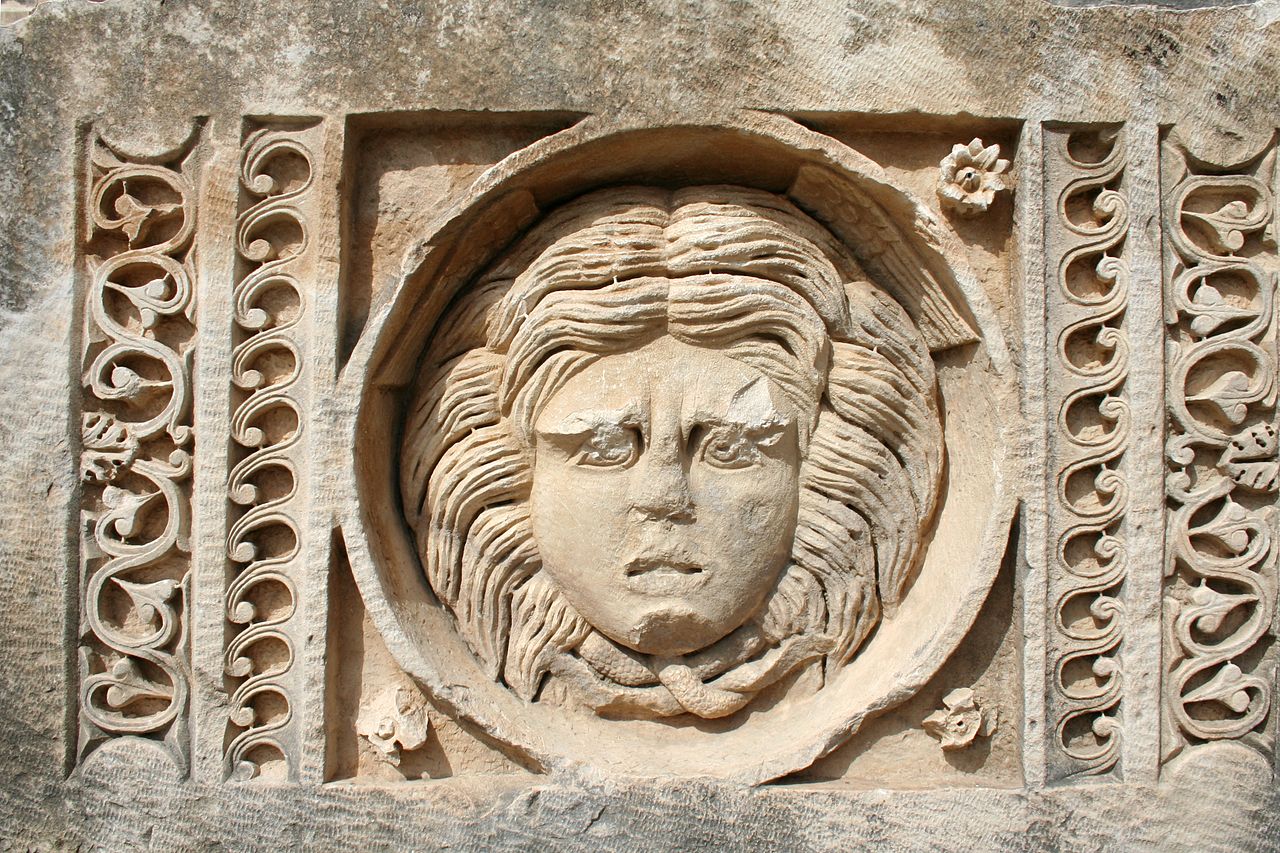
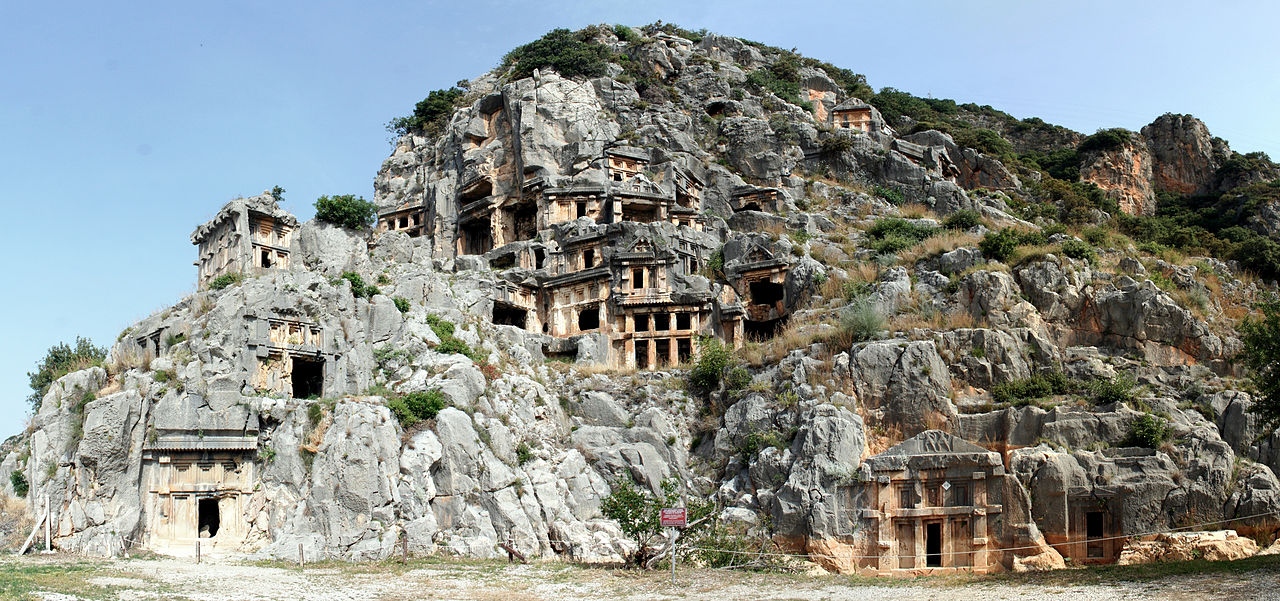
The site preserves a range of monuments that reflect successive phases of occupation. Among the most distinctive are the Lycian rock-cut tombs carved into the cliff faces, which display carefully worked façades imitating wooden architecture. Other important remains include a large Roman theatre built into the slope, a well-preserved agora and commercial areas, bath complexes, and the foundations of churches and episcopal structures associated with the Christian community.
- Rock-cut tomb façades and chamber tombs from the Lycian period and later.
- Roman-period theatre and public buildings from the imperial era.
- Byzantine churches and a bishopric centre tied to the Christian history of the region.
Saint Nicholas and religious significance
Myra is widely known in Christian tradition as the seat of the 4th-century bishop Nicholas, commonly venerated as Saint Nicholas. Historical and hagiographical accounts connect him to charitable deeds and episcopal activity in the city. From the medieval period onward his association with Myra enhanced the town's reputation as a pilgrimage destination; parts of his relics were later taken to Bari in southern Italy, a transfer that further spread his cult.
Modern study, tourism and conservation
Excavation and conservation work at Myra have revealed its long occupational history and produced artefacts now displayed in local museums. Today the ruins are a popular destination for visitors interested in Lycian culture and late antique Christianity. Conservation challenges include weathering of the rock-cut tombs, vegetation growth, and the need to manage tourism sensitively so that both monumental façades and archaeological stratigraphy are preserved for future study. The river valley, visible vestiges of the ancient town and the nearby landscape offer a compact illustration of how coastal change and human settlement interacted over millennia.
For general location and travel information the river that served the ancient harbour is referred to as Myros (Demre Çay) in modern sources, and visitors typically use the town of Demre/Kale as their base for exploring the ruins.
Related articles
Author
AlegsaOnline.com Myra (ancient Lycian city) Leandro Alegsa
URL: https://en.alegsaonline.com/art/67989