
Movie projector
A device that displays moving images by projecting them onto a screen; covers how projectors work, their components, historical development, common uses, and distinctions from cameras.
Overview
A movie projector is a device that presents sequences of still images rapidly enough to create the illusion of continuous motion. Traditionally it cast light through strips of photographic film onto a projection screen, but modern systems commonly use digital light engines. Projectors combine optics, mechanical transport, and illumination to convert recorded frames into a visible, enlarged image for audiences viewing moving pictures.
Image gallery
10 Images


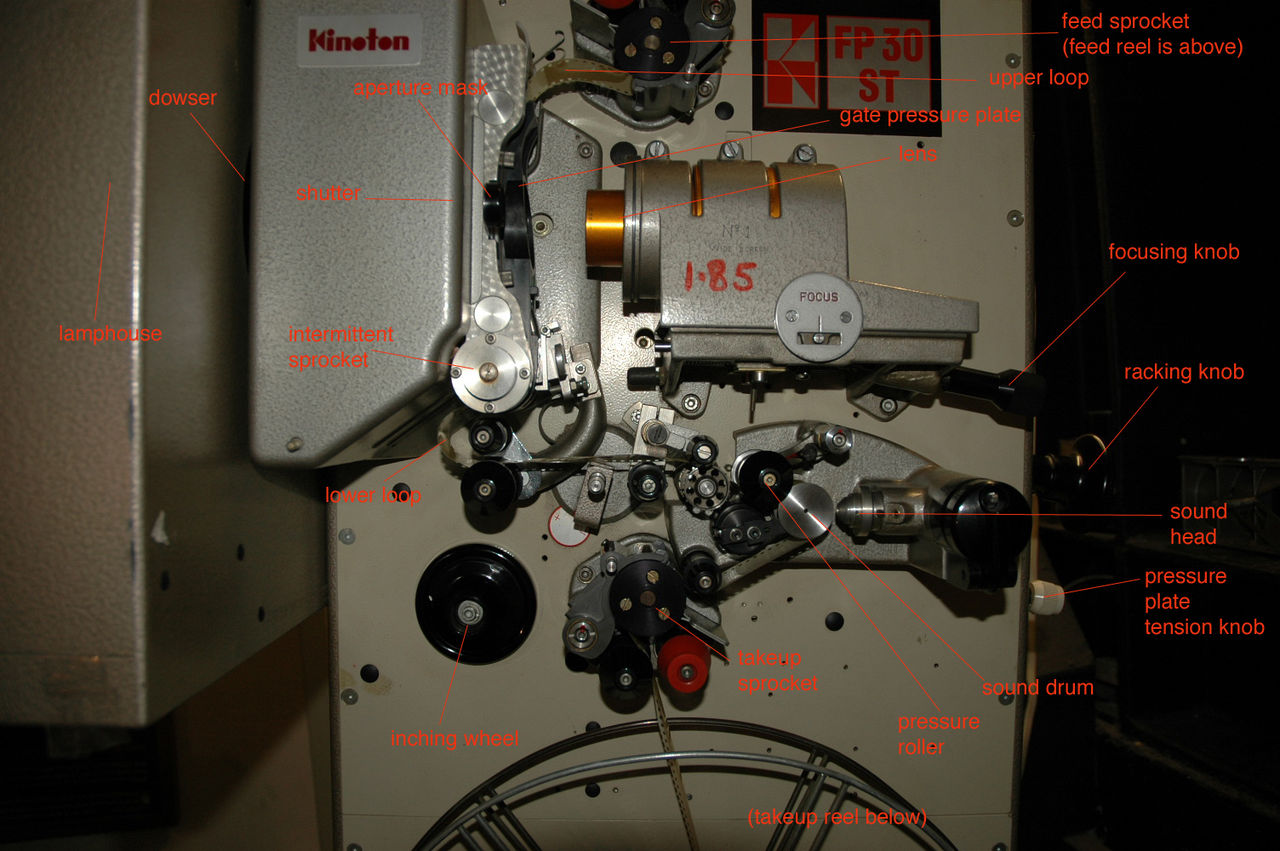


Parts and operation
Fundamental elements include a light source, a means of holding and advancing the image medium, an optical lens, and a shutter that interrupts the beam to reduce flicker. Film projectors physically move celluloid or polyester film frame by frame, while digital projectors use chips (DLP, LCD, or LCoS) to modulate light. Basic parts often cited are:
- Illumination: lamp or laser providing the light.
- Transport mechanism: sprockets, rollers, or electronic frame buffering.
- Optics and lens: focusing and enlarging the image.
- Shutter and synchronization: controls frame timing and sound sync.
History and development
Projection evolved from earlier image lanterns and peep-show devices into large-screen systems in the late 19th century. Early motion projection emerged after inventors combined photographic sequences with improved light sources and intermittent movement. Over the 20th century the technology matured with standardized film formats (such as 35 mm) and integrated audio; late 20th–early 21st century advances moved most commercial cinemas to digital projection systems and standardized digital packages and servers.
Uses and importance
Projectors remain central to cinema exhibition and are used widely in education, business presentations, home theaters, and art installations. They enable large-scale viewing that single-display devices cannot match, and their specifications—brightness, contrast, resolution, and color accuracy—affect perceived image quality.
Distinctions and notable facts
Although many optical and mechanical elements are similar to those inside movie cameras, projectors differ primarily in illumination and sound reproduction methods. Other notable points include differences between film and digital projection workflows, the importance of frame rate and shuttering for smooth motion, and practical concerns such as bulb heat and maintenance. Contemporary cinema increasingly relies on digital standards and file-based distribution while archival and specialty screenings continue to use film projectors.
Related articles
Author
AlegsaOnline.com Movie projector Leandro Alegsa
URL: https://en.alegsaonline.com/art/67200