
Mount Tate (Tateyama) — Peak of the Northern Hida Mountains
Mount Tate, or Tateyama, is a prominent peak group in the Northern Hida (Japanese Alps), known for three summits, alpine scenery, cultural sites and rare perennial ice fields in Japan.
Overview
Mount Tate, commonly called Tateyama, is a prominent mountain group in the northern Hida Mountains, often referred to as the Northern Japanese Alps. Located in the southeastern part of Toyama Prefecture, it forms the dominant massif of the Tateyama range and is one of the most famous highland landscapes in central Japan. The name Mount Tate is used collectively for three closely associated summits and the ridgelines that connect them.
Image gallery
10 Images




Peaks and physical characteristics
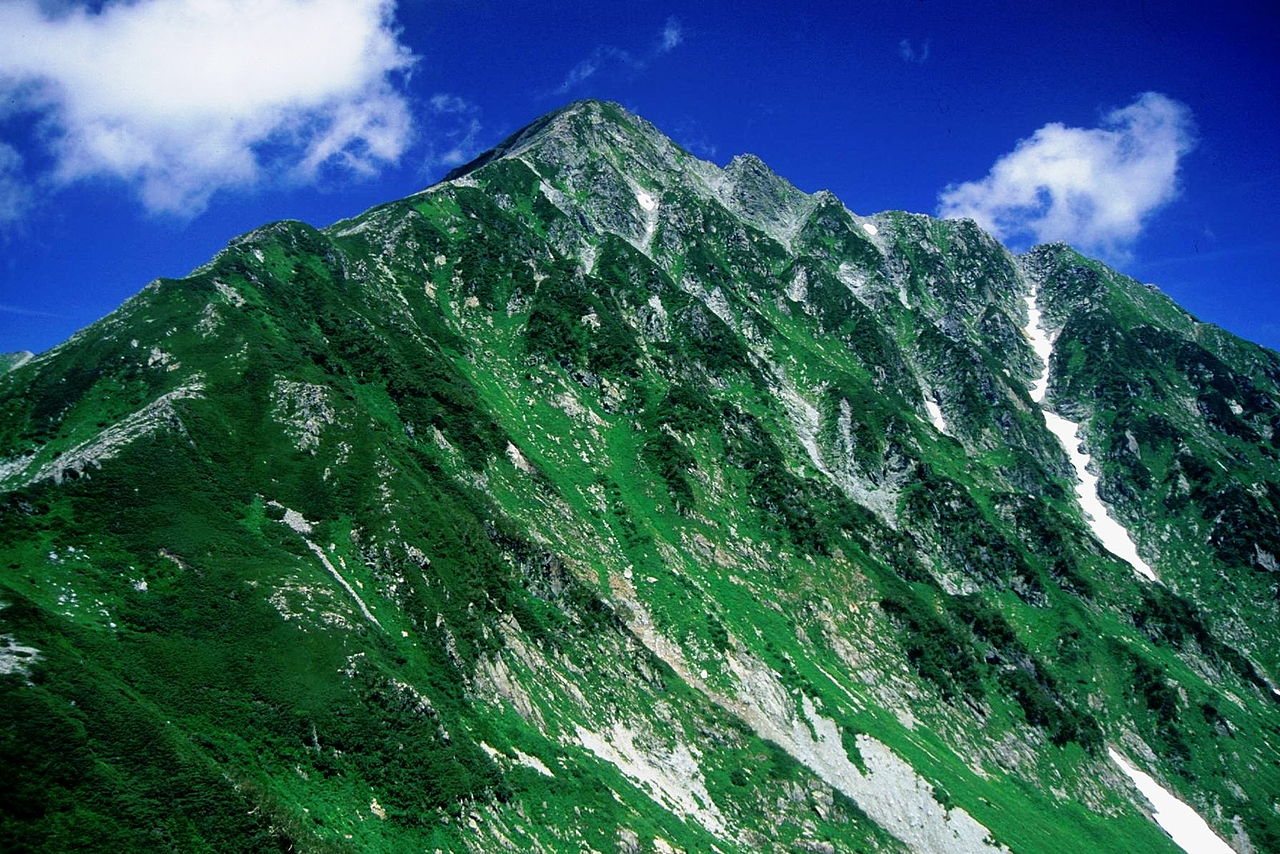
The Mount Tate grouping traditionally comprises three principal summits: Mt. Oyama (often written Mt. O) at about 3,003 m, Mt. Onanji at about 3,015 m, and Fujinooritate at about 2,999 m. These peaks rise sharply above alpine basins and cirques and display classic high-mountain features such as steep rock faces, talus slopes, and persistent snowfields. The range sits within Chūbu-Sangaku National Park, which was established in 1934 to protect the distinctive landscapes of the Northern Alps.
Glacial features and geology
While Japan lacks large continental glaciers, Mount Tate and some neighboring high peaks preserve perennial ice and compacted snow in shaded cirques. These small ice masses and perennial snowfields are noteworthy because they are among the few places in modern Japan where year-round frozen ice persists; they are sometimes described in literature as small glaciers or glacial remnants and are of interest for climate and geomorphological studies. The rock composition of the range includes metamorphic and igneous units typical of the Japanese Alps, with ongoing processes of frost weathering and erosion shaping the terrain.
History, culture and conservation
Tateyama has a long cultural history as both a site of mountain worship and a destination for mountaineers. Historically, it was regarded as sacred in mountain-religion traditions and attracted pilgrims and ascetic practitioners. The area became a focus of modern mountain tourism and scientific exploration from the late 19th and early 20th centuries onward. Conservation measures are in place as part of Chūbu-Sangaku National Park to balance public access with protection of fragile alpine ecosystems and the rare perennial ice features referenced by researchers and public guides (glaciers and perennial ice).
Access, recreation and significance
Mount Tate is accessible by a combination of public transport, roadways, and mountain trails. The region is popular for hiking, alpine climbing, nature observation, and photography. Visitors should be prepared for rapidly changing weather, steep terrain, and seasonal snow that can linger late into summer. Facilities and routes vary from established trails and mountain huts to more technical climbing lines on higher rock faces.
Notable facts and distinctions
- Mount Tate is part of the iconic Northern Japan Alps and ranks among the country's better-known highland massifs.
- The mountain group contains small perennial ice bodies that draw scientific interest for studies of high-elevation microclimates in Japan.
- It lies within Chūbu-Sangaku National Park, one of Japan's earliest national parks, designated in 1934 to protect alpine environments.
For hikers, naturalists and those interested in cultural landscapes, Mount Tate offers a combination of dramatic alpine scenery, historical depth, and ecological features uncommon elsewhere in Japan. Practical information, trail conditions and conservation rules are provided through local park authorities and visitor centers; readers should consult official sources before planning an excursion.
Related articles
Author
AlegsaOnline.com Mount Tate (Tateyama) — Peak of the Northern Hida Mountains Leandro Alegsa
URL: https://en.alegsaonline.com/art/67102
Sources
- alpen-route.com : Mt.Tate
- env.go.jp : "Chūbu-Sangaku National Park"