
Moses (Michelangelo)
Moses is a marble sculpture by Michelangelo created for Pope Julius II’s tomb, famous for its expressive anatomy and the depiction of horns derived from a Biblical translation.
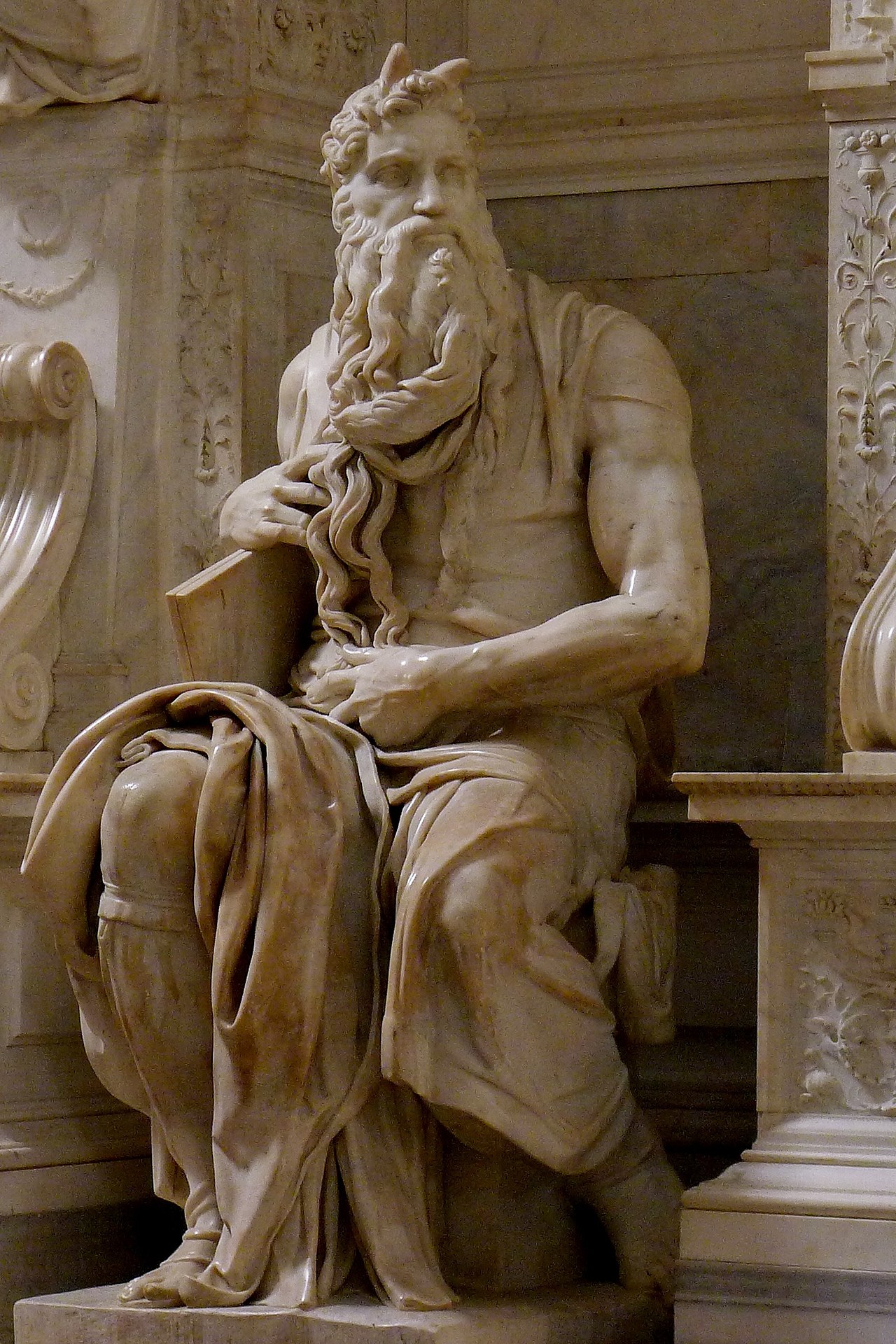
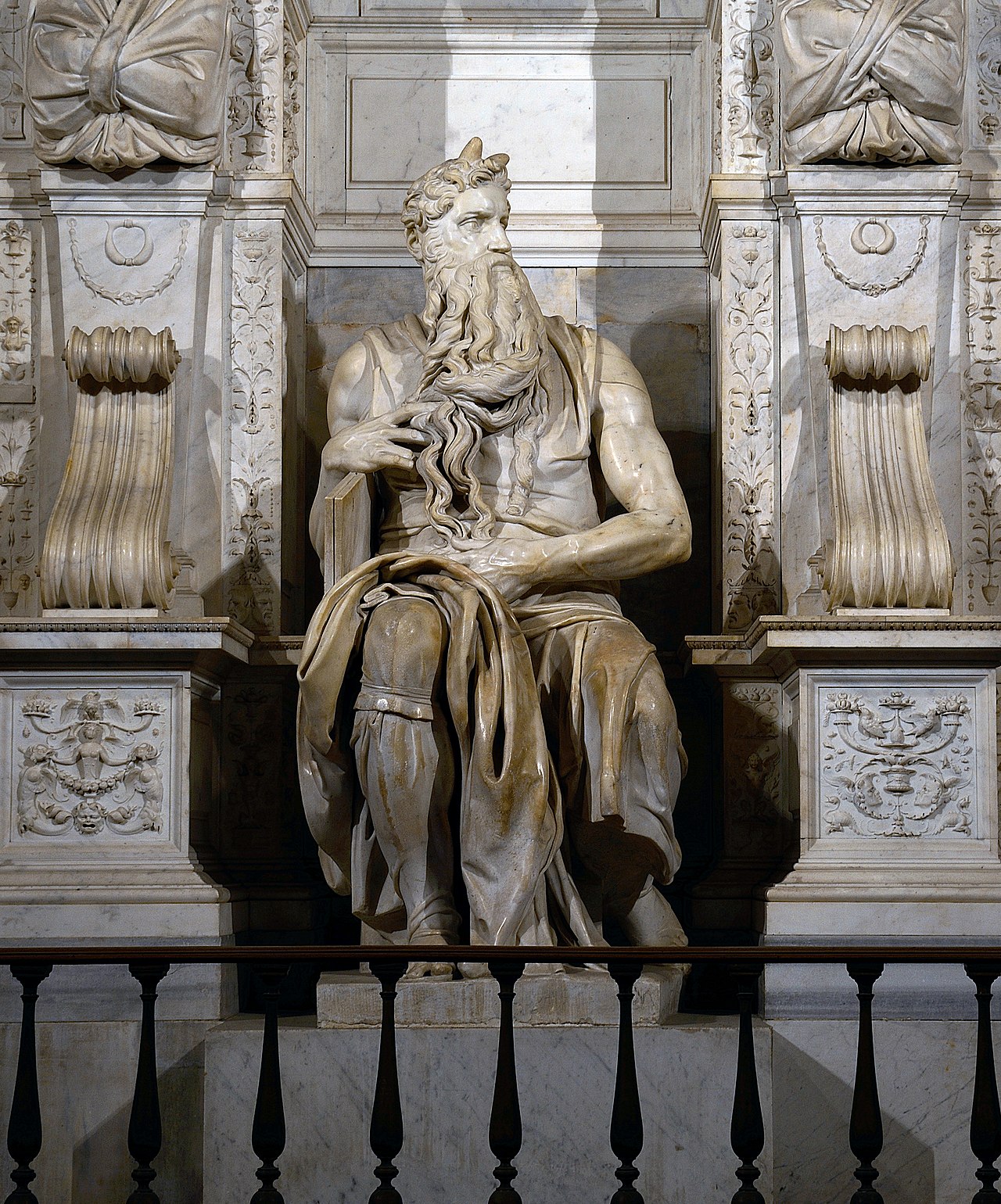
The sculpture known as Moses is a monumental marble work carved by Michelangelo early in the 16th century. It portrays the Israelite leader Moses seated, with a muscular, imposing body, a long flowing beard and a tense, watchful expression. The piece is celebrated for its anatomical precision, dynamic posture and psychological depth.
Image gallery
8 Images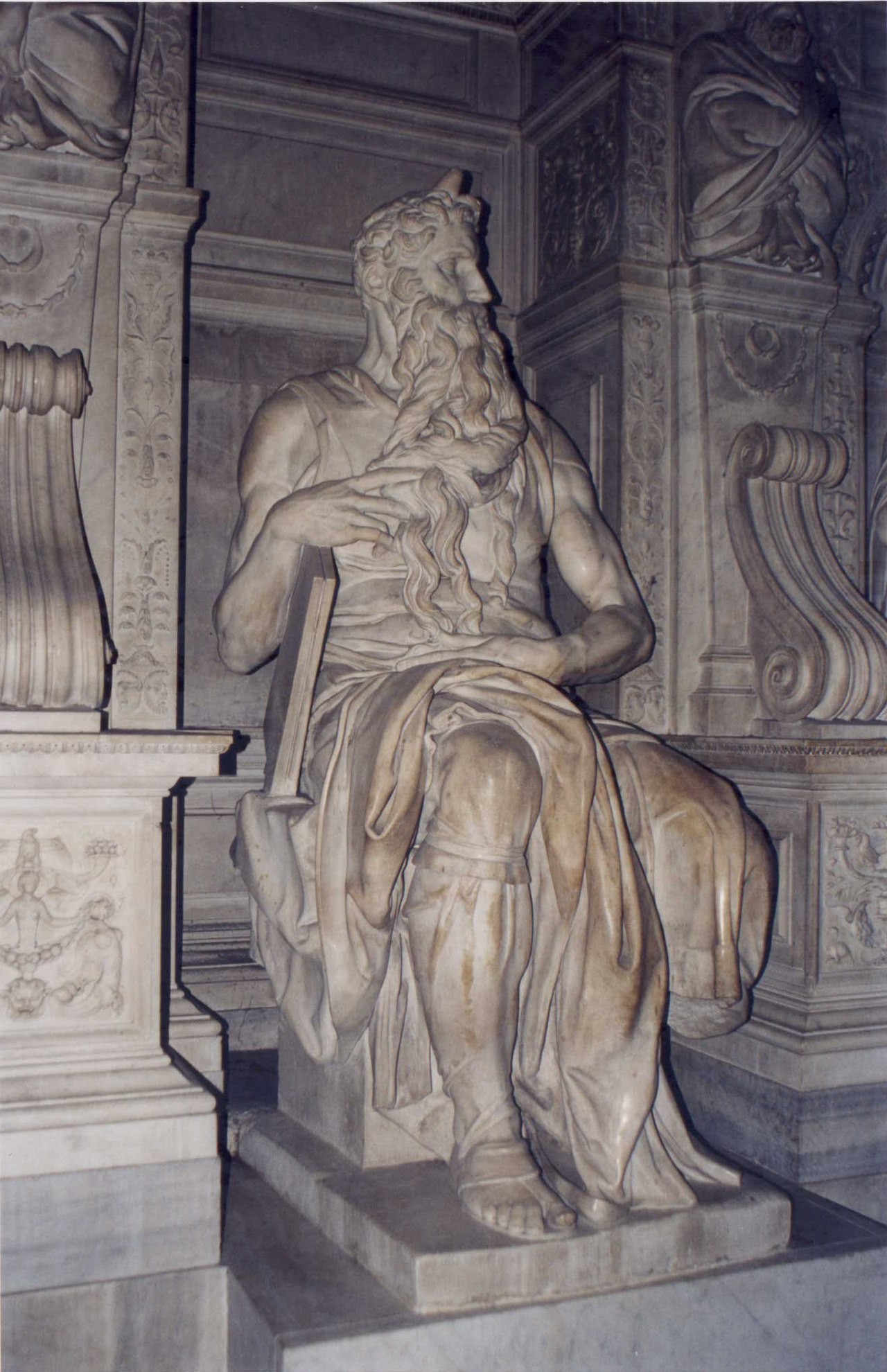


Physical characteristics
Michelangelo’s Moses shows the figure seated with one hand holding the tablets of the law and the other gripping his beard, as if arrested in thought or about to rise. The carving emphasizes strong musculature, lifelike drapery and an animated face. Unusually, the sculpture includes horn-like protrusions on Moses’ head — a feature that has drawn sustained attention and scholarly explanation.
Origins and context
The statue was executed as part of the larger project for the tomb of Pope Julius II, a commission that occupied Michelangelo for decades. Completed around the early 1500s, the statue was intended for a funerary ensemble and remains installed in the church of San Pietro in Vincoli in Rome, where it attracts many visitors and students of Renaissance art.
Why horns?
The horns derive from a translation tradition: the Latin Vulgate rendered a Hebrew description of Moses’ face as "horned" rather than "radiant," which led medieval and Renaissance artists to visualize him with horns. This iconographic detail became accepted in Western art and explains the otherwise surprising feature.
Importance and legacy
Michelangelo’s Moses is widely regarded as one of his masterpieces for its fusion of anatomical virtuosity and emotional intensity. It influenced subsequent depictions of biblical figures and remains an important study for sculptors and historians. For further reading on Michelangelo and Renaissance sculpture, see general resources such as entries on the artist and the Biblical narrative in the Hebrew Bible.
- Location: San Pietro in Vincoli, Rome.
- Commission: Tomb of Pope Julius II.
- Notable feature: horned depiction linked to translation history.
Related articles
Author
AlegsaOnline.com Moses (Michelangelo) Leandro Alegsa
URL: https://en.alegsaonline.com/art/66843