
Montfaucon-d'Argonne
Montfaucon-d'Argonne is a small commune in the Meuse department of Grand Est, northeastern France, known for its hilltop ruins and its prominent role and memorials from World War I.
Overview
Montfaucon-d'Argonne is a rural commune in the Meuse department of the Grand Est region in north-eastern France. It occupies a strategic hill and surrounding countryside typical of the Argonne area, and the village is small in size with an economy based largely on agriculture and local services.
Image gallery
3 Images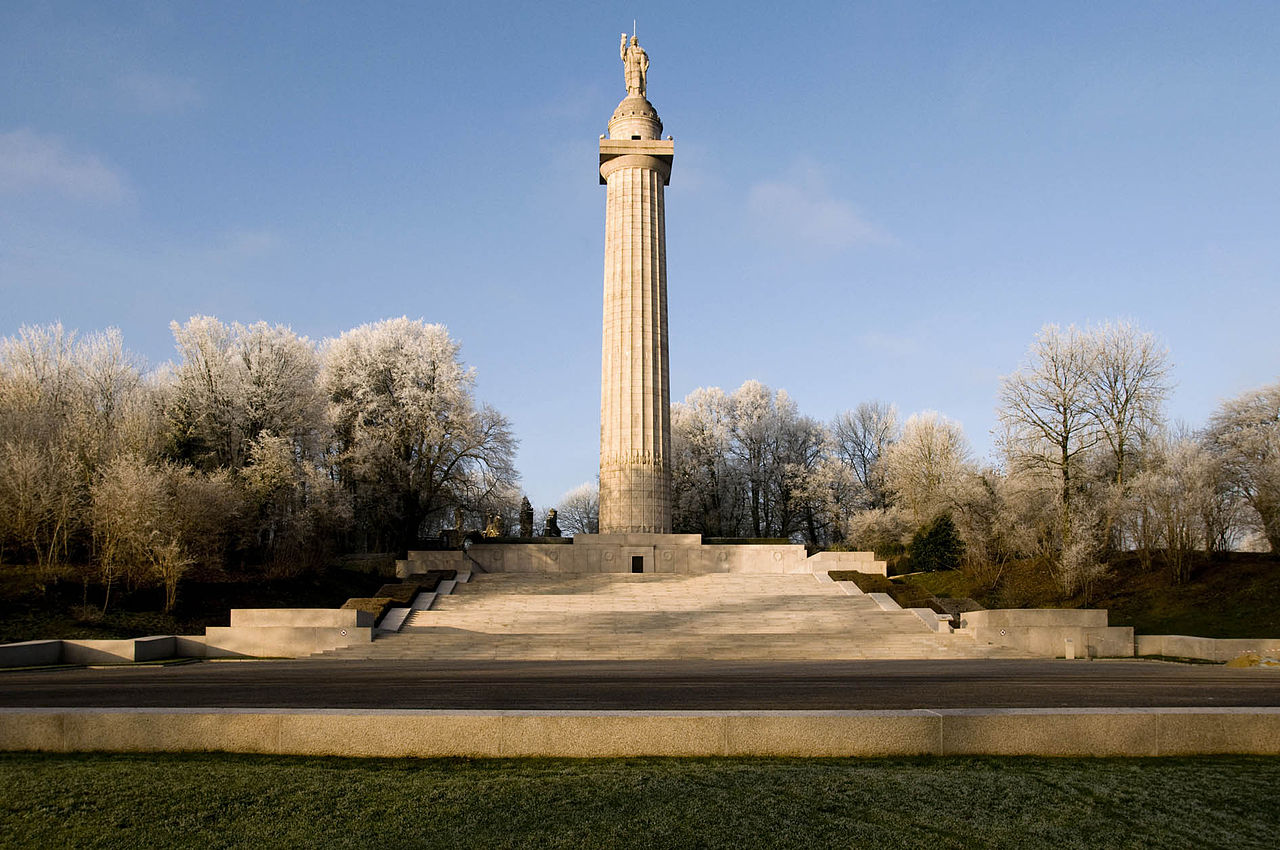


Geography and notable features
The settlement sits on and around a prominent rise that overlooks the surrounding valleys. The elevated position gave the site military importance in several historical periods and today provides wide views across the Meuse-Argonne landscape. Remnants of older stone structures and earthworks are visible near the summit and within the rebuilt village.
History
Montfaucon-d'Argonne has medieval roots and for centuries its hill was a locally important defensive position. Its modern notability comes from the First World War: the village and its heights were heavily contested during the Meuse-Argonne fighting in 1918. Much of the original village was destroyed in the conflict and the post-war years saw reconstruction alongside preservation of battlefield remains.
Memorials and visitor information
Because of its wartime role, Montfaucon-d'Argonne is associated with several memorials and sites of remembrance. A prominent American monument stands near the village to commemorate U.S. forces who fought in the Argonne sector, and several marked trails allow visitors to follow parts of the former front lines. Nearby is one of the large World War I American cemeteries and other commemorative landscapes that attract researchers, descendants and visitors interested in military history and remembrance.
Things to see
- Hilltop ruins and viewpoints: fragments of fortifications and panoramic outlooks across the Argonne.
- War memorials: an American monument and interpretive markers describing the 1918 operations and local wartime experience.
- Country walks: lanes and paths linking the village to nearby forests, farmsteads and battlefield sites.
Today Montfaucon-d'Argonne combines quiet village life with its role as a place of historical memory. It is served by regional roads and is commonly visited as part of tours of the Meuse-Argonne battlefields; facilities are modest, and visitors are encouraged to respect the commemorative character of many sites in and around the commune.
Related articles
Author
AlegsaOnline.com Montfaucon-d'Argonne Leandro Alegsa
URL: https://en.alegsaonline.com/art/66337