
Monism: Philosophical View of Unity
Monism is the doctrine that reality is ultimately one unified substance or principle. It appears in metaphysics, religion, and science as various forms such as material, ideal, and neutral monism.
Overview
Monism is the philosophical position that the variety of things we experience are manifestations of a single fundamental reality. Rather than positing two or more kinds of substance or principle, monist views explain diversity as aspects, states, or appearances of one underlying entity. Monism is most often set against dualism and pluralism, which hold that two or many distinct kinds of things exist respectively.
Image gallery
3 Images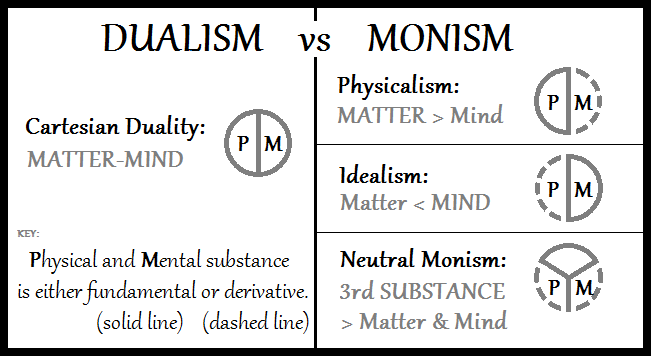

Main forms
- Material or physical monism: the claim that everything is ultimately physical or material, often aligned with contemporary physicalism in the sciences.
- Idealist monism: the view that reality is fundamentally mental or spiritual, with physical phenomena dependent on mind or consciousness.
- Neutral monism: holds that the basic constituent of reality is neither purely mental nor purely physical but a neutral type of entity from which both emerge.
- Substance monism: the classical idea that there is one kind of substance (for example, a single substance expressed in many modes).
History and traditions
Elements of monism appear across cultures and eras. Early Greek thinkers proposed unity beneath change, and several religious and philosophical schools—most notably Advaita Vedanta in India and the work of some modern philosophers—articulate nondual or monist interpretations of existence. In the early modern period, thinkers such as Baruch Spinoza defended a form of substance monism, identifying God or Nature as the one substance.
Applications and debates
Monism shapes how people approach the mind–body problem, metaphysical explanation, and the relation between science and religion. Material monism underpins much of contemporary neuroscience and philosophy of mind, while idealist and neutral monist positions offer alternative frameworks for understanding consciousness. Debates about monism often focus on whether a single principle can account for subjective experience and whether apparent plurality can be reduced without losing explanatory power.
Notable distinctions
Monism should not be equated with uniformity of appearance: it allows for diversity, change, and complex structure while maintaining a single ontological ground. It is a broad family of positions rather than a single doctrine, and remains a central topic in metaphysics, comparative religion, and philosophy of mind.
Related articles
Author
AlegsaOnline.com Monism: Philosophical View of Unity Leandro Alegsa
URL: https://en.alegsaonline.com/art/66065