
Noble savage: idea, history, and cultural legacy
Overview of the 'noble savage' concept: its meaning, development in early modern Europe, examples, criticisms, and lasting influence on literature, philosophy, and colonial discourse.
The term "noble savage" names an influential and disputed idea: that people living in a pre‑civilized or "natural" condition possess a purity or moral integrity lost under complex societies. In its simplest form the concept contrasts a supposedly uncorrupted human nature with the corruptions attributed to institutions, cities, commercial life, or excessive refinement. This contrast shaped debates in moral philosophy, literature, and anthropology from the early modern period onward.
Image gallery
9 Images
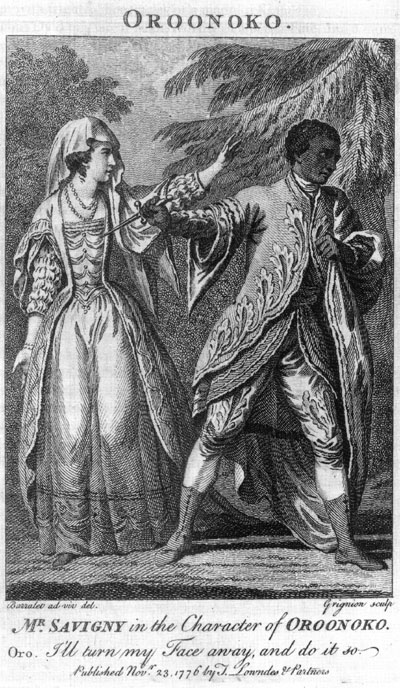


Core meaning and typical features
At its core the noble‑savage notion contains several related claims: that humans in simpler social settings are essentially virtuous; that social structures—property, law, or luxury—produce greed, vanity, or vice; and that proximity to "nature" fosters honesty, courage, and communal bonds. Writers and artists who adopt this idea often describe life outside metropolitan centers as more authentic and emotionally honest. The phrase can function as praise, an aesthetic ideal, or a rhetorical device that criticizes a contemporary society taken to be decadent or unjust. For a concise framing see early accounts of the idea.
Historical development
The idea circulated in Europe from the 17th century and became especially prominent in the 18th century, when debates about human nature, education, and religion intensified. Some writers and moralists argued against doctrines of innate sinfulness by pointing to examples of simplicity and virtue in peoples deemed "uncivilized." The phrase "noble savage" is often traced to literary use in the 17th century; later Enlightenment thinkers and sentimental novelists popularized a romanticized image of natural goodness. See discussions of the term's appearance in the 17th century and its broader elaboration in the 18th century. Prominent figures who engaged with variants of this view included essayists and reformers who contrasted contemporary manners with simpler lives; critics of the established religious doctrine of original sin sometimes invoked such contrasts. Early commentators and dramatists applied the label to people they imagined beyond European institutions; literary examples include references in works like Dryden's plays (Dryden).
Uses, examples, and influence
The noble‑savage idea influenced many fields. In literature and art it inspired characters who embody natural virtue and offered a foil for urban or courtly corruption. In political thought the contrast between a "state of nature" and civil society entered arguments about rights, law, and governance. Explorers' accounts, travel literature, and imaginative fiction circulated images that were alternately admiring and exoticizing. For general discussions of civilization as a category see civilization and reflections on human nature in sources grouped under humans.
Critiques and complications
Scholars and critics have highlighted multiple problems with the noble‑savage idea. It tends to essentialize and stereotype diverse peoples, flattening complex societies into a single image of innocence. It can serve both to idealize and to otherize: praising supposed purity while denying historical agency, political complexity, or technological achievement. The image also emerged in colonial contexts where European observers interpreted unfamiliar cultures through familiar moral narratives. Modern anthropology and history emphasize cultural variation, internal social dynamics, and the dangers of projecting romantic ideals onto real communities.
Because the phrase mixes admiration with exoticism, contemporary discussions often treat the noble savage as a rhetorical shorthand rather than an accurate ethnographic description. Its longevity owes to the persistent tension—across philosophy, arts, and politics—between longing for simplicity and the realities of social life. The idea remains a useful touchstone for debates about nature and culture, even as scholars caution against uncritical repetition of its romantic and reductive assumptions.
- Typical claim: natural virtue vs. civilized corruption.
- Origins: early modern literature and Enlightenment debates.
- Legacy: influence on literature, political thought, and cultural stereotypes.
- Criticism: simplification, exoticism, and colonial entanglements.
Further reading should balance primary historical texts with critical scholarship that situates the idea within colonial history, philosophical debates, and modern social science methods.
Questions and answers
Q: What is the noble savage?
A: The noble savage is a concept that dates back to the 17th century, which suggests that without civilization, humans are inherently good and that it is civilization that corrupts them.
Q: When did the concept of the noble savage developed?
A: The concept of the noble savage developed in the 18th century.
Q: Who was one of the first to express the idea of the noble savage?
A: One of the first to express the idea of the noble savage was Shaftesbury.
Q: What did Shaftesbury believe about when humans were "corrupted"?
A: Shaftesbury believed that humans were "corrupted" by commerce and civilization.
Q: What was the counter to the doctrine of original sin?
A: The counter to the doctrine of original sin was the idea of the noble savage.
Q: What was the eighteenth-century cult of "Primitivism"?
A: The eighteenth-century cult of "Primitivism" was the idea that the noble savage, uncorrupted by civilization, was more worthy and authentically noble than the contemporary product of civilized training.
Q: When did the phrase "noble savage" first appear?
A: The phrase "noble savage" first appeared in Dryden's The Conquest of Granada (1672).
Related articles
Author
AlegsaOnline.com Noble savage: idea, history, and cultural legacy Leandro Alegsa
URL: https://en.alegsaonline.com/art/70500
Sources
- scaa.sk.ca : scaa.sk.ca/ourlegacy/exhibit_popularculture
- links.jstor.org : links.jstor.org