
Ashmore and Cartier Islands: Australian external territory in the Indian Ocean
A small uninhabited Australian external territory of coral reefs and sand cays northwest of mainland Australia, important for seabirds, turtles and traditional Indonesian fishers.
The Ashmore and Cartier Islands are an Australian external territory made up of two separate reef groups and a handful of sand islets in the eastern Indian Ocean. Lying north‑west of the Australian mainland and south of the Indonesian island of Roti, the territory is uninhabited and dominated by shallow reefs, lagoons and intermittent sand cays. The islands are known in Indonesian as Kepulauan Pasir and remain a biologically rich but fragile marine area; see local nomenclature at Kepulauan Pasir.
Image gallery
9 Images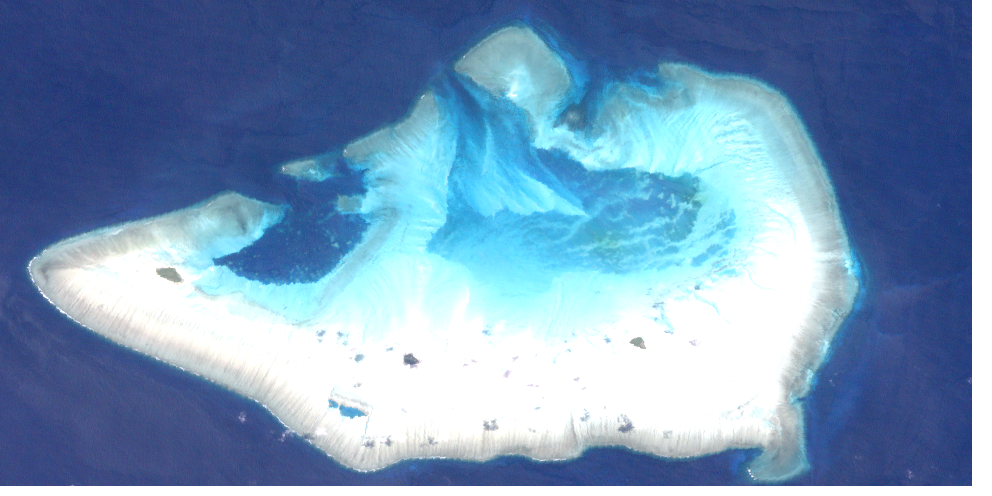


Geography and physical characteristics
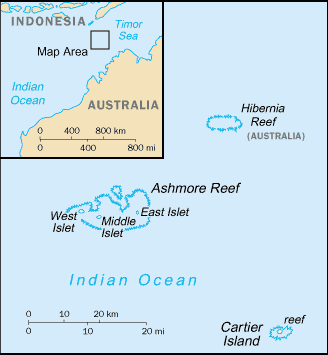
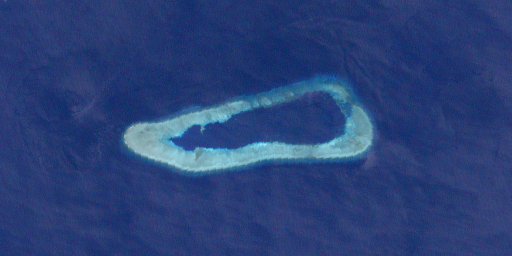
The territory comprises two main features: Ashmore Reef, which itself consists of several islets (commonly referred to as West, Middle and East Islets), and Cartier Island located roughly 70 kilometres to the east of Ashmore. The combined reef and lagoon area is nearly 200 square kilometres, though the amount of permanently dry land is modest—limited to small sand cays and exposed reef flats. There are no developed ports or harbours; vessels must use offshore anchorage when visiting. Ashmore lies approximately 340 kilometres from the Australian coast and about 160 kilometres south of Timor and nearby Indonesian islands.
Ecology and natural values
Despite their small size, these reef systems provide important habitat for marine and bird life. The reefs support corals, reef fish and invertebrate communities typical of tropical Indian Ocean atolls. The islands and surrounding waters serve as breeding and resting sites for seabirds, and as nesting grounds for marine turtles. Migratory shorebirds use the intertidal flats during seasonal movements. Because of these values, the area has been the subject of conservation and protective measures aimed at limiting extractive activities and preserving habitat.
History and administration
The islands have no permanent indigenous population, but they lie close enough to Indonesian islands that traditional fishers have long visited the reefs. Modern arrangements reflect Australian sovereignty combined with recognition of customary use: a memorandum with Indonesia has allowed limited traditional fishing access by nearby communities. Administratively the territory is managed by the Australian Government as an external territory; Australian law applies and agencies are responsible for fisheries, biosecurity and environmental protection in the area.
Human use, regulation and conservation
Contemporary human activity is limited to occasional visits by researchers, rangers and authorised fishers. Commercial development and settlement have not occurred. Management focuses on protecting marine habitats, regulating fishing and preventing introductions of invasive species. Access is controlled and enforcement is carried out by Australian authorities to reduce illegal fishing and to protect breeding wildlife. The islands are sometimes used as a reference site in regional conservation planning because of their relatively undisturbed reef systems.
Notable facts and distinctions
- Uninhabited: there is no permanent human population, only periodic visitation.
- Ecological importance: key nesting and breeding sites for seabirds and marine turtles.
- Traditional fishing: local Indonesian communities have historical customary access that is recognised under bilateral arrangements.
- Maritime features: extensive reef and lagoon area but very limited dry land and no natural harbours.
Because of their isolation and sensitivity, the Ashmore and Cartier Islands remain a focus for marine conservation in the region while also illustrating the challenges of managing remote maritime territories that sit close to international neighbours.
Tags
Related articles
Author
AlegsaOnline.com Ashmore and Cartier Islands: Australian external territory in the Indian Ocean Leandro Alegsa
URL: https://en.alegsaonline.com/art/6584
Sources
- commons.wikimedia.org : Ashmore and Cartier Islands
- cia.gov : "Ashmore and Cartier Islands" at CIA World Factbook
- thecommonwealth.org : Commonwealth Secretariat - Member States
- wikidata.org : wikidata.org/wiki/Q133888
- aleph.nkp.cz : ge754413