
Military diving: roles, equipment, history and operations
Military diving is underwater activity conducted by armed forces for combat, reconnaissance, clearance, salvage and support tasks. This article explains roles, techniques, equipment, and risks.
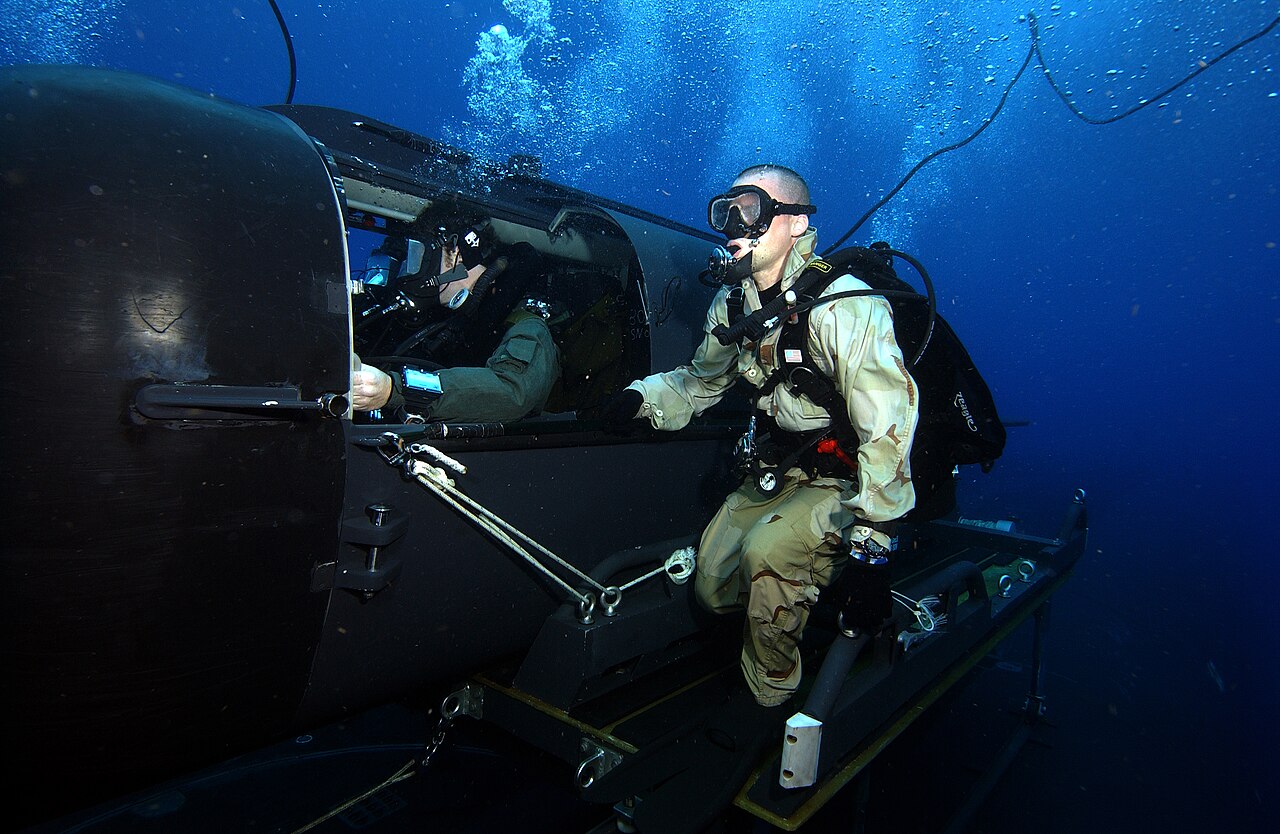
Military diving refers to underwater activity carried out by members of a nation's armed forces to achieve military objectives. Unlike recreational or commercial diving, missions are defined by operational need: stealthy reconnaissance, sabotage, clearing explosive hazards, repair and salvage, or tactical insertion and extraction. Military divers use a range of breathing systems and techniques depending on task, depth, duration and the need for concealment; for a general summary of diving methods see diving techniques.
Image gallery
10 Images




Common roles and mission types
Military divers are organized around specific roles that reflect their training and equipment. Typical categories include:
- Combat or special operations divers — trained to infiltrate hostile areas, conduct reconnaissance, place charges or sabotage ships and infrastructure while minimizing detection.
- Clearance divers — specialists in locating, identifying and neutralizing mines, improvised explosive devices and other underwater ordnance.
- Salvage and repair divers — perform hull inspections, emergency repairs, recovery of equipment and support for naval engineering projects.
- Support and logistical divers — handle port security, underwater construction, light sub-surface survey and training.
Equipment and techniques
Equipment ranges from standard self-contained underwater breathing apparatus (open-circuit SCUBA) to closed- or semi-closed circuit rebreathers that recycle exhaled gas to reduce bubbles and thermal loss. Closed-circuit rebreathers are commonly used for clandestine operations because they produce few or no bubbles, reducing the chance of visual or acoustic detection. Other tools include underwater communication systems, navigation and sonar devices, cutting and welding gear, remotely operated vehicles, and explosive ordnance disposal equipment.
Training, safety and risks
Training combines diving skills with military trades: underwater navigation, demolition and counter‑demolition, seamanship, small-boat handling, medical and hyperbaric awareness, and physical conditioning. Hazards mirror those of other diving plus combat-specific threats: decompression sickness, hypothermia, drowning, equipment failure, underwater explosions, and enemy action. Robust procedures, redundant systems and careful planning are standard risk-mitigation measures.
Historical development and notable facts
The organized use of military divers expanded in the 20th century as navies adopted specialized teams for reconnaissance, sabotage and mine warfare. Throughout modern military history, innovations in breathing apparatus, underwater tools and training have broadened capabilities from simple clearance and salvage to complex clandestine insertions. Many navies maintain dedicated diving units or integrate diving specialists into special forces and engineering corps.
Military diving remains a highly technical and demanding discipline that combines the physiological challenges of the underwater environment with the tactical requirements of armed operations. Its practitioners must balance stealth, safety and mission effectiveness while working in one of the most hostile domains available to military forces.
Related articles
Author
AlegsaOnline.com Military diving: roles, equipment, history and operations Leandro Alegsa
URL: https://en.alegsaonline.com/art/64966