
Military glider: engineless assault aircraft for airborne forces
Towed, engineless aircraft designed to deliver troops and equipment to combat zones. Widely used in World War II, they offered silent, precise insertion but were vulnerable and largely replaced by helicopters.
Military gliders are engineless aircraft that were towed into the air and released to carry soldiers, vehicles and matériel into combat zones. They rose to prominence as a tactical option during the Second World War, when airborne operations expanded rapidly. Unlike recreational or soaring gliders, these types were purpose-built for assault and supply missions and are a distinct category of aircraft with no engines. Towing was normally performed by military transport planes and at times by bombers, which brought gliders close to the objective before release. After release the glider pilot guided the aircraft to an improvised touchdown on open ground or a cleared landing zone near the target.
Design and materials reflected the one-way nature of many missions: gliders were built to be light and cheap so that losses could be accepted in high-risk operations. Builders commonly used low-cost components and simple structures made from inexpensive materials, notably timber and plywood such as wood, rather than heavy metal alloys. Most were lightly or unprotected unarmored, with limited or crude flight controls and ground-handling features like steering mechanisms that were basic by powered‑aircraft standards; many models lacked effective wheel brakes altogether. Crews and cargo were therefore exposed to risk: designers aimed to protect delicate equipment and the personnel they carried, but the landing conditions were often harsh.
Image gallery
4 Images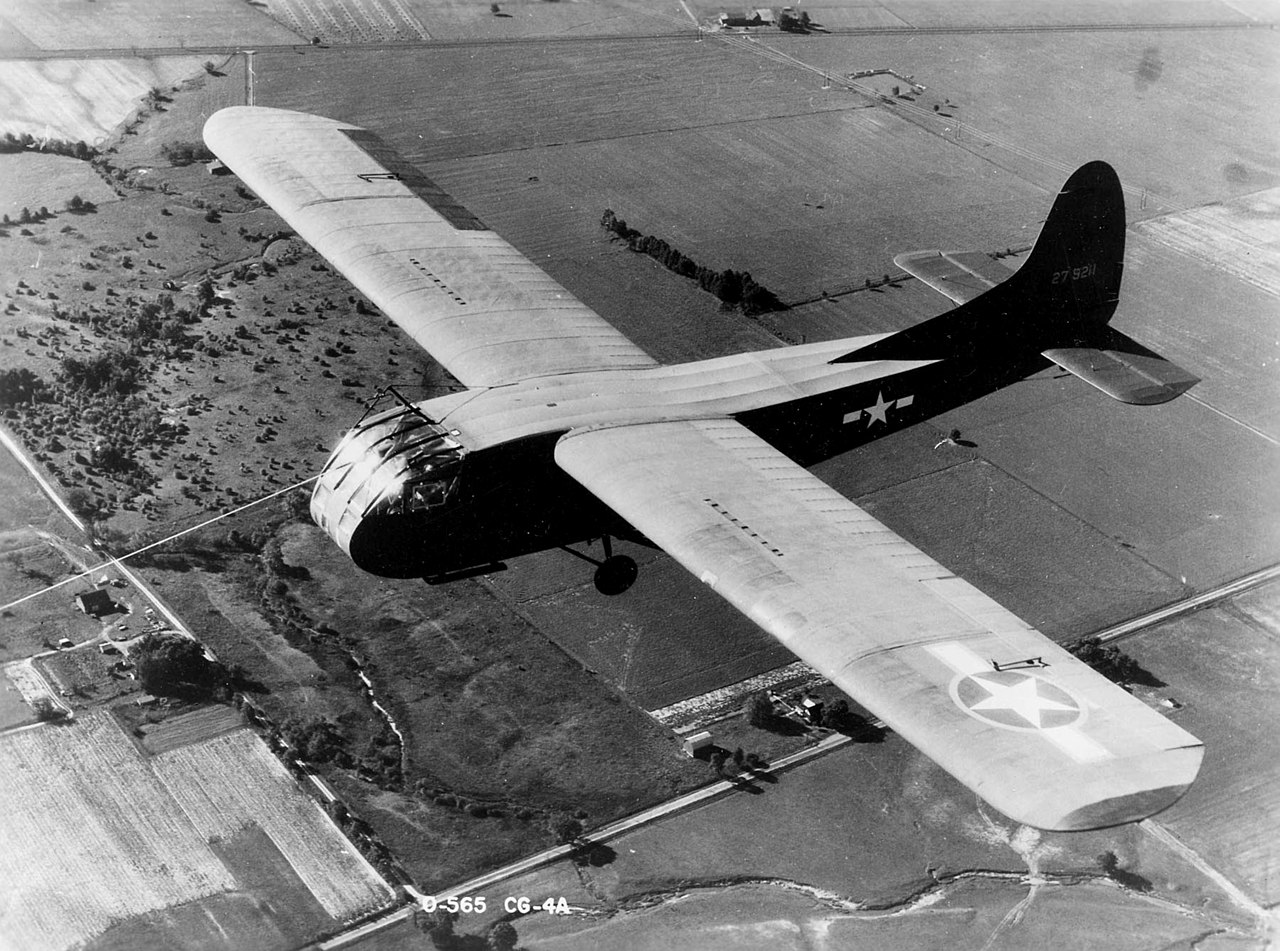



Operational advantages and limitations
Gliders offered specific tactical benefits compared with parachute-borne insertions. Parachute troops and supplies tended to scatter over wide zones, while a glider could deliver concentrated forces and heavier items to a precise spot. Airborne commanders used gliders to land small vehicles, towed and self-propelled guns, and other bulky items that would be difficult to drop by paratroopers or by parachute. Typical payloads included cargo such as light utility vehicles, anti-tank weapons like anti-tank guns, jeeps and light armored pieces such as small jeeps and some light tracked vehicles sometimes referred to as light tanks. The ability to bring men and hardware together intact at the landing zone made glider-borne infantry a potent complement to airborne parachute forces.
Personnel training and unit organisation reflected the method’s intensity. Several nations committed significant resources to train crews: for example, the United States developed large glider schools and numbered many trained crews, producing thousands of designated glider pilots. Other countries such as the Soviets explored unique airborne concepts, including experimental schemes to bring armored vehicles into action by air (experiments) and other inventive measures to increase payload capability.
Notable actions, risks and decline
Gliders were used in several well-known operations of the 1940s, often in night or surprise landings near contested terrain. Though they could deliver men and material silently and accurately, the missions were perilous. Landing zones were far from ideal and many aircraft were damaged or destroyed on impact; some operations produced casualty rates that were alarmingly high, with losses reported in extreme cases approaching forty percent for some missions. Crews and airborne soldiers (often called soldiers in contemporary reports) accepted severe risks to achieve tactical surprise and concentration of force.
After the Second World War the development of rotary-wing aviation and improvements in parachute and cargo airdrop technology reduced the role of military gliders. By the time of the Korean War helicopters helicopters were becoming the preferred method for precise delivery and recovery of troops and for close support, offering better maneuverability and the ability to extract forces after insertion. Today conventional glider assaults are largely a historical practice; their legacy endures in airborne doctrine and occasional specialized uses by elite units.
Typical characteristics
- Engineless, towed into flight by powered aircraft and released near target.
- Built for single or limited reuse; emphasis on light weight and low cost.
- Payloads vary from dozens of infantry to jeeps, guns and light vehicles.
- Simple landing gear and control systems; high landing risk in rough terrain.
- Silent approach after release, aiding surprise.
Further reading and resources
- Overview of glider types
- Airborne operations during World War II
- Classification of military aircraft
- Engineless flight principles
- Towing and transport aircraft
- Use of bombers as tugs
- Selection of landing zones
- Cargo protection and stowage
- Crew survival and evacuation
- Material choices in wartime aircraft
- Timber construction techniques
- Armour and protection considerations
- Control systems in gliders
- Ground handling and braking issues
- Infantry units delivered by air
- Casualty statistics and assessments
- Paratrooper operations
- Parachute delivery versus glider delivery
- Air-transportable vehicles
- Artillery and anti-tank equipment
- Light utility vehicles for airborne forces
- Examples of light armored vehicles
- United States airborne development
- Training and schools for glider crews
- Glider pilot roles and organisation
- Soviet airborne experiments
- Innovations in air-delivered armor
- Postwar conflicts and doctrine changes
- The rise of helicopters in battlefield mobility
Questions and answers
Q: What type of aircraft are military gliders?
A: Military gliders are a variation of the common glider and have no engines.
Q: How were military gliders used during World War II?
A: During World War II, military gliders were towed into the air by military transport planes or bombers and then released near the front lines to land on any convenient open terrain close to their target.
Q: What materials were used to make military gliders?
A: Military gliders were made from common and inexpensive materials such as wood because they were treated as disposable.
Q: What did troops landing by glider refer to themselves as?
A: Pilots referred to themselves as "tow targets" while the soldiers referred to the gliders as "flying coffins."
Q: What advantages did military gliders have over paratroopers?
A: Gliders had certain advantages over paratroopers in that they could land troops and equipment precisely at the target landing area, be silent, and difficult for the enemy to identify. They also allowed for heavier equipment like anti-tank guns, anti-aircraft guns, small vehicles, such as jeeps, and light tanks (e.g., Tetrarch tank) to be delivered with more precision than parachutes.
Q: How many trained pilots did the United States have during WWII?
A: The United States had about 6,000 trained pilots during WWII.
Q: Are military gliders still used today?
A:Military Gliders are only used today by special forces for silent, small-scale insertion missions due advances in helicopter technology which allow even light tanks to be dropped by parachute with more precision than before.
Related articles
Author
AlegsaOnline.com Military glider: engineless assault aircraft for airborne forces Leandro Alegsa
URL: https://en.alegsaonline.com/art/64968
Sources
- asme.org : "The Flying Coffins of World War II"
- wingedcommandos.org : "A Brief History of the Combat Glider in World War II"
- worldwar2headquarters.com : "Allied Glider troops - WWII"