
Aryabhata (5th–6th century CE) — Indian mathematician and astronomer
Indian mathematician and astronomer traditionally dated to the 5th–6th centuries CE; author of the Aryabhatiya, noted for trigonometry, arithmetic, methods for indeterminate equations and theories of planetary motion.
Overview
Aryabhata is the name given to an influential Indian mathematician-astronomer traditionally dated to the 5th–6th centuries CE. He is best known as the author of the compact treatise Aryabhatiya, which presents rules and algorithms for arithmetic, algebra, trigonometry and spherical astronomy in verse form. Later scholars and commentators preserved and expanded his ideas, and his work became a foundation for mathematical and astronomical developments in South Asia and beyond.
Image gallery
4 Images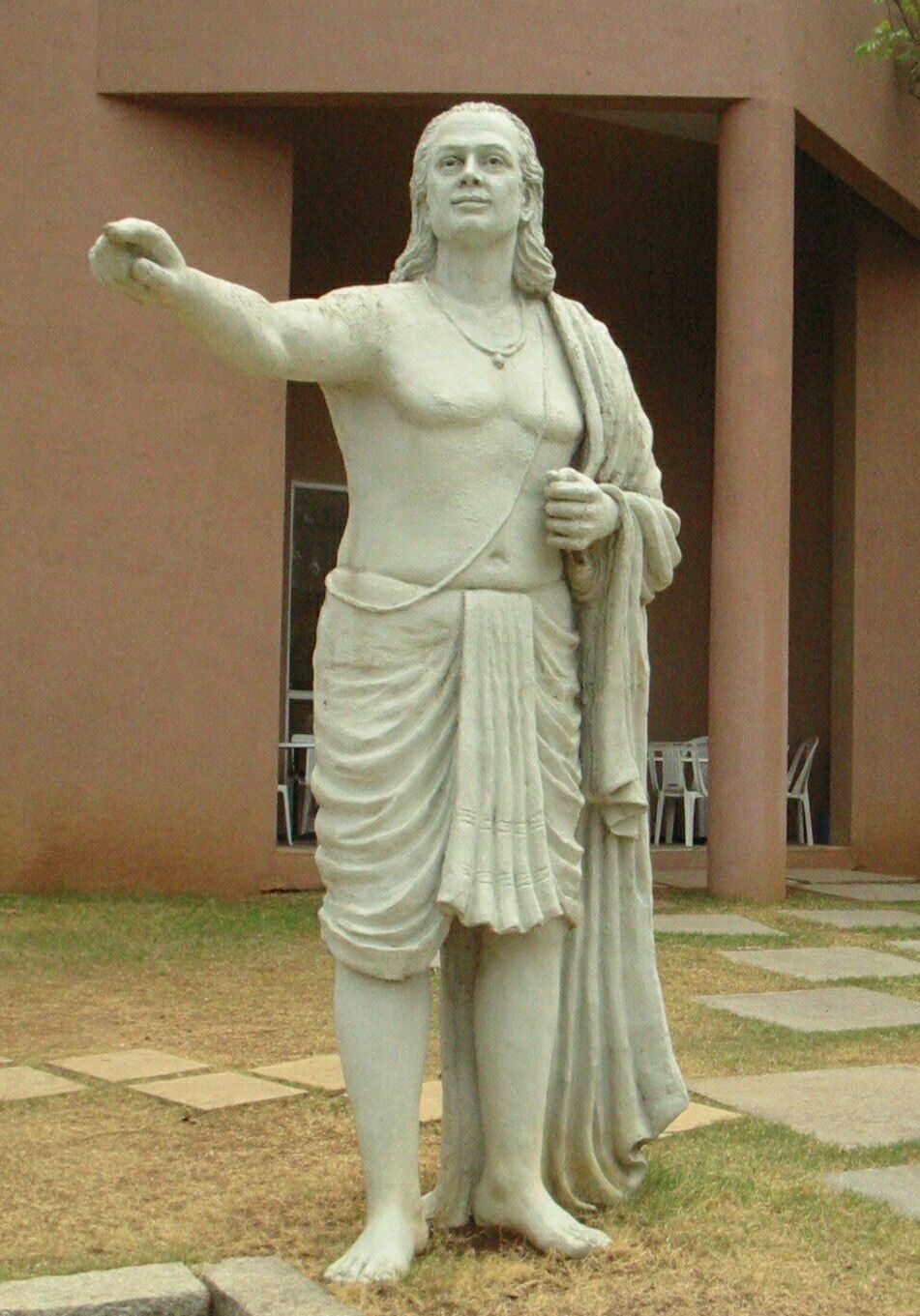

Major works and structure
The principal surviving work attributed to him is the Aryabhatiya, a concise manual arranged in several sections that cover numerical methods, algebraic rules, trigonometric tables, and astronomical models for computing planetary positions, eclipses and calendar functions. A second text, the Arya-siddhanta, is known only through references and later summaries. Commentaries—most notably by Bhaskara I—helped transmit Aryabhata's methods to later generations.
Mathematical contributions
- Place-value arithmetic and calculations with large numbers; his exposition presupposes the use of a positional system.
- Approximation of pi to a value often quoted as 3.1416, presented as a computational rule rather than a proof.
- Systematic use of trigonometric functions (sine tables) and procedures for computing chords and angles useful in astronomy.
- Algorithms for algebraic problems and the kuṭṭaka method for solving certain linear indeterminate (Diophantine) equations.
Astronomical ideas and methods
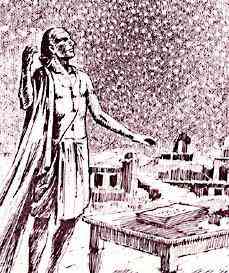
Aryabhata described methods to predict eclipses and to compute planetary longitudes. He argued that the apparent daily motion of the stars could be explained by the rotation of the Earth, an idea notable in the premodern world. His planetary models were expressed algorithmically to produce numerical tables used by astronomers and calendar makers.
Context, influence and misconceptions
Working in the intellectual climate of classical India, Aryabhata synthesized computational techniques and observational traditions. His compact style required later commentators to unpack and explain his verses, which aided transmission. A common misconception states that Aryabhata "discovered zero"; more accurately, his work uses a positional approach that requires a concept of an empty place, but he did not introduce a symbol for the numeral zero in the way later texts do.
Legacy and further reading
Aryabhata's algorithms and tables influenced Indian mathematics and astronomy for centuries and reached Islamic and medieval European scholars through translations and commentaries. For concise introductions and primary-text commentary consult modern treatments and translations provided by historians of mathematics and astronomy.
Further reading and resources: biographical sources, editions and translations, mathematical commentaries, astronomical context.
Related articles
Author
AlegsaOnline.com Aryabhata (5th–6th century CE) — Indian mathematician and astronomer Leandro Alegsa
URL: https://en.alegsaonline.com/art/6417
Sources
- britannica.com : "Aryabhata"